Samsung Galaxy Z Fold8 vs iPhone Fold: Which is right for you? Camera, design and specs
Should you wait for Apple's Fold, or go with Samsung? Here's what we know so far
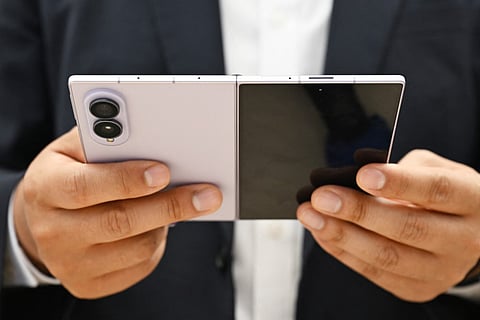
Samsung has spent years convincing people that a phone can be a phone and a tablet at the same time. Now, with the Galaxy Z Fold8 and the more ambitious Fold8 Ultra, it is pushing that idea further, just as Apple’s long-rumoured foldable iPhone reportedly prepares to enter the same premium battleground.
So, if you are considering a foldable phone, which one should you actually be watching?
The answer may come down to whether you want a device that is available now, with multiple form factors and an established foldable ecosystem, or whether you are willing to wait for Apple to bring its famously controlled approach to the category.
Samsung gives you more than one way to fold
Samsung has launched three new foldables: the Galaxy Z Fold8 Ultra, Galaxy Z Fold8 and Galaxy Z Flip8. The Fold8 models are aimed at users who want a large screen that opens into a tablet-style workspace, while the Flip8 takes the more compact route, folding down into a smaller, pocket-friendly design.
For this comparison, however, the real contest is between the Galaxy Z Fold8 and Apple’s expected book-style foldable iPhone.
The Galaxy Z Fold8 starts at P109,990 for the 256GB model in the Philippines, rising to P123,990 for 512GB and P151,990 for 1TB. The more premium Fold8 Ultra starts at P123,990, with the 1TB model reaching P165,990.
Apple has yet to officially confirm its foldable iPhone, so there is no confirmed price. However, the device is expected to sit firmly above the regular Pro iPhone range, meaning buyers should probably expect a premium price tag rather than an affordable entry into foldables.
Galaxy Z Fold8 vs iPhone Fold: design
Samsung's latest Fold8 is built around a 7.6-inch QXGA+ Dynamic AMOLED 2X inner display with a 120Hz adaptive refresh rate. When closed, it has a 5.5-inch cover display.
The phone weighs 201g and measures 9.7mm thick when folded. Open it up and the device becomes just 4.5mm thick, giving users a considerably larger canvas for browsing, gaming, reading and content creation.
Apple's foldable, meanwhile, is expected to take a similar book-style approach, but with its own proportions. Leaks have pointed to a 7.8-inch inner screen and a 5.3-inch cover display, placing it in a space between a traditional smartphone and a small tablet.
The design could be one of Apple's biggest selling points. Reports suggest the company is chasing an extremely slim profile, potentially around 4.5mm when unfolded, with a hinge and flexible display designed to make the crease less noticeable.
That is important because the crease has remained one of the most obvious visual reminders that foldable phones are still a compromise.
The crease could be the real battle
Samsung says its new Flex Titanium display technology helps make the latest foldables thinner and more durable while reducing the visibility of the crease.
Apple, however, is reportedly approaching the same problem with its usual strategy: Engineer the hardware until the compromise becomes less obvious.
Early reports have pointed to an elaborate hinge system and a flexible display designed to minimise the folding line. If Apple manages to make the crease significantly less visible, it could turn one of the biggest criticisms of foldables into one of its strongest selling points.
Of course, this remains based on leaks until Apple officially reveals the device.
Galaxy Z Fold8 vs iPhone Fold: Cameras
Samsung's standard Fold8 comes with a 50MP wide-angle camera and a 50MP ultra-wide camera on the rear, alongside 10MP cameras on the cover and inner displays.
For people who want more serious camera hardware, Samsung has the Fold8 Ultra. The triple-camera system includes a 200MP wide-angle camera, a 50MP ultra-wide lens and a 10MP telephoto camera.
Apple's foldable is reportedly expected to feature two 48MP rear cameras. That may sound less dramatic than Samsung's 200MP sensor, but Apple's camera advantage has rarely been about megapixel counts alone. Image processing, video quality and the way the cameras work with Apple's wider ecosystem could ultimately matter more.
The bigger question is whether Apple can make its foldable genuinely useful for content creation rather than simply making it a very expensive phone that opens.
Performance and battery
The Galaxy Z Fold8 is powered by Qualcomm's Snapdragon 8 Elite Gen 5 Mobile Platform for Galaxy and has a 4,800mAh battery.
The Fold8 Ultra takes things further with the same processor family and a 5,000mAh battery.
Apple's foldable is expected to feature an A20 Pro chip, 12GB of RAM and a battery reportedly exceeding 5,500mAh. Those specifications remain unconfirmed, but they suggest Apple could be targeting the device at users who want flagship performance alongside the larger foldable display.
Software could decide the winner
This is where the battle becomes more interesting.
Samsung is no longer treating its foldables as ordinary smartphones with a hinge in the middle. The company says Galaxy AI has been optimised for the different foldable designs, while new features such as Now Brief and Now Nudge are designed to make the devices more proactive.
The larger screen also gives the Fold8 a natural advantage for multitasking, editing, reading and working on the go.
Apple's challenge will be convincing users that iOS can make the most of a foldable screen.
Reports suggest Apple is developing a more iPad-like experience for the device, with improved multitasking, split-screen layouts and software that adapts more intelligently as the phone moves between its folded and unfolded states.
That could be crucial. A foldable is not simply a smaller phone with a larger screen attached. It changes how people use the device depending on whether it is open or closed.
So, which foldable could be better for you?
Choose the Galaxy Z Fold8 if...
You want a foldable phone that is available now, prefer Android's more flexible multitasking experience and want a choice of storage options. Samsung also has the advantage of several generations of experience in the foldable market.
The standard Fold8 could be the more sensible option for most people who want the big-screen foldable experience without paying Ultra-level prices.
Choose the Galaxy Z Fold8 Ultra if...
You want the biggest display, the most advanced camera hardware and the most premium version of Samsung's foldable concept.
Its 8-inch inner display and 200MP main camera make it the obvious choice for users who see their foldable as a serious content creation and productivity device.
Wait for Apple's foldable iPhone if...
You already live inside Apple's ecosystem and are willing to pay a premium for a first-generation device.
Apple's foldable could be particularly appealing to users who want the iPhone experience but have been waiting for a larger, more tablet-like screen. If the company delivers on the rumours surrounding its hinge, crease reduction and iPad-style software, it could make a very strong first impression.
But there is an obvious catch: Apple has not officially announced the device, so its final design, price, specifications and launch date remain unknown.
For now, Samsung has the simplest advantage of all: its foldables actually exist. The Galaxy Z Fold8 gives buyers a proven foldable format, while the Fold8 Ultra pushes the hardware further.
Apple, meanwhile, is betting that making people wait may make its eventual entry feel less like catching up — and more like redefining what a foldable iPhone should be.
The real winner may come down to one question: do you want the foldable phone you can buy today, or the one Apple hopes will make you wish you had waited?


