Why Bugatti, Mercedes-Benz and Lamborghini want you living in their towers
Car brands chase property premiums and loyal buyers, with Dubai leading the branded boom
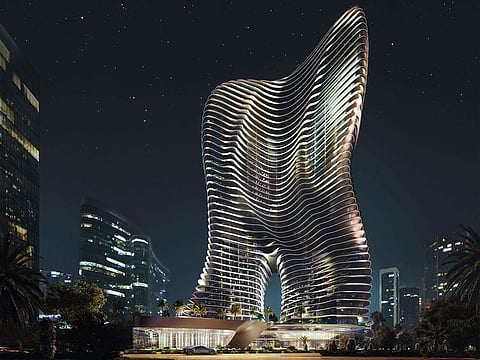
Dubai: Luxury car brands are moving beyond the showroom and into the skyline, using branded residential towers to turn design identity into real estate value and lock in wealthy buyers who want a lifestyle package, not only a home. Developers in Dubai and the wider UAE have leaned into the trend, pairing trophy plots with global names such as Bugatti, Pagani, Aston Martin, BRABUS, Lamborghini and Mercedes-Benz to sell homes at prices that can outpace comparable non-branded stock.
Branded residences give developers instant differentiation in a crowded luxury market, while car and lifestyle brands gain a new revenue stream without tying up manufacturing capital. Zacky Sajjad, Director of Business Development and Client Relations at Cavendish Maxwell, described it as “a capital light brand monetisation strategy with strategic upside, low-risk economics and brand expansion without tying up manufacturing capital, allowing them to turn the brand into a full lifestyle ecosystem by owning the driveway, the lobby, the interior aesthetic, the resident community.”
A premium buyers can see, and resell
The strongest draw for end buyers is the pricing performance, particularly in markets where luxury demand is global and repeat. Oussama El Kadiri, Partner and Head of Hospitality, Tourism and Leisure Advisory, MENA, said Knight Frank research shows branded schemes typically command a material premium over comparable non-branded homes, with global averages “around the 30% mark for equivalent product and location.” Dubai can push that much higher in certain cycles, with some branded projects trading at premiums exceeding 100% versus the wider residential market.
That premium is helped by the buyer profile. El Kadiri said Knight Frank’s 2025 Destination Dubai survey of nearly 400 global high-net-worth individuals, with an average net worth of $22 million, found branded residences are viewed as tools for “capital protection and outperformance,” with many expecting 5–15% price growth in the first year of ownership. The market backdrop supports the narrative. Dubai recorded 500 home sales above $10 million in 2025, worth more than $9 billion, a segment where branded offerings tend to cluster.
The UAE – and Dubai in particular – has become the world’s densest and fastest‑growing branded‑residence market as it combines tax efficiency, investor‑friendly regulation, tourism fundamentals and a powerful inflow of global wealth exceeding mature cities such as London or New York.Oussama EL Kadiri, Partner at Knight Frank MENA
Not a badge on a building
The brand role varies widely, and that matters for buyers weighing long-term value. El Kadiri said branding increasingly means treating real estate as an extension of brand DNA, with controls written into “design, service and governance.” Hotel-branded residences tend to be more involved through the full development cycle because service consistency is central to the promise, while non-hotel brands are usually more focused on design and licensing.
Risk management also differs by operator size. Larger hospitality groups tend to build in stricter compliance mechanisms, which can be more favourable for residents over time. “Choosing the right brand for the right project is critical for a balanced risk-profit equation for developers,” El Kadiri said.
Dubai’s advantage over London and New York
Dubai has become the world’s densest and fastest-growing branded-residence market by combining tax efficiency, investor-friendly regulation, strong tourism fundamentals and sustained wealth inflows that outpace mature gateway cities. Repeat visitation strengthens the link between tourism and ownership, turning frequent visitors into buyers who already know the city and its districts. Knight Frank research cited by El Kadiri indicates more than half of high-net-worth buyers based outside the UAE purchase primarily for investment returns, a dynamic that supports branded projects that offer rental and service propositions.
For car and lifestyle brands it’s a capital light brand monetisation strategy with strategic upside, low-risk economics and brand expansion without tying up manufacturing capital, allowing them to turn the brand into a full lifestyle ecosystem by owning the driveway, the lobby, the interior aesthetic, the resident community.Zacky Sajjad, Director Business Development and Client Relations at Cavendish Maxwell
What buyers are really purchasing
Developers are selling a curated experience, with design language and services built to echo the brand’s core identity. Bugatti Residences by Binghatti in Business Bay has pitched private amenities and car-to-penthouse access, framing the building as a controlled lifestyle environment rather than a typical apartment block.
Similar messaging has followed other automotive-led launches. Horacio Pagani, Founder and Chief Designer at Pagani Automobili, said the DarGlobal Pagani Tower interiors aim to reflect “the cornerstones of our creative philosophy that combines form and function to create unique, handmade objects.” In Abu Dhabi, BRABUS has positioned its first branded residential project as a shift from product to full experience. “Now, for the first time, we’re not just designing vehicles for a lifestyle. We’re designing the lifestyle itself,” said Constantin Buschmann, CEO of BRABUS.
Mercedes-Benz, which has expanded its Dubai partnership with Binghatti into a multi-tower masterplan concept, has framed the move as a broader play on identity and daily living. Axel Harries, Head of Global Service and Parts at Mercedes-Benz AG, said: “With Mercedes-Benz Places, we transfer the unique DNA of our brand into holistic, customer-centric and connected living spaces.”
Dubai’s market has shown it can absorb high-end launches when global wealth inflows stay strong, yet the premium only holds when the experience matches the badge. That is the real reason luxury car brands are building skyscrapers.