What are branded residences, and why are UAE buyers paying more for them?
Branded residences offer hotel-style living, rental appeal and stronger resale value
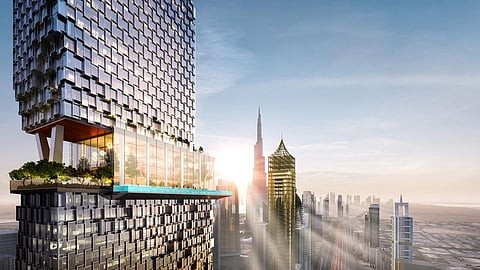
Dubai: UAE property buyers are hearing the term “branded residences” more often, but what does it actually mean, and why are investors paying a premium for them?
Put simply, branded residences are homes linked to a recognised hotel, hospitality or lifestyle brand. Buyers get a private residence, but with the service standards, design, management and amenities usually associated with hotels. That can include concierge services, housekeeping, security, wellness facilities, branded interiors, rental management and access to hospitality benefits.
Get updated faster and for FREE: Download the Gulf News app now - simply click here.
A branded home is sold not only as real estate, but as a managed lifestyle asset with a name attached to it. That brand can make the property easier to understand, easier to rent and easier to resell, especially for buyers who do not live in the country full-time.
Lifestyle is driving the demand
Demand for branded residences in the UAE is being driven by a shift in how people buy homes. Buyers are no longer looking only at size, location and price. They are also asking how the property will fit into their lifestyle, how it will be managed and whether it can hold its value over time.
“Buyers are no longer simply choosing a new home based on the size and location; they are looking at how that property will fit into their overall lifestyle experience,” said Abhishek Jalan, CEO of Grovy Developers.
That change has become more visible in Dubai, where the property market is serving end-users, investors, second-home buyers and international residents who want a long-term base.
“The UAE has undergone a structural shift," said Zeeshan Shah, CEO and Founder of Elevate. "This is no longer a market driven by speculation or short-term capital. What we’re witnessing is the relocation of global wealth, with families, founders, and sophisticated investors choosing the UAE as their primary base. And when you’re making that decision, you don’t buy a box, you buy a lifestyle.”
Why buyers pay a premium
Branded residences usually cost more than comparable non-branded homes. That premium is paid for the brand name, service structure, design standards, hospitality management and perceived long-term value.
Shah said hospitality-branded residences typically command a price premium of 30% to 40% over comparable unbranded stock, with the gap widening in the most sought-after locations.
“The more important question isn’t the entry price, it’s the total return,” Shah noted. “When you factor in capital appreciation, rental yield, the liquidity advantage that comes with a globally recognised brand, and the Accor ownership benefits that travel with you across 5,600 properties worldwide, the calculation shifts entirely.”
Jalan stressed that the higher selling price can be justified when the project delivers stronger rental demand, better occupancy, higher service levels and stronger resale value.
He added that branded residences can outperform traditional luxury homes when they operate more like professionally managed hospitality assets.
What buyers must check before paying more
The brand alone does not guarantee a better return. Buyers still need to assess the location, developer track record, operating model, service charges, rental demand and the long-term supply pipeline in that area.
Jalan said the fundamentals remain the same for branded and non-branded property.
“A well established brand alone will not guarantee you greater ROI than a non-branded product,” he said.
That is an important point for buyers who may be attracted by a famous name. A strong brand can support value, but only if the project is well located, properly managed and backed by a credible developer and operator.
In other words, buyers should ask who is managing the property, what services are included, how much they will pay in annual charges, whether short-term rental is allowed and whether the surrounding district has enough demand to support rents and resale prices.
How they hold value
Branded residences tend to hold value when the brand, developer and operator maintain the quality promised at launch. The strongest projects usually have clear operating standards, professional asset management and consistent service delivery.
Jalan said conventional developments can lose value over time if maintenance quality declines or if owners reduce operating costs at the expense of the asset.
“In conventional developments, it is common for long-term maintenance quality and long-term resident experiences to deteriorate with poor real estate management or if property owners value reduced operating costs more highly than long-term asset integrity,” Jalan said.
Branded projects are meant to reduce that risk by tying the property to a management structure that protects service levels, building presentation and the overall resident experience.
Shah said value retention depends on three factors.
“Value retention in this asset class is fundamentally a function of three things: brand longevity, operational excellence, and location irreplaceability,” he said.
That means the safest branded projects are usually those in prime or fast-growing locations, with an operator that has a long track record and a developer capable of delivering the project as promised.
Ultra-luxury is growing, but accessible luxury is rising
Demand is coming from both ultra-luxury and mid-market buyers, but for different reasons.
Ultra-luxury branded residences are benefiting from the movement of global wealth into Dubai and Abu Dhabi. High-net-worth buyers are looking for waterfront locations, privacy, service, international design and communities that match what they have experienced in London, Singapore, New York and Sydney.
Shah said the ultra-luxury buyer has become more demanding.
“Today’s buyer is globally exposed, exceptionally discerning, and uncompromising when it comes to design, service, and community,” he said.
At the same time, the upper-mid-market is becoming more important as more UAE residents look for premium living without paying ultra-luxury prices.
Jalan said “accessible luxury” is one of the strongest long-term opportunities in the market.
“Accessible luxury can best be described as projects that provide an opportunity for buyers to access premium lifestyle experiences, innovative design, hospitality integration, and exceptional quality living that are not limited to targeting just the ultra-wealthy,” he said.
That is why branded residences are expanding beyond trophy penthouses and beachfront mansions. Developers are increasingly using hospitality partnerships to attract buyers who want service, design and rental potential at a more attainable price point.