How Dubai’s property market enters a new phase of consolidation
Developers adapt to regional challenges as buyers gain flexibility, new projects continue
Dubai: Dubai’s property market is entering a new phase in which financial discipline, construction capacity and the ability to adapt to changing buyer behaviour are becoming increasingly important.
The shift is being reflected in a growing consolidation across the property development sector, with companies with stronger financial positions and greater control over construction and supply chains continuing to launch new projects even as the regional conflict puts pressure on material and logistics costs.
New projects
Samana Developers is among the companies continuing to expand during this period. The developer has added seven projects since the beginning of the conflict, taking its total pipeline to 54 projects, while recording Dh2.2 billion in sales from March to date.
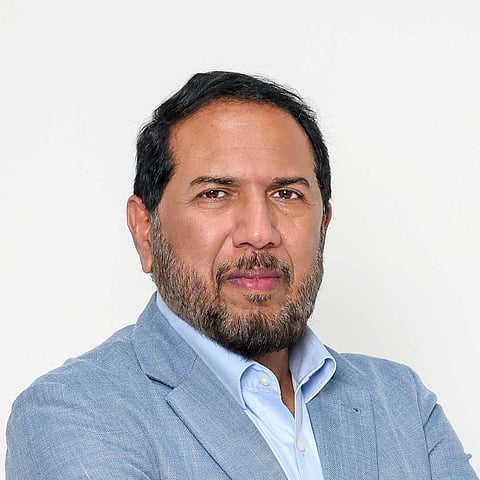
The company’s performance, according to CEO Imran Farooq, reflects a broader change in the market rather than simply a short-term response to regional conditions.
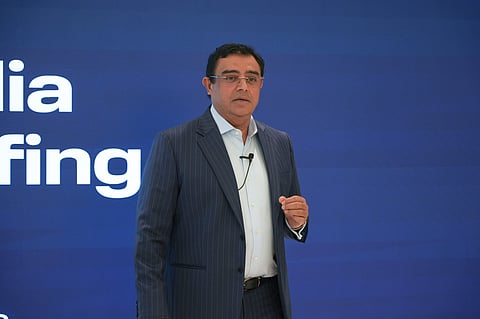
“I strongly believe that market is in consolidation mode in terms of both stock which is already sold and in terms of developers,” Farooq said while talking to media at his office in Dubai on Thursday.
From rapid expansion to consolidation
Farooq noted that the Dubai’s development market has grown rapidly in recent years, but the current environment is putting greater emphasis on the ability to finance, build and deliver projects consistently.
He added the consolidation is visible among both developers and existing property stock, with a relatively small group of active developers continuing to launch projects and record sales.
“Consolidation is healthy,” he said, adding that Samana does not want to pursue unlimited growth but instead aims to strengthen its position through its existing residential business while expanding into premium property and master communities.
For buyers, the changing environment is also producing more flexible payment structures. Farooq said developers have softened down payments and payment plans, allowing a wider pool of end users to enter the market.
He pointed to financing structures in which buyers pay a smaller initial amount and rely on bank financing for the balance, saying this can bring property ownership within reach of buyers who previously faced higher upfront payment requirements.
New launches
The continued flow of launches is another indication of how the market is evolving.
Samana has introduced projects including Samana Greenfield, Samana Business Hub, Samana South Heaven, Samana Greenfield Two, Samana Portside, South Heaven Two and Portside Two since March.
He said projects that have been in the market for around 60 days typically reach a high sales ratio, while its recovery rate reached 82 per cent in August. It is targeting 88 to 95 per cent in September.
Farooq said the company sees the current period as an opportunity to increase its market share rather than simply protect existing business. “We plan for crisis before the crisis,” he said.
Developer absorb cost pressures
Regional disruption has also changed the cost equation for construction, with developers facing higher prices for materials and logistics.
Samana says it will not pass those additional costs on to buyers who have already signed contracts. “We have no plans to pass on that cost to customer,” Farooq said.
Instead, the company expects to absorb the increase through lower margins, while betting that some costs could moderate over a longer period.
“Our profits are going to shrink. It’s still a very viable business, and it’s a market situation today,” he said.
The approach is supported by Samana’s vertically integrated model, with design and contracting operations held in-house. Farooq said this gives the company greater control over procurement, construction and supply-chain issues at a time when developers are exposed to price variations and delays.
Construction at full pace
Despite the cost pressures, the developer said construction has continued across its projects.
“Since March, about 160,000 cubic metres of concrete and 56,000 tonnes of steel have been deployed, with around 700 technical staff working on sites,” he said.
The company expects to deliver 20 new projects between now and December 2027, including four projects scheduled for delivery this year. Its future sales pipeline has a gross development value of Dh15 billion.
Farooq said the company’s financial position provides additional support for the construction programme, with Dh2.48 billion in escrow and Dh6.7 billion in future receivables.
A broader shift
The changing market is also encouraging developers to look beyond conventional residential launches.
Samana plans to establish a separate premium-property business, with its first project expected to be a branded residence developed in partnership with a major brand. The company is also exploring master-community opportunities and is planning to expand in Abu Dhabi, Ajman and the Maldives.
Farooq said the company’s strategy will ultimately be divided across three areas: its existing residential business, master communities and premium developments.
He explained that Dubai’s property market is not simply moving through a period of slower or faster sales. It is changing structurally, with greater emphasis on financial resilience, flexible payment plans, construction execution and the ability to absorb short-term shocks.
“For developers able to maintain that discipline, the current consolidation is creating room to expand while the market adjusts to a new operating environment,” he concluded.