Abu Dhabi, Dubai drive UAE real estate surge in Q1 2026 Colliers report
The report attributed this growth to the strength of the UAE’s economic fundamentals
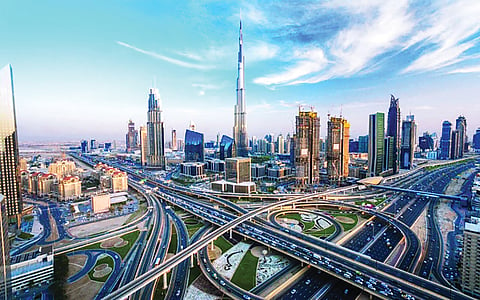
A report issued by Colliers, the diversified professional services and investment management company, on the performance of the UAE real estate market during the first quarter of 2026, revealed that the sector has entered a new phase of balanced and sustainable growth following the exceptional momentum witnessed throughout 2025.
The report attributed this growth to the strength of the UAE’s economic fundamentals and continued investment in infrastructure projects, amid rapid shifts in investor and tenant behavior, as well as the growing influence of asset quality and submarket dynamics in shaping real estate performance and determining market trends.
Get updated faster and for FREE: Download the Gulf News app now - simply click here.
22 major real estate projects, including 9 residential developments in Abu Dhabi
The report noted that Abu Dhabi’s real estate market continues its transition toward a more mature and sustainable trajectory, supported by ongoing development activity and the carefully managed expansion of residential supply.
The residential sector maintained a steady delivery pace during the first quarter of the year, with approximately 1,200 residential units added, while another 7,000 units are expected to be completed before year-end.
At the same time, the emirate recorded landmark development activity with the addition of 22 new projects to the upcoming pipeline, including nine branded residential developments carrying internationally recognized brands, reflecting the market’s growing attractiveness and the sustained investment momentum within the real estate sector.
The report highlighted that Abu Dhabi’s residential rental market moved toward greater stability during the first quarter, with average apartment rents increasing by 15% year-on-year, while mid-market developments recorded increases exceeding 20%.
This trend was also reflected in the villa sector, which posted modest growth of 1% quarter-on-quarter and 6% annually. Luxury communities on Yas Island, alongside projects such as Al Reef, recorded annual rental increases ranging between 7% and 10%.
95% occupancy rates in Abu Dhabi’s office market
In the office sector, Abu Dhabi’s office market maintained strong momentum, with occupancy rates exceeding 95% and annual rental growth ranging between 8% and 20% across different categories.
This coincided with the strengthening of office stock following the completion of Shams Tower on Al Reem Island, while the market anticipates the completion of projects in Masdar City and The Link, both of which have attracted significant tenant interest, reflecting sustained demand for sustainable Grade-A office spaces within the capital’s key business districts.
The report further stated that residential transactions maintained their upward trajectory, reaching around 7,800 deals during the first quarter, representing increases of 10% quarter-on-quarter and 119% year-on-year. This growth was mirrored in sales prices, with apartment and villa prices rising by 4% and 2% quarter-on-quarter, and by 32% and 21% annually, respectively.
Dubai real estate market demonstrates strong resilience
In Dubai, the report confirmed that the real estate market is also moving toward a more mature phase following years of rapid growth, while maintaining strong resilience against short-term fluctuations thanks to robust economic fundamentals and ongoing infrastructure development.
This was reflected in the pace of new supply, as apartment handovers exceeded 10,000 units for the second consecutive month, while around 1,900 villas were delivered during the first quarter of 2026.
The report added that Dubai’s development pipeline remains substantial, with approximately 65,000 apartments and 12,500 villas expected to be delivered by the end of the year.
Meanwhile, the rental market continued its positive performance, supported by sustained demand for affordable housing. Average apartment rents increased by 2% quarter-on-quarter, while villa rents remained stable amid varying performance across communities, with tenants placing greater emphasis on value for money.
Dubai sales market continues its growth path
According to the report, Dubai’s sales market maintained its growth trajectory during the first quarter, with average sales prices continuing to rise across various asset classes in both primary and secondary markets.
The commercial office sector also recorded notable sales growth, driven by a shortage of completed units and limited new project launches, despite the gradual expansion of Grade-A office developments.
Northern Emirates emerge as integrated residential destinations
Regarding the Northern Emirates, the report noted that the region is undergoing a rapid transformation, evolving from a residential alternative for commuters working in other emirates into fully integrated residential destinations offering competitive pricing and modern lifestyles within master-planned communities.
Sharjah led the Northern Emirates in terms of newly launched units with around 1,700 units, followed by Ras Al Khaimah, Ajman, and Umm Al Quwain.
Apartment rental prices in Sharjah and Ras Al Khaimah recorded slight quarterly increases ranging between 1% and 2%, while rents in Ajman, Fujairah, and Umm Al Quwain remained stable.
This coincided with strong initial momentum in project deliveries, with more than 1,100 apartments and 320 villas completed across several major planned communities, including Aljada, Sharjah Sustainable City, and Al Zahia.
The report also indicated that the number of units scheduled for delivery during 2026 remains high at approximately 12,000 units.
Al Ain: Upward performance supported by strong local demand
In Al Ain, the real estate market continued its steady upward trajectory, supported by strong local demand that reinforced stability across various asset classes.
First-quarter data showed average apartment and villa rents increasing by 7% and 2%, respectively, compared to the same period last year.
Office rents outside the central business district remained largely stable, while overall market performance was supported by rental growth along Khalifa Street and the Main Street corridor, which recorded annual increases of 1% and 6%, respectively.
This momentum also extended to the retail sector, where commercial rents across the city increased by 5% year-on-year, while Khalifa Street and Main Street retail corridors achieved the highest growth rates at 8%.