UAE attracts 97% of global business leaders for infrastructure investment: HSBC
UAE accounts for 22% of the region’s infrastructure project finance pipeline
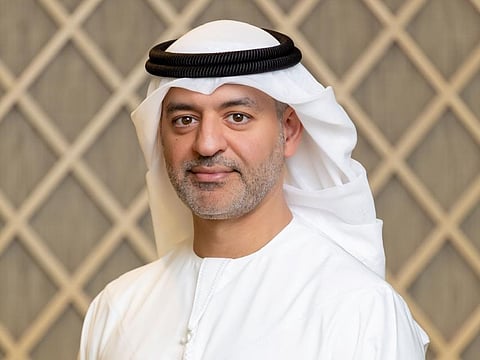
Dubai: Despite a more complex global and regional operating environment, international businesses see the UAE playing a vital role in the next phase of infrastructure investment across the Middle East, North Africa and Turkey (MENAT), according to new HSBC research.
HSBC’s New Networks of Capital: MENAT Infrastructure report draws on a global survey of 1,626 senior business leaders and 818 institutional investors across 16 markets, including India, the US, China and the UK. It found that 97 per cent of business leaders consider the UAE attractive for infrastructure investment over the next four years.
Get updated faster and for FREE: Download the Gulf News app now - simply click here.
Investment intentions are also broad-based, with 71 per cent of business leaders and 66 per cent of global institutional investors directing approved or expected infrastructure capital expenditure to the UAE between 2026 and 2028. Among European and Asian business leaders, the figure was higher at 75 per cent and 72 per cent, respectively.
Mohamed Al Marzooqi, Chief Executive Officer, UAE, HSBC Bank Middle East, said: “Global businesses see a clear and growing infrastructure opportunity in the UAE. The country’s ambitious project pipeline, international connectivity and eagerness to promote public-private partnerships create a strong platform for investment and delivery.
“The opportunity now is to leverage the strong momentum to continue financing and developing projects that will deliver lasting economic value. HSBC’s role is to combine local insight and our international network to help connect clients with capital, partners, and expertise, and contribute to their financing.”
An $872 billion pipeline of infrastructure projects across MENAT highlights the scale of the region’s medium- and long-term investment potential, with the UAE accounting for approximately 22 per cent of the regional project finance pipeline.
By 2030, 96 per cent of both business leaders and investors expect the broader MENAT region to have more capital available than investment-ready infrastructure projects, while 92 per cent of UAE business leaders expect execution capacity to become a greater constraint than access to finance.
To enhance project execution, businesses identified improved risk-sharing, faster permitting and greater regulatory transparency as key factors, while investors prioritised larger, scalable projects and better transparency on realised returns.
An analysis of approximately 4,500 infrastructure projects and programmes across seven MENAT markets identified a substantial pipeline of individual projects in the UAE at the study, design or tender stage.
Transport (38 per cent) accounts for the largest proportion of unawarded individual packages in the UAE’s infrastructure pipeline, followed by energy and power (28 per cent), digital and AI infrastructure (19 per cent), and water and waste (16 per cent).


