QatarEnergy declares force majeure after LNG production halt
Drone attack disrupts Qatar gas output, raising supply concerns in Europe and Asia
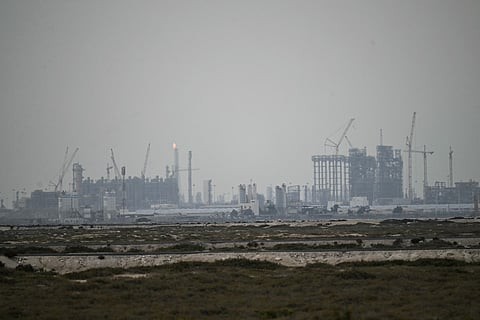
Dubai: QatarEnergy has declared force majeure on liquefied natural gas (LNG) shipments after suspending production at key facilities following a drone attack on the country’s energy infrastructure.
The state-owned energy giant said it had informed affected buyers that contractual deliveries could not be guaranteed after the disruption forced the company to halt LNG output and associated products.
“Further to the announcement by QatarEnergy to stop production of liquefied natural gas (LNG) and associated products, QatarEnergy has declared Force Majeure to its affected buyers,” the company said in a statement.
Force majeure allows suppliers to suspend contractual obligations when events beyond their control prevent normal operations. QatarEnergy said it remains in contact with customers and partners as it assesses the situation.
“QatarEnergy reiterated in a statement that it values its relationships with all of its stakeholders and will continue to communicate the latest available information,” the company added.
Stay updated: Get the latest faster by downloading the Gulf News app - it's completely free. Click here for Apple or here for Android. You can also find it on the Huawei AppGallery.
Energy infra hit
The production halt followed a drone strike targeting critical energy infrastructure in Qatar, prompting authorities to suspend LNG output as a precaution while damage assessments and security checks are carried out.
The Gulf state is the world’s largest exporter of LNG, supplying major markets in Europe and Asia, making any disruption significant for global gas supply.
Energy analysts say even a short interruption could tighten markets already under pressure from geopolitical tensions across the Middle East.
Several LNG cargoes scheduled to leave Qatar have been delayed, according to shipping and energy market sources cited in regional reports.
Impact on global gas
Qatar accounts for a substantial share of the global LNG trade, exporting more than 75 million tonnes per year through its massive liquefaction facilities at Ras Laffan Industrial City.
The country has become an increasingly important supplier to Europe since the continent began reducing its dependence on Russian pipeline gas following the Ukraine war.
European utilities have relied on LNG shipments from Qatar to secure winter energy supplies and stabilise electricity markets.
Disruptions to Qatari output could therefore push global LNG prices higher and force buyers to seek alternative cargoes.
Traders said spot LNG prices and tanker freight rates have already begun to rise amid uncertainty over the scale and duration of the outage.
Shipping, supply risks
The halt comes as tensions across the Gulf raise broader concerns about energy infrastructure and maritime security in one of the world’s most important hydrocarbon export regions.
Many LNG cargoes and oil shipments from the Middle East pass through the Strait of Hormuz, a critical shipping lane linking Gulf producers with global markets.
Any prolonged disruption to Qatari exports would affect energy flows to both Europe and Asia, where countries such as Japan, South Korea and China rely heavily on LNG imports.
Industry sources said energy companies and traders are closely monitoring developments in Qatar while assessing whether alternative suppliers such as the United States or Australia may be needed to fill potential supply gaps.
Market outlook
Energy analysts say the duration of the production halt will be crucial in determining the broader impact on global gas markets.
If the disruption proves temporary, markets may absorb the shock through existing inventories and rerouted shipments.
A longer outage, however, could tighten supply and add further volatility to global energy markets already strained by geopolitical tensions.
For now, QatarEnergy said it will continue updating customers as the situation evolves while working to restore operations at its LNG facilities.