Qatar cutting off world’s largest LNG production fuels gas disruptions in Europe
Qatar halted production at liquefied natural gas plant after Iranian drone attacks
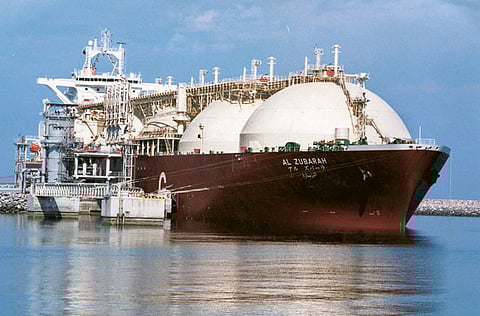
Dubai: European natural gas prices are surging after Qatar halted production at the world’s largest liquefied natural gas plant following Iranian drone attacks, raising concerns over global supply security tied to Gulf exports.
Benchmark Dutch TTF futures rose as much as 45% to around €46 per megawatt-hour in early afternoon trading, before extending gains to trade near €62. Prices are up about 90% since Friday’s close, marking swings not seen since the 2022 energy crisis. UK NBP gas prices climbed sharply in tandem with continental markets, with traders reporting sharp minute-by-minute volatility.
QatarEnergy said it stopped LNG production linked to the giant North Field reservoir after its facilities were targeted. The export complex accounts for about a fifth of global LNG supply, underscoring Qatar’s central role in global energy markets. The company did not provide details on the extent of the damage.
Stay updated: Get the latest faster by downloading the Gulf News app now - it's completely free. Click here for Apple or here for Android. You can also find it on the Huawei AppGallery.
Qatar cut reverberates
The escalation follows US and Israeli strikes on Iran, heightening tensions across a region that anchors a significant share of global oil and gas exports.
QatarEnergy also halted aluminum production and some chemicals as it managed the consequences of the attacks. Aluminum prices rallied as much as 3.8% on the London Metal Exchange. QatarEnergy owns 50% of Qatalum alongside joint-venture partner Norsk Hydro ASA.
Hydro said it was weighing contingencies to avoid disruptions to deliveries, as flows of raw materials and refined metals were affected by the virtual halt in regional shipping.
Operations scaled back
QatarEnergy said it would also stop making downstream products including urea, polymers and methanol, widening the industrial impact beyond LNG.
China, the world’s largest LNG importer, called on all parties involved in the Iran conflict to allow safe passage of ships. Senior gas executives said Chinese buyers were pressing Iranian officials to avoid actions that would disrupt Qatari LNG exports.
“In modern history, the Strait of Hormuz has never been actually closed, albeit a temporary slowing of traffic has occurred,” said Maurizio Carulli, global energy analyst at Quilter Cheviot.
Risks amplify anxiety
“About 20% of global oil supply transits through the Strait of Hormuz and 38% of seaborne crude oil trade,” he said.
Carulli said he does not expect oil shipping companies to send vessels through until “the military situation de-escalates,” citing risks of ship damage, seizures and temporary loss of insurance cover.
“Satellite data shows that oil tanker transit had virtually halted over the weekend, a precautionary measure by shipping companies,” he added.
Tighter LNG competition
Qatar supplies about 12% to 14% of Europe’s LNG imports and has grown in importance to the continent since 2022 as European states reduced reliance on Russian pipeline gas.
Ross Wyeno, associate director for LNG short-term analysis at S&P Global Energy, said: “We expect substantial price volatility over the coming days as market participants assess the impact of lost production on their own supply portfolios.”
“The buyers which will be most aggressive at near-term spot purchases will likely be in the Asia-Pacific markets,” he said.
Storage deepens vulnerability
Traders are also questioning the severity of the attacks on the Qatari facility, one of the most significant unplanned outages in the LNG industry.
European gas inventories remain low as winter draws to a close. Storage across the European Union is below 30% capacity, compared with about 40% at the same point last year. Germany’s gas storage sites were 20.5% full as of Saturday, while France’s stood at 21%, according to Gas Infrastructure Europe.
“Security of supply could become an issue again for Europe,” said Huibert Vigeveno, chief executive of Switzerland-based MET Group.
Goldman Sachs raised its forecast for April 2026 European gas prices to €55 per megawatt-hour from €36. Analysts expect Asian spot LNG prices to rally relative to European benchmarks, reflecting Qatar’s heavier supply exposure to Asia.
- With inputs from Agencies