How Strait of Hormuz could become ‘redundant’ within five years
HSBC CEO says alternative oil pipelines reduce Gulf reliance on key waterway
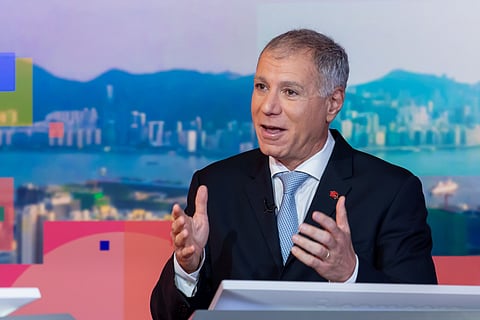
Dubai: Gulf countries could reduce their dependence on the Strait of Hormuz within five years by investing in pipelines and logistics networks that carry exports around the strategic waterway, according to HSBC Group Chief Executive Georges Elhedery.
Get updated faster and for FREE: Download the Gulf News app now - simply click here.
The idea is to give producers alternative ways to reach international buyers when shipping through Hormuz faces disruption.
Pipelines connecting oilfields to ports outside the strait could allow some exports to continue without ships entering the passage.
Speaking at the HSBC Future Forum in Dubai on Tuesday, Elhedery said the Iran war had accelerated the push to develop those alternatives.
“We do see this region being able to recover and then continue growing. It will mean a lot of investment,” he said, according to Reuters. “Of course, we do wish and hope to see a resolution to the conflict ... But Hormuz, probably in five years’ time, may become redundant,” he added.
What ‘redundant’ means
Elhedery’s comments point to a future in which Gulf exporters have enough alternative transport capacity to reduce their reliance on Hormuz. His five-year outlook is a projection, rather than a confirmed timetable for replacing the route.
Before the conflict began in late February, the strait handled about a fifth of global oil and liquefied natural gas trade. Disruptions have exposed how heavily those shipments depend on a single maritime passage.
Alternative infrastructure could reduce that exposure. The projects described so far, though, do not establish that all the oil and LNG trade passing through Hormuz could move elsewhere within five years.
How pipelines bypass strait
A pipeline can move crude over land to an export terminal outside Hormuz. Tankers can then collect the oil at that terminal without passing through the strait.
Saudi Arabia’s East-West pipeline provides one example. It carries crude to Red Sea export terminals, giving the country an alternative to shipping those barrels through Hormuz.
Saudi Arabia plans to increase the pipeline’s capacity from 7 million barrels per day to 10 million within two to three years, Energy Minister Prince Abdulaziz bin Salman said at the WPC Energy Congress in Riyadh last week.
That would add 3 million barrels per day of capacity to the route. It would expand Saudi Arabia’s options for moving crude during disruption, although pipeline capacity alone does not demonstrate that the wider region can replace its use of Hormuz.
What other countries consider
Iraq is considering reviving a pipeline through Syria that would provide access to the Mediterranean coast. Such a route would offer another way to transport Iraqi oil to international markets.
Kuwait is pursuing oil storage facilities outside the Middle East. Overseas storage serves a different purpose from a bypass pipeline: it places supplies closer to buyers and outside the immediate region.
Together, pipelines, export terminals and storage facilities could give producers greater flexibility. Their contribution will depend on which projects proceed, when they become operational and how much trade they can handle.
Where does investment fit?
The search for alternative routes forms part of a much larger regional infrastructure programme.
The Middle East, North Africa and Turkey have a combined $1.4 trillion pipeline of planned and unawarded infrastructure projects, HSBC said in a report released on Monday. That includes $872 billion in individual project packages, based on data from Dubai-based construction industry intelligence provider MEED.
Those figures cover the wider infrastructure market. They do not represent spending solely on projects designed to bypass Hormuz.
A separate HSBC survey of more than 1,600 business leaders and approximately 820 global institutional investors found that respondents continued to view the Gulf as an attractive investment destination despite the conflict.
Elhedery also reaffirmed HSBC’s commitment to the Gulf Cooperation Council region and its long-term economic development.
Why this matters for UAE, GCC
Alternative routes give UAE businesses more ways to move goods when shipping through Hormuz faces disruption, helping maintain imports, exports and re-export trade.
DP World’s planned Al Rugaylat and Dibba terminals in Fujairah will connect with Jebel Ali through its inland logistics network, providing an entry point outside the strait. Moody’s estimates the additional capacity could accommodate nearly half of Jebel Ali’s current re-export volumes.
AD Ports Group has already rerouted cargo through Fujairah and Khor Fakkan, added 400 trucks, increased Etihad Rail services and introduced air cargo options for food and pharmaceuticals.
Across the region, Saudi Arabia plans to expand its East-West pipeline, Kuwait is pursuing overseas oil storage, and Iraq is considering reviving a pipeline through Syria to the Mediterranean. Together, these initiatives could reduce dependence on Hormuz, but Elhedery’s five-year outlook hinges on planned investments becoming operational routes with sufficient capacity.