Why water matters more than oil and gas in the Middle East now
Reliance on coastal desalination plants leaves water supply vulnerable amid Iran threats
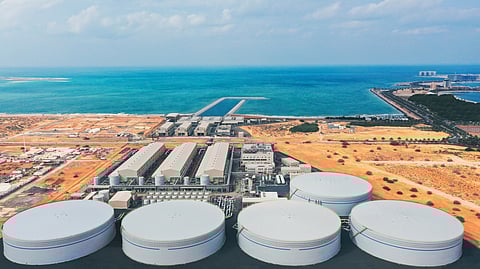
Dubai: Water security came into focus across Gulf economies after a desalination plant in Bahrain was damaged in a drone strike earlier this month, highlighting a key weakness: most countries in the region depend heavily on desalination for daily supply.
That reliance is not new. What is changing is how quickly any disruption could spread across the wider economy. A recent Moody’s report says desalination dependence should be seen differently, describing it as “a vital security risk.”
Across the Gulf, desalination is not a backup system. It is the main source of drinking water. Moody’s notes that “the GCC countries… rely on desalination for most of their potable water.”
Coastal concentration creates weak points
The scale of that reliance is significant. Gulf countries produce a large share of the world’s desalinated water, with hundreds of plants concentrated along their coastlines.
In several countries, desalination supplies most of the water people use every day. Kuwait relies on it for around 90% of drinking water, while Saudi Arabia and Oman also depend heavily on it.
These plants are typically located near coastal cities, power stations and industrial hubs. That setup supports efficiency but creates a clear weakness. Moody’s says “much of their water production is concentrated in coastal plants… with limited near-term substitutes at scale.”
Stay updated: Get the latest faster by downloading the Gulf News app - it's completely free. Click here for Apple or here for Android. You can also find it on the Huawei AppGallery.
Strikes bring water infrastructure into conflict
Recent events have made that risk more visible. The Bahrain strike underlined how exposed this infrastructure has become.
The risks are no longer theoretical. Regional officials and analysts warn that water infrastructure is now being drawn directly into the conflict.
Iran has threatened to target desalination plants across the Gulf, while governments in the region have warned that any escalation could trigger retaliatory strikes on water and energy systems.
In some countries, reserves may only cover about a week of supply, meaning any prolonged disruption could quickly affect households, hospitals and industry.
Disruptions can spread quickly across sectors
The risk does not stop at water supply. The systems are closely linked. Desalination needs electricity to operate, while power plants and factories rely on water to run.
Moody’s explains this connection: “power is required to sustain water production, while water is essential to utilities, industry and wider economic systems.”
This creates a chain reaction. If water supply is disrupted, power generation and industrial activity can slow. Desalination supports “households… power generation, industrial operations and commercial activity,” according to Moody’s.
Governments would be the first to respond. Maintaining water supply is essential for daily life and public services. Moody’s says “any threat to potable water continuity would likely require rapid government intervention.”
That response can be costly. Emergency supply, repairs and support for affected sectors all add pressure, especially if disruption lasts. The report warns the impact “could spread quickly across tightly linked water, power and industrial systems.”
Limited buffers mean time is critical
Not all countries face the same level of risk. Saudi Arabia, the UAE and Qatar have stronger financial buffers and more developed systems, giving them more room to respond. Others are more exposed. Moody’s says Bahrain’s “very weak public-finance metrics increase its sensitivity to prolonged disruption.”
Time is a key factor. Some countries can store water for several days, providing a short buffer. Beyond that, supply must be restored quickly. If not, shortages can spread.
The broader shift is clear. Water in the Gulf is no longer just a supply issue. It sits at the center of energy, industry and public services. As the report puts it, disruptions can trigger “cascading credit effects” across the region.
That makes water supply one of the most immediate concerns for people across the region as tensions continue.