Saudi oil output hit by attacks, pipeline damage tightens global supply
Pipeline and key fields hit, cutting output and raising global supply concerns
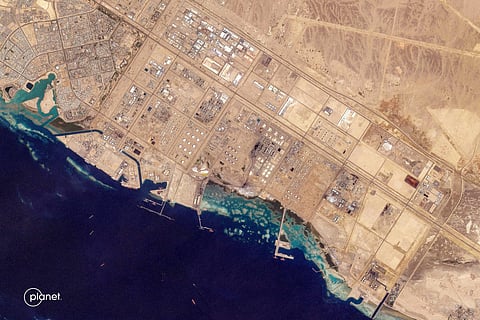
Dubai: Saudi Arabia said recent attacks linked to Iran have damaged key parts of its energy network, cutting production capacity and disrupting exports at a time when global supply is already strained.
An energy ministry official said strikes targeted “infrastructure for oil and gas production, transport and refining, as well as petrochemical plants and power facilities in Riyadh, the Eastern Province and the industrial city of Yanbu.” The attacks killed one Saudi national, injured seven others and disrupted operations at several major facilities.
The impact extends across the system, from upstream production to refining and export channels, tightening flows into global markets.
Get updated faster and for FREE: Download the Gulf News app now - simply click here.
Pipeline hit adds to supply pressure
One of the most critical blows came from a strike on a pumping station along the East-West pipeline, reducing throughput by 700,000 barrels per day.
The pipeline has become a key export route during the conflict, allowing Saudi Arabia to move crude to the Red Sea while flows through the Strait of Hormuz remain constrained. With a capacity of up to 7 million barrels per day, it has been central to maintaining exports.
Damage to this route limits the kingdom’s ability to offset disruptions elsewhere, adding to concerns over supply stability.
Production capacity takes a hit
Saudi authorities said the Manifa and Khurais fields were also affected, cutting production capacity by about 600,000 barrels per day. That loss represents close to one in every ten barrels of pre-war Saudi exports.
The kingdom, which produces just over 10 million barrels per day, has already been adjusting flows in response to the near blockage of the Strait of Hormuz. The latest disruptions deepen the strain on output and logistics.
Refineries in Jubail, Ras Tanura, Yanbu and Riyadh were also targeted, with a direct impact on refined product exports to global markets, alongside damage to gas processing facilities.
Markets react to mixed signals
Oil prices have surged more than 30% since the conflict began and are trading near $96 to $98 a barrel, reflecting both supply concerns and shifting expectations around the ceasefire.
Daniela Hathorn, senior market analyst at Capital.com, said the latest developments point to continued uncertainty. “The latest developments in the regional tensions point to a fragile and highly uncertain ceasefire that is already being tested.”
Price action reflects that tension between relief and risk. “Oil initially fell sharply on the ceasefire announcement as traders priced out worst-case supply disruption but has since rebounded as doubts over the agreement’s longevity have grown,” she said.
Markets remain cautious even as diplomatic efforts continue. “Equities have struggled to build on initial gains, while the US dollar and yields remain supported, signalling that markets are still embedding a geopolitical risk premium despite the apparent de-escalation.”
Meanwhile, the final reading of Q4 GDP was revised lower once again, and while still reflecting resilience, it shows that the US economy had been softening even before the regional instability began and the impact of the energy shock has been factored in.Daniela Hathorn, Senior market analyst at Capital.com
Supply shock feeds inflation concerns
The disruption is feeding into a broader inflation picture, with energy costs adding upward pressure at a time when price growth was already firm.
Hathorn said recent data showed inflation risks were building even before the conflict intensified. “Combined with upward pressure from energy prices, this confirms that inflation risks are now skewed to the upside.”
Growth signals are also showing signs of strain, with revised GDP data pointing to a softer trajectory heading into the conflict. The combination of rising costs and slowing momentum adds complexity to the global outlook.
What it means for consumers
The impact of reduced Saudi output and constrained transport routes is likely to flow through to fuel prices and everyday costs in the coming weeks.
Wholesale markets tend to react quickly, while retail prices adjust more gradually as supply chains, inventories and transport costs recalibrate. The scale of infrastructure damage and the pace of repairs will determine how long these pressures persist, keeping energy costs closely tied to developments in the region.