4 ASEAN countries agree to regional oil stockpiling: Philippine Trade Secretary Roque
Philippines, Singapore, Indonesia and Malaysia among countries backing initiative
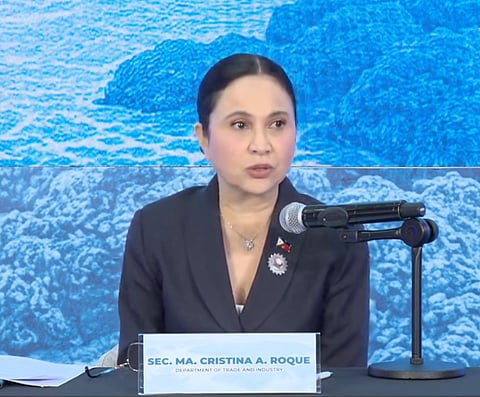
MANILA — Four countries in Southeast Asia have agreed to participate in a proposed regional oil stockpiling initiative aimed at reducing the impact of global supply disruptions, Philippine Trade Secretary Cristina Roque said on Monday, November 17, 2026.
Roque said Singapore, Indonesia, Malaysia and the Philippines had agreed to maintain oil inventories under the proposed arrangement, while the United Arab Emirates (UAE), a member of the Gulf Cooperation Council (GCC), had also expressed interest in participating.
The initiative, championed by President Ferdinand Marcos Jr. during the Philippines' 2026 chairmanship of the Association of Southeast Asian Nations (ASEAN), is intended to give participating countries access to oil supplies stored within the region rather than relying exclusively on purchases from more distant markets.


"This will make it easier also in case a country needs oil rather than buying oil from countries that are far," Roque told reporters during an interview following the 28th ASEAN Economic Community Council meeting in Manila.
The arrangement could also reduce transportation and logistics costs while helping governments respond more quickly to supply shortages and disruptions.
Study
No details on how and when the proposed mechanism would be operational were given.
Roque said the Economic Research Institute for ASEAN and East Asia (ERIA), which conducted a study on the proposed arrangement, would submit its findings and recommendations to Marcos and ASEAN member states.
Asked whether the Philippines could immediately access oil stored in Indonesia, Roque said this was not yet possible.
"Not yet. We still have to present the studies of ERIA to the ASEAN member states," she said.
The four ASEAN countries identified by Roque were Singapore, Indonesia, Malaysia, and the Philippines, plus the UAE.
The UAE is not an ASEAN member but an external partner interested in participating in the proposed storage arrangement.
Regional energy security
The proposal comes as Southeast Asian economies seek to reduce their vulnerability to disruptions in international oil supplies, particularly amid instability in the Middle East and the risks facing global shipping routes.
Many ASEAN economies depend heavily on imported crude oil and petroleum products.
The Philippines, in particular, imports about 99% of its crude oil, according to ERIA.
On November 14, ERIA and the Indonesian Business Council announced letters of intent with energy companies to explore emergency oil access for the Philippines through existing storage facilities in Indonesia and Thailand.
The proposed pilot arrangements are intended to translate regional energy-security discussions into practical cooperation.
ERIA's study also examined different approaches to joint stockpiling, including national reserves, shared inventories and arrangements that would give participating countries the right to purchase specified quantities of fuel held in another country's storage facilities.
A separate report by Nikkei, stated that ASEAN could launch a joint petroleum-products stockpiling scheme as early as 2027, with storage facilities planned in Indonesia and Thailand.
The proposed system could initially allow the Philippines to purchase diesel and gasoline during emergencies through a so-called ticketing arrangement, under which buyers pay for the right to access specified quantities of fuel held by storage operators.
Storage hub
The Philippines has also been exploring the possibility of becoming a regional oil storage hub, allowing other countries to maintain petroleum inventories in facilities located in the country.
The ERIA study and proposed pilot arrangements will be important steps towards determining how much oil participating countries should store, where inventories should be located, how access would work and how costs would be shared.
ASEAN power grid
Roque said the initiative could begin with willing participants rather than requiring all ASEAN members to join immediately.
The Philippines also welcomed the signing of a memorandum of understanding on the ASEAN Power Grid, which seeks to connect regional electricity networks and improve cross-border energy access.
Together, the initiatives form part of Manila's broader effort to strengthen ASEAN's energy security, improve supply-chain resilience and protect businesses and consumers against future global disruptions.
While the countries have expressed support for the initiative, but the regional mechanism still requires further consideration and approval before participating governments can draw on shared reserves.


