How GCC central banks are helping the sector weather crisis with liquidity, policy relief
Liquidity support and rule easing help GCC banks manage war-driven risks
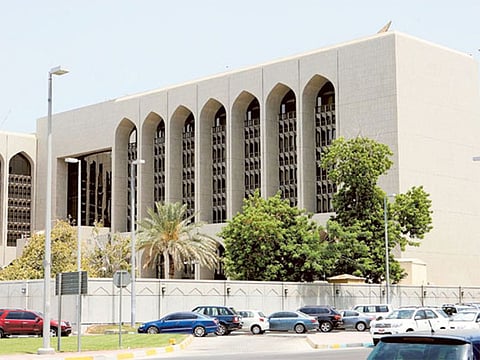
Dubai: Gulf central banks have rolled out targeted support measures to help banks navigate ongoing geopolitical turbulence, S&P Global Ratings said in a report.
Authorities in the UAE, Kuwait and Qatar introduced packages focused on liquidity, capital and asset quality, aimed at ensuring banks can continue operating smoothly despite disruptions linked to the war.
S&P noted that while uncertainty remains high around the duration and impact of the conflict, these early interventions are designed to reduce stress on banking systems and maintain financial stability.
Get updated faster and for FREE: Download the Gulf News app now - simply click here.
Liquidity boost
A key focus has been on improving access to liquidity. Central banks have allowed banks to tap into reserve balances and introduced additional funding facilities.
In the UAE, banks can access up to 30 per cent of their cash reserve requirements and benefit from liquidity facilities in both dirhams and US dollars. In addition, banks were provided with temporary liquidity and funding relief by lowering regulatory LCR and NSFR.
Kuwait and Qatar have also lowered liquidity ratios and expanded repo facilities, giving banks more room to manage short-term funding needs.
These steps are meant to ensure banks can meet obligations and continue lending even if funding conditions tighten.
Capital relief
Regulators have also moved to ease capital requirements.
Measures include releasing capital buffers and lowering minimum capital adequacy thresholds. This allows banks to free up capital that would otherwise be held as a cushion, enabling them to support lending and absorb potential shocks.
Such flexibility is particularly important during periods of uncertainty, when banks may face higher credit risks or slower economic activity.
Loan flexibility
To address potential stress among borrowers, central banks have allowed banks to offer relief to affected customers.
This includes deferring loan repayments and delaying the classification of loans as stressed. In Qatar, for example, borrowers impacted by the conflict can defer principal and interest payments for up to three months.
These measures help businesses and individuals manage short-term cash-flow pressures while also preventing a sudden rise in non-performing loans.
Stable funding
Despite the volatile environment, GCC banks have so far not experienced significant deposit outflows, either locally or from overseas.
However, S&P warned that if the conflict drags on, funding pressures could emerge. The current support measures act as a buffer, ensuring banks have access to sufficient liquidity if conditions worsen.
The report also noted that some “flight-to-quality” movements may have occurred within banking systems, although not at levels that threaten stability.
Growth impact
The ongoing situation is expected to weigh on bank performance in the near term.
S&P forecasts slower lending growth and a rise in the cost of risk, as borrowers face pressure from economic disruption. This could impact profitability across the sector.
However, the impact may be partly offset by interest rate trends. The report now expects a smaller rate cut by the US Federal Reserve in 2026 than previously forecast, which could support margins for GCC banks.
Strong buffers
Importantly, GCC banks are entering this period from a position of strength.
The region’s top 45 banks had an average Tier 1 capital ratio of 17.1 per cent at the end of 2025, alongside relatively low non-performing loans of 2.5 per cent and strong provisioning coverage of nearly 159 per cent.
This provides a solid cushion to absorb potential shocks and maintain stability during periods of stress.
Government backing
S&P highlighted that governments across the GCC have significant capacity to support their banking systems if needed.
The UAE, Kuwait and Qatar are all viewed as highly supportive, backed by large sovereign asset buffers. Government liquid assets are estimated at around 211 per cent of GDP in the UAE, 181 per cent in Qatar and as high as 517 per cent in Kuwait.
This financial strength enables authorities to step in quickly to stabilise the system during periods of volatility.
The report read, "The strong net asset position of these governments will provide significant scope to counter volatility, support economic fundamentals, and aid recovery during a period of heightened geopolitical uncertainty with weaker growth and fiscal revenue."
System resilience
The combination of central bank measures, strong capital buffers and government backing is expected to help GCC banks remain resilient.
The relief measures also provide “breathing space” for both banks and borrowers, allowing time to assess the full impact of the crisis, particularly on asset quality, which may become clearer over the coming quarters.
Banks are also expected to disclose the extent of loans benefiting from relief measures, improving transparency around the sector’s exposure.
For now, S&P has maintained stable outlooks on most GCC banks, reflecting confidence in their ability to withstand current pressures. The exception is Sharjah Islamic Bank, where the outlook remains negative due to capital pressures that existed prior to the conflict.


