UAE tightens AML rules, banks face stricter checks
New guidance sharpens checks on clients, trade flows and cross-border banking risks
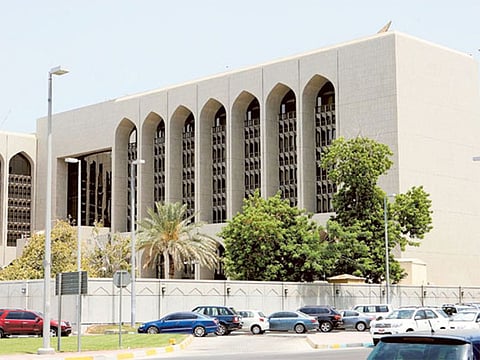
Dubai: The Central Bank of the UAE has rolled out a fresh set of anti-money laundering and counter-terror financing guidelines, tightening expectations for banks and money transfer operators.
The update sets out clearer supervisory expectations across customer verification, trade finance monitoring and correspondent banking, with a stronger focus on identifying risks linked to proliferation financing and cross-border transactions.
Get updated faster and for FREE: Download the Gulf News app now - simply click here.
The move places licensed financial institutions and registered hawala providers under closer oversight, pushing them to strengthen internal systems that flag suspicious activity earlier and respond with greater consistency.
Sharper focus on financial crime risks
At the centre of the update is a more structured approach to risk identification, with institutions expected to assess exposure to proliferation financing, evaluate gaps in their control frameworks and continuously track emerging patterns in illicit activity.
Trade-based money laundering and transshipment risks also come into sharper focus, with banks required to build deeper visibility into trade flows and strengthen monitoring of complex cross-border transactions that could be used to disguise illicit funds.
Correspondent banking relationships, often seen as higher risk due to their cross-jurisdictional nature, are another area of attention, with clearer expectations around due diligence and ongoing monitoring of partner institutions.
At the CBUAE, we aim through these guidelines to raise awareness within the financial sector and enable Licensed Financial Institutions and Registered Hawala Providers (RHPs) to monitor emerging risks and prevent them effectively, efficiently, and responsibly. We are moving forward in developing a robust national framework to combat financial crimes, establishing a resilient financial system, and actively contributing to safeguarding the stability of the global financial system.Khaled Mohamed Balama, Governor of the CBUAE
Stricter customer checks and data requirements
Customer due diligence rules have been tightened, with institutions required to take a more detailed approach to verifying identities, assessing risk profiles and maintaining records throughout the lifecycle of a client relationship.
The guidance clarifies how simplified and enhanced due diligence should be applied, alongside stricter expectations on the type of documentation that must be collected and retained.
This pushes compliance teams to move beyond onboarding checks and maintain continuous oversight, particularly for higher-risk clients and transactions.
Risk-based approach and workforce readiness
Alongside regulatory guidance, the central bank has issued best practice manuals that push institutions to adopt a risk-based approach across their operations.
Banks and exchange houses are expected to develop structured methodologies to assess institutional risks and align their controls with the scale and nature of those risks, while also strengthening internal training programmes.
The emphasis on role-based training reflects a wider effort to ensure that employees across levels, including senior management, are equipped to identify suspicious patterns and act on them.
Strengthening global positioning
The update aligns with the UAE’s national strategy for 2024 to 2027 and international standards set by the Financial Action Task Force, reinforcing efforts to keep the country’s financial system aligned with global expectations.
Khaled Mohamed Balama, Governor of the Central Bank, stated that the new package is designed to strengthen the country’s standing in combating financial crime and reinforce its reputation as a secure financial hub.
“The issuance of this new regulatory guidance package reflects the CBUAE’s commitment to solidifying the UAE’s leadership in Anti-Money Laundering and Combating the Financing of Terrorism and Proliferation Financing, in line with the highest international standards, and enhancing its position as a secure and trusted global financial hub,” he stated.
He added that the guidance is intended to help institutions monitor emerging risks and prevent them effectively while contributing to a stronger national framework that supports financial stability.