Travel demand, soaring jet fuel costs could keep airfares high for months
Strong demand, fuel spike and fewer flights push ticket prices sharply higher
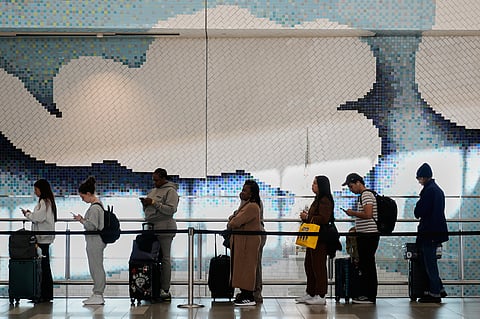
Dubai: Travel demand, high jet fuel costs and limited flight capacity are pushing airfares sharply higher — and prices may stay elevated for months, aviation experts say.
Passengers flying out of the UAE are already feeling the impact, with last-minute ticket prices surging far beyond pre-war levels.
Outbound fares from Dubai have jumped steeply compared to levels seen just two months ago.
A return ticket from Dubai to Mumbai for travel this week is priced at Dh4,230, compared to Dh730 less than 60 days ago.
Flights to London have climbed to Dh4,380 from Dh1,209 two months ago, while routes to Barcelona (Dh6,380), Lisbon (Dh3,667), San Francisco (Dh7,140) and New York (Dh7,770) have also surged.
Get updated faster and for FREE: Download the Gulf News app now - simply click here.
Exorbitant fares
Even bookings for a week later remain costly, with Dubai–Mumbai fares at around Dh1,560 and Dubai–London at Dh3,400.
Other routes continue to show elevated prices, including Dubai–Barcelona at Dh6,380, Dubai–Lisbon at Dh3,667, Dubai–San Francisco at Dh7,140 and Dubai–New York at Dh7,770.
For those planning travel between April 18 and 25, fares are slightly lower than last-minute bookings but remain far from affordable. Dubai–Mumbai tickets are priced at Dh1,560, Dubai–Delhi at Dh2,731, and Dubai–London at Dh3,400. Flights from Dubai to Barcelona are also high at Dh5,940.
Flights from Abu Dhabi are similarly expensive across key routes. Fares to New Delhi are around Dh2,460, while Abu Dhabi–Mumbai tickets cost about Dh1,600. Long-haul travel remains particularly pricey, with Abu Dhabi–London at Dh4,750, Abu Dhabi–Barcelona at Dh5,570 and Abu Dhabi–New York at Dh5,740.
Demand spike
Travel demand remains strong, particularly from the UAE.
Summer travel planning has already begun, with high demand for Europe as Schengen visa slots open. At the same time, subcontinent routes are full due to school holidays and steady diaspora travel.
TP Sudheesh, General Manager at Deira Travels, told Gulf News, “Since the announcement of the two-week ceasefire, some hope and confidence have returned to the industry. International airlines are actively evaluating the situation to resume operations.”
He added, “Some travellers have also begun preparing for the upcoming summer break. Schengen visa slots have opened, and they are looking to book appointments and ready their applications.”
Today, Emirates announced it is now operating flights to 100+ destinations.
Fuel shock
A key driver of rising fares is the sharp increase in jet fuel prices.
Fuel costs have jumped from around $830 per tonne before the war to over $1,800 in early April, significantly increasing airline operating expenses.
“It’s absolutely colossal,” said Pascal de Izaguirre, president of the French aviation federation, told business daily La Tribune on Tuesday.
Fuel, which typically accounts for up to 30 per cent of airline costs, now makes up as much as 45 per cent, forcing airlines to raise ticket prices.
European jet fuel prices have gone up to around 100 per cent from pre-war levels, according to S&P Global Platts. The global average rose 7.1 per cent last week to $209 per barrel, although oil prices fell more than 10 per cent after US President Donald Trump announced a ceasefire between the US and Iran on April 8.
While the truce raised hopes of easing costs, refinery constraints and supply bottlenecks are expected to keep prices high in the near term.
The Gulf, which supplies roughly half of Europe’s jet fuel via the Strait of Hormuz, remains critical to the market. Ongoing disruptions in the region have pushed up airline costs, leading to operational challenges and concerns over summer flight schedules.
Capacity cuts
Airlines are also cutting flights due to both cost pressures and fuel supply risks.
IATA Director General Willie Walsh said, “There’s no way airlines can absorb it,” adding that carriers are increasing fares and adjusting routes.
Limited flight frequencies, especially across the Middle East, are further tightening supply and pushing prices higher. UAE carriers, including Emirates, Etihad, flydubai and Air Arabia are operating reduced schedules through special air corridors.
Flights are available, but capacity remains well below pre-conflict levels, adding to fare pressure.
Analysts say high fares are unlikely to ease soon.
“This is a combination of jet fuel prices rising owing to supply issues and the longer, re-routed flights to safe corridors means that airlines have no choice but to increase fares,” said Saj Ahmad of Strategic Aero Research.
He added that even if the conflict ends, elevated costs and supply constraints could persist.
Outlook ahead
Despite a recent ceasefire easing oil prices slightly, jet fuel costs remain high due to refinery constraints and supply disruptions.
Experts warn that prices are likely to stay “historically elevated for months, not weeks”, meaning travellers should expect expensive tickets well into the summer season.


