Emirates-flown K9 unit begins anti-poaching operations in Zimbabwe
Vega and Kuda have completed 185 hours of training and more than 60 tracking exercises
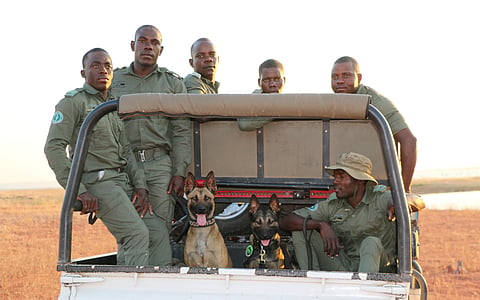
Dubai: Two specialist conservation dogs flown from London to Zimbabwe by Emirates SkyCargo have begun frontline preparations to help track illegal poaching activity at Matusadona National Park.
Vega and Kuda, both Belgian Malinois, were transported to Harare via Dubai in partnership with UK charity Dogs 4 Wildlife and have since acclimatised to their new operating environment.
The pair form part of the park’s first specialist conservation K9 team and are now undergoing advanced integration training alongside local rangers.
More than 185 hours of training
Within just over a month of arriving in Zimbabwe, Vega and Kuda have completed more than 185 hours of practical training with six specialist K9 handlers.
The dogs have also carried out more than 60 human-scent tracking exercises, demonstrating their ability to identify and follow trails linked to suspected illegal poaching activity.
The first stage of the programme has also introduced welfare and Standard Operating Protocols for the dogs, creating an operating framework for the K9 unit.
Frontline conservation role
The K9 unit is expected to work alongside rangers at Matusadona National Park, using scent tracking capabilities to support efforts against illegal wildlife activity.
Emirates SkyCargo maintains a total ban on the transportation of hunting trophies and has trained frontline teams across its global network to identify, report and respond to potential wildlife trafficking risks.
Emirates is also a founding signatory of the Buckingham Palace Declaration and works with United for Wildlife on efforts aimed at combating illegal wildlife trafficking.
Dubai workshop targets wildlife trafficking
The airline has also stepped up training and coordination in Dubai, recently bringing together government agencies and aviation stakeholders for a workshop focused on illegal wildlife trade.
Participants included representatives from the Emirates Group, the Ministry of Climate Change and Environment, Dubai Customs, Dubai Police, Dubai Airports, Al Ain Municipality and the International Fund for Animal Welfare.
The workshop used real-world cases and scenario-based discussions to examine early detection, escalation procedures, cross-agency coordination, animal welfare and biosecurity.