Abu Dhabi advances as global maritime hub, enters top 15
Emirate records progress across all five pillars assessed in the biennial global report
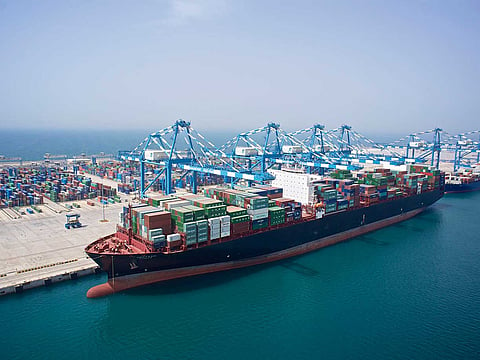
Abu Dhabi has strengthened its position on the global maritime map after entering the world's top 15 maritime cities for the first time, according to the 2026 Leading Maritime Cities (LMC) report, jointly published by DNV and Menon Economics.
The achievement reflects the rapid growth of the emirate's maritime sector and its expanding role as a global hub for maritime business, trade, innovation and sustainability.
Get updated faster and for FREE: Download the Gulf News app now - simply click here.
The latest ranking builds on Abu Dhabi's performance in the 2024 edition, when it was placed 22nd among the world's top 25 maritime cities. The progress highlights the success of the emirate's long-term vision to develop a sustainable, innovation-driven maritime ecosystem capable of competing globally, boosting trade, attracting investment and supporting economic diversification.
Integrated efforts drive maritime infrastructure development
Abu Dhabi's improved ranking reflects coordinated efforts by the entities responsible for developing the emirate's maritime sector. These include the Integrated Transport Centre (ITC), affiliated with the Department of Municipalities and Transport; Abu Dhabi Maritime, part of AD Ports Group; and the Abu Dhabi Maritime Academy, alongside partners from the public and private sectors.
These efforts have helped develop maritime infrastructure, strengthen regulatory frameworks, support innovation and accelerate the adoption of sustainable maritime solutions. Together, these initiatives have enhanced the sector's competitiveness and contributed to Abu Dhabi's progress in the 2026 Leading Maritime Cities ranking.
Mohamed Ali Al Shorafa, Chairman of the Department of Municipalities and Transport, said: “Abu Dhabi's advancement in the Leading Maritime Cities report reflects the impact of long-term planning and integrated efforts to develop a maritime sector that strengthens the emirate's connectivity with global markets, supports economic diversification and enhances quality of life.
“The Department of Municipalities and Transport continues to develop integrated transport systems that align community needs with the requirements of economic growth through investment in infrastructure, the development of regulatory frameworks and the application of innovation.”
He added: “This achievement underscores the importance of continuing along this path to consolidate Abu Dhabi's competitiveness and strengthen its position as a preferred destination for living, working and investment.”
World-class infrastructure meets international standards
Dr Abdullah Hamad Al Ghafli, Director General of the Integrated Transport Centre, said: “Abu Dhabi's entry into the world's top 15 leading maritime cities is the result of the vision of our wise leadership and the combined efforts of the entities responsible for the sector across the emirate.
“In collaboration with Abu Dhabi Maritime and our partners, we have focused on creating an enabling environment for the sector's growth and sustainability, underpinned by infrastructure that meets the highest international standards, advanced regulatory frameworks and innovative digital solutions.
“This progress provides further impetus for us to continue developing a maritime ecosystem that responds to users' needs and strengthens its readiness for the demands of the future.”
Captain Saif Al Mheiri, CEO of Abu Dhabi Maritime and Chief Sustainability and Risk Officer at AD Ports Group, said: “This achievement reflects years of sustained efforts, strategic investments and effective partnerships, and highlights Abu Dhabi's growing standing as a leading destination for maritime business, trade, innovation and specialised expertise.
“Sustainability remains a fundamental pillar of the sector's development through our initiatives aimed at reducing carbon emissions, supporting maritime innovation and promoting responsible environmental practices. We are committed to ensuring that Abu Dhabi's growth and its consolidation as a leading maritime hub go hand in hand with our efforts to build a more resilient and sustainable future.”
Five key pillars assess maritime cities
Published every two years, the Leading Maritime Cities report is one of the world's leading benchmark studies for evaluating the performance of maritime cities and hubs and comparing their competitive strengths.
The report assesses cities across five key pillars: attractiveness and competitiveness; maritime finance and law; maritime technology; ports and logistics; and shipping.
Mohamed Al Derei, Director of the Maritime Transport Department at the Integrated Transport Centre, said Abu Dhabi had secured 15th place in the global ranking, moving up seven positions from 22nd in 2024. He said the improvement reflected the development of the emirate's maritime sector and its growing global competitiveness.
He explained that this achievement builds on the progress recorded in the 2024 edition, when Abu Dhabi climbed 10 places, marking its biggest-ever improvement in the report's history.
Al Derei said the report evaluates maritime cities across five key pillars, covering maritime finance and law, attractiveness and competitiveness, shipping, ports and logistics, and maritime technology. He added that Abu Dhabi had made progress across all five pillars.
He attributed the results to cooperation among the various entities involved in the sector, as well as the efforts led by the Department of Municipalities and Transport through the Integrated Transport Centre. These efforts include developing long-term plans to advance the emirate's maritime sector, improve its competitiveness and sustainability, support innovation and diversify investment in maritime activities.
The growth of Abu Dhabi's maritime sector is underpinned by investment in infrastructure, stronger regulatory frameworks, expanded public maritime services and faster digital transformation.
The Abu Dhabi Maritime Academy also plays an important role as a platform bringing together government entities and private-sector partners to exchange expertise and explore opportunities for collaboration.
The 2026 Leading Maritime Cities report is based on data and insights collected during 2024 and 2025.


