Why is Iran stepping up tanker attacks amid peace talks? The high-risk strategy behind the Hormuz escalation
Fresh attacks on oil tankers raise questions over Tehran’s strategy amid peace efforts
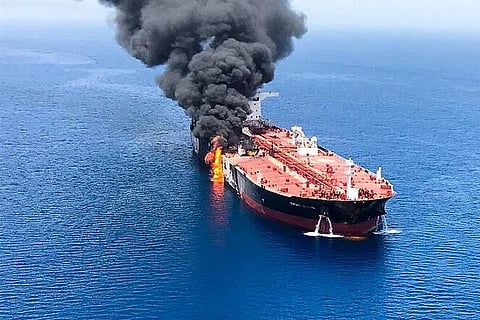
Dubai Why are oil tankers still being attacked in the Strait of Hormuz and the Arabian Gulf when diplomatic efforts to end the Iran war are gathering momentum?
Is Tehran using commercial shipping as a bargaining chip, or are the Revolutionary Guards risking a wider confrontation with the United States?
The questions have gained urgency after ADNOC Logistics & Services confirmed that one of its vessels was damaged in an attack in UAE territorial waters in the Arabian Gulf on Tuesday, November 10.
In another incident the same day, four crew members were injured when the Liberia-flagged supertanker MT Fujairah Energy was struck by a projectile while transiting the Arabian Gulf, India’s Ports, Shipping and Waterways Minister Sarbananda Sonowal said.
Six Indian seafarers were aboard the vessel. One suffered minor injuries and was taken ashore for further medical examination, the minister said in a post on X.
Meanwhile, the United Kingdom Maritime Trade Operations (UKMTO) said early Wednesday, November 11, that it had received a report of another tanker-related incident in the Strait of Hormuz, underscoring the continuing risks to commercial shipping.
Neither incident should be confused with separate Iranian claims that other tankers had struck naval mines.
The attack adds to an increasingly dangerous pattern.
According to figures cited by Reuters, 37 ships were attacked in October — the highest monthly total since the conflict began in February — while another 10 attacks had been recorded in November by Wednesday. The International Maritime Organisation has documented 130 maritime incidents across the region, most involving attacks, with at least 25 seafarers killed.
Behind the violence lies a calculated struggle over one of the world’s most important energy routes.
Is Iran using Hormuz as a weapon of economic pressure?
Evidence suggests that disrupting commercial shipping has been a deliberate element of Tehran’s strategy.
In an October 14 investigation, Reuters quoted two senior Iranian officials who said Iran had changed its tactics to intensify attacks on vessels and keep global oil prices elevated.
One official said the objective was to frustrate American efforts to reduce energy prices. The strategy was also intended to influence the November 3 US midterm elections.
The officials said the change had been coordinated at the highest levels of Iran’s leadership.
Although the elections are now over, the continued attacks suggest maritime pressure remains an important feature of the confrontation. The current objectives, however, cannot be established solely from the earlier officials’ accounts.
Hormuz attacks — key takeaways
130 maritime incidents: The International Maritime Organization has verified at least 130 attacks on commercial vessels across the region since the war began in February.
25 seafarers killed: Civilian crews have borne a deadly toll, with thousands more facing risks at sea.
37 ships attacked in October: The highest monthly total since the conflict began, according to figures cited by Reuters.
ADNOC-linked tanker hit: A Navig8-managed vessel caught fire near Oman, highlighting the risks to UAE-linked shipping.
US blockade continues: American forces are restricting access to Iranian ports as Tehran seeks to control shipping routes through Hormuz.
Oil spills threaten Gulf waters: Damaged tankers have leaked oil off Oman and the UAE, raising environmental concerns.
Diplomacy under pressure: Continued attacks threaten efforts to negotiate an end to the conflict.
Why are the Revolutionary Guards targeting shipping routes?
Iran’s Islamic Revolutionary Guard Corps (IRGC) has sought to enforce restrictions on vessels travelling through the Strait of Hormuz.
Tehran has described some shipping corridors as unauthorised, warning vessels against using routes outside its designated passages.
On Sunday, three tankers were hit for allegedly using unauthorised routes, Iranian state broadcaster IRIB reported, citing the IRGC Navy.
Reuters verified footage showing a Navig8-managed tanker burning near Oman. Navig8 is majority-owned by ADNOC Logistics & Services.
Separately, the Guards said two tankers had caught fire after striking naval mines. Those claims do not independently establish the cause of the incidents.
The restrictions also serve a broader purpose: Asserting Iranian control over shipping movements through a waterway that carried roughly one-fifth of global oil and liquefied natural gas trade before the war.
Also Read: Iran says 3 tankers caught fire in Hormuz
Is Tehran retaliating against the US naval blockade?
The maritime confrontation is unfolding on both sides.
While Iran restricts traffic through Hormuz, American forces continue enforcing a blockade of Iranian ports.
In the latest reported incident, US Central Command said an American military aircraft fired on and disabled a St Kitts-flagged cargo vessel that had visited an Iranian port and attempted to leave regional waters.
The competing restrictions have turned commercial shipping into an instrument of pressure in the wider conflict.
For Tehran, disruption to shipping offers potential leverage against Washington’s military and economic pressure. But it also threatens vessels and crews that are not parties to the conflict.
How serious are the attacks on ADNOC vessels?
The November 10 incident is not the first involving ADNOC’s shipping operations.
In an August 7 statement, ADNOC said 15 of its vessels had been attacked by missiles and drones since the conflict began, resulting in one death and 20 injuries among crew members.
The company subsequently confirmed further attacks in August, including an incident involving a missile and two vessels attacked on August 13.
Earlier, on July 14, two ADNOC-operated crude oil tankers, Al Bahyah and Mombasa B, were struck by projectiles while transiting Hormuz.
ADNOC has repeatedly called for the protection of seafarers and freedom of navigation.
The latest attack, inside UAE territorial waters, underscores how the danger extends beyond vessels navigating the narrowest part of the strait.
What is the human and environmental cost?
The toll extends far beyond damaged tankers and disrupted oil deliveries.
The International Maritime Organization’s figures of at least 25 seafarer deaths and 130 incidents illustrate the growing dangers facing civilian crews.
Attacks have also caused oil pollution.
Reuters verified footage showing oil reaching Oman’s coastline, while satellite imagery revealed spills off Oman and the UAE.
The damage threatens marine ecosystems, coastal communities and shipping operations already struggling with high insurance costs and security risks.
Why continue the attacks when diplomacy is underway?
Mediators, including Qatar, have been trying to bring Washington and Tehran towards a settlement.
But diplomatic activity has not produced an end to the maritime confrontation.
Iran may calculate that maintaining pressure on shipping strengthens its negotiating position, particularly over the US blockade and the reopening of Hormuz.
There is a significant danger in that approach.
Continued attacks could undermine confidence in negotiations, increase pressure on Washington to respond militarily and make shipping companies reluctant to return even if an agreement is reached.
Analysts at the London Stock Exchange Group (LSEG), a global financial data and analytics provider, warned that restoring shipping through Hormuz would depend on mine clearance, insurance costs and shipowners’ willingness to return.
Could the strategy backfire?
Iran’s maritime campaign creates a dilemma.
By disrupting Hormuz, Tehran can impose economic costs on its adversaries and demonstrate that it retains the capacity to threaten a vital international shipping route.
But every new tanker attack also risks widening the conflict, damaging relations with Gulf neighbours and weakening efforts to secure a negotiated settlement.
For commercial shipping, the consequences are already severe.
The central question is whether Iran’s maritime pressure will help it extract concessions at the negotiating table — or trigger another round of military escalation before diplomacy can succeed.


