What is the ‘Mother of All Bombs’ US may use in Iran?
The MOAB delivers a massive blast, but it is not designed to destroy deeply buried sites
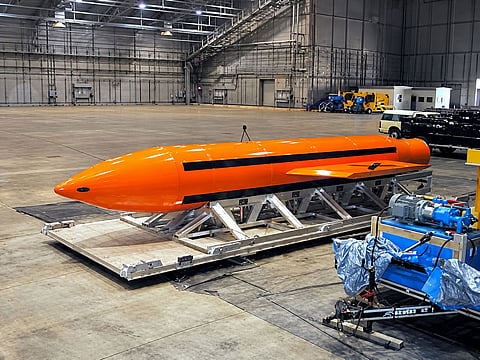
The United States is considering using a weapon known as the “Mother of All Bombs” in potential renewed strikes against Iran, according to CNN.
The report concerns military contingency plans. It does not establish that President Donald Trump has authorised an attack with the weapon. Reuters, which also carried the report, said it could not immediately verify it independently.
What has been reported?
CNN reported that US military planners have developed options that include using the GBU-43/B Massive Ordnance Air Blast bomb, or MOAB, against Iranian energy infrastructure and nuclear sites if Trump orders renewed combat operations.
The potential targets include Pickaxe Mountain, a deeply buried complex near Natanz linked to Iran’s nuclear programme. Sources familiar with the discussions questioned whether the weapon could destroy facilities protected by deep layers of rock.
The complex’s precise contents and operational status remain uncertain. It should not be confused with a confirmed operating uranium enrichment plant.
What exactly is the MOAB?
The MOAB is a large, guided conventional bomb. Its official name is Massive Ordnance Air Blast; “Mother of All Bombs” is its nickname.
According to the Air Force Armament Museum, it weighs approximately 9,800kg and carries about 8,500kg of explosive.
It is approximately nine metres long and uses satellite and inertial guidance. It is delivered from a C-130 aircraft, with a specially designed cradle separating from the weapon after it leaves the aircraft.
Why might it struggle against underground nuclear sites?
The MOAB detonates above the ground, producing a powerful blast across a wide area.
It can damage cave and tunnel systems, but it is not designed to penetrate deep layers of rock before detonating. Its use against tunnels does not give it the same capabilities as a purpose-built deep-penetration weapon.
CNN’s sources questioned its ability to destroy suspected facilities beneath Pickaxe Mountain’s granite protection. They also raised concerns about civilian casualties if the weapon were used near populated areas.
The distinction is between producing a huge explosion and delivering that explosion deep inside a protected underground structure.
Is it the same as a bunker-buster?
No. The similarly named GBU-57 Massive Ordnance Penetrator, or MOP, is a different weapon.
Air Force documentation describes the MOP as a precision-guided penetrator designed to defeat hard and deeply buried targets. It weighs approximately 13,600kg, making it heavier than the MOAB.
The two weapons serve different purposes: the MOAB produces extensive blast effects, while the MOP is designed to penetrate protected targets before exploding. Descriptions of the MOAB as America’s “biggest non-nuclear bomb” therefore need qualification: it is not the heaviest conventional bomb in the US inventory.
Has the MOAB been used before?
Yes. Its first operational use was in Afghanistan on April 13, 2017, during Trump’s first presidency. The weapon had been developed and tested in 2003, according to the Air Force Armament Museum.
What have US officials said about the latest plans?
The White House declined to discuss sensitive military planning when approached by CNN. The Pentagon said it prepares for a range of operational scenarios.
Those responses do not confirm a decision to use the MOAB. For now, its deployment remains a reported option, with questions about whether its destructive power would translate into a decisive military result.


