US Admiral sends important message to people of Iran, says Hormuz 'physically open' but risky to transit
IRGC shooting at transiting ships; US commander sends direct appeal to Iranian public
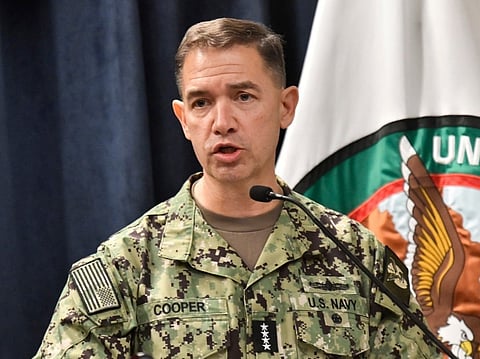
In a rare direct appeal to the Iranian public, US Central Command chief, Admiral Brad Cooper, urged civilians to remain indoors, warning that Iranian regime forces are launching attacks from populated areas and placing ordinary people at risk.
Speaking in an exclusive interview with Samira Gharaei of Iran International, an Iran opposition channel, Cooper delivered a message aimed not at Tehran’s leadership — but at its citizens.
“Stay inside for now”: US Commander Brad Cooper sends direct message to Iranians as conflict intensifies
Iran could stop this war right now, absolutely, if they chose to do so.
They need to stop putting the wonderful Iranian people at risk by firing missiles and drones from inside populated areas.
To Iranian people: "There will be a clear signal at some point, as the President has indicated, for you to be able to come out".
“They’re launching missiles and drones from populated areas and you need to stay inside for right now,” Cooper said.
“There will be a clear signal… for you to be able to come out.”
Civilians caught in the crossfire
Cooper accused Iran’s military leadership of endangering its own people, describing a campaign increasingly marked by desperation.
“In the last couple of weeks, they’ve attacked civilian targets very deliberately, more than 300 times.”
He added that the scale of attacks has diminished — from large barrages to isolated strikes — suggesting weakening operational capacity.
Hormuz chokepoint under fire
Despite remaining physically open, the vital Strait of Hormuz has effectively been shut down by persistent threats.
“The reason ships are not transiting right now is because the Islamic Republic is shooting at them with drones and missiles.”
140 vessels: Number of Iranian vessels sunk or damaged in ongoing operations to secure maritime routes
'Iran could stop this war right now'
Cooper emphasised that the conflict could end immediately if Iran’s leadership chose to halt attacks.
“They need to stop putting the wonderful Iranian people at risk… and stop immediately attacking civilians throughout the Middle East.”
At the same time, he said US-led forces are expanding their campaign beyond current threats — targeting drone and missile production as well as naval assets to degrade Iran’s long-term capabilities.
"We’re not only detecting them (launchers, missiles and drones), we’re eliminating those threats in large volumes."
Cooper laid out four military targets:
Eliminating Iran regime's ballistic missiles
Eliminating their drones
Sinking IRGC’s navy and
Eliminating the Iran regime's capacity to produce the weapons used to threaten and hit neighbours.
A stark divide: Iranian generals vs soldiers
In one of the interview’s most pointed remarks, Cooper drew a contrast between Iran’s leadership and its rank-and-file forces.
Senior generals, he said, remain “in deep bunkers… protected,” while “soldiers… are unprotected” on the ground.
Expanding air defence shield
Cooper also highlighted what he described as the largest integrated air defence network in Middle East history, with the US and allies intercepting incoming drones and missiles aimed across the region.
War timeline still uncertain
While Cooper said operations are “ahead or on plan,” he made clear that the decision to end the conflict ultimately rests with Donald Trump.
For now, his message to ordinary Iranians remains urgent and direct: stay sheltered, remain cautious — and wait for a signal that it is safe to emerge.


