Tougher post-MoU talks between US and Iran now taking place behind closed doors: Vance
Unwritten ‘gentleman’s agreements’ raise doubts over Iran nuclear commitments
Even as Washington hailed the 14-point memorandum of understanding (MOU) with Tehran, much of the real negotiation is now taking place behind closed doors.
According to CNN, the United States and Iran are quietly working on a series of confidential proposals that would spell out how the agreement will actually be implemented.
Get updated faster and for FREE: Download the Gulf News app now - simply click here.
The discussions include sensitive details on the future of Iran's nuclear programme, CNN quoted US officials "familiar with the talks". The proposals are intended to transform the broad commitments outlined in the MOU into concrete steps, including verification measures and implementation timelines.
However, officials cautioned that the follow-up documents remain preliminary and have not yet been finalised.
'Gentleman's agrements'
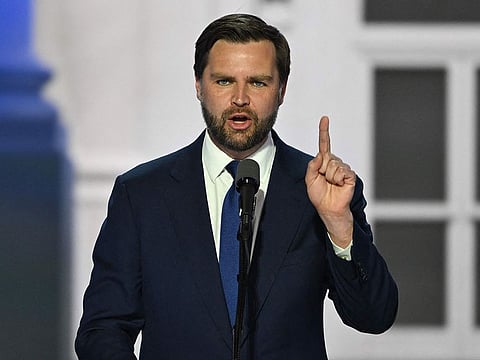
Speaking to CNN late on Thursday, Vice President JD Vance acknowledged that at least some of the additional understandings — described by administration officials as "gentleman's agreements" that go beyond the signed memorandum — have been put into writing.
Still, the arrangements remain politically fragile.
Iran has not signed any of the supplementary documents, unlike the original 14-point memorandum, raising fresh questions over whether the White House has overstated the commitments it secured from Tehran.
The uncertainty also underscores how easily the negotiations could unravel before a comprehensive agreement is reached.
We don't trust words, we trust action: Vance
"Some of them are written down, but fundamentally, whether they're written down or spoken, this is why we structured the deal that we did, because we don't trust words, we trust action, and we trust conduct," Vance told CNN. "We're going to reward conduct, and we're not going to reward any words, whether they're written on a sheet of paper or not."
The latest developments illustrate the difficult path ahead.
While the MOU established a framework for easing tensions after months of conflict, the most contentious issues — including limits on Iran's nuclear activities, verification mechanisms, sanctions relief, and enforcement procedures — still require detailed negotiations before a final agreement can be secured.
Until those details are formally accepted by both sides, diplomats caution that the accord remains a work in progress, with significant political and security risks still looming.
What Ghalibaf said about Iran's highly enriched uranium stockpile
Iranian negotiator Mohammad Bagher Ghalibaf has defended the US-Iran memorandum of understanding (MoU) by insisting that Iran would "not surrender" its peaceful nuclear program, even while accepting measures to reduce proliferation concerns.
Ghalibaf emphasised that Iran will dilute — not surrender — its stockpile of highly enriched uranium.
He said the agreement requires the down-blending of highly enriched uranium into lower-enriched material suitable for peaceful civilian purposes, rather than shipping it abroad or destroying it outright.
He stressed that Iran's nuclear program will continue, adding that the country's nuclear activities, including uranium enrichment for civilian purposes, would remain intact and that Iran's scientific and technological achievements would not be dismantled.
Ghalibaf also argued that Iran has not given up its sovereign rights and that the MoU preserves Iran's right to a peaceful nuclear program under international law while addressing international concerns over weapons-grade material.


