Inside Iran’s mistrust dilemma: Is Tehran managing risk by engaging the US?
Sanctions pressure, nuclear talks and a widening crackdown shape Tehran’s calculus
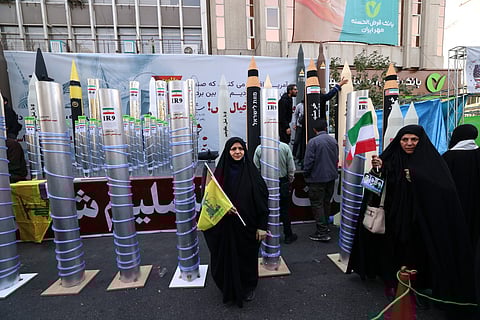
Dubai: Iran’s renewed warnings of “deep distrust” toward Washington underline the central paradox shaping the latest round of nuclear diplomacy: Tehran is talking not because it trusts the United States, but because pressure, sanctions and internal strain leave it little room not to.
The approach mirrors past rounds of engagement driven by pressure rather than confidence, as Tehran seeks to manage risk, buy time and extract economic relief even while hardening its posture at home.
That contradiction was on full display on Monday when Iran’s foreign minister Abbas Araghchi said mistrust of the United States remained deep despite the resumption of talks over Tehran’s disputed nuclear programme.
“We are looking for serious negotiations to achieve a result, provided the other side shows the same seriousness,” Araghchi told ambassadors at a diplomatic gathering in Tehran.
“Unfortunately, a deep mistrust persists due to the behaviour of the United States in recent years.”
Talks resume, mistrust remains
The remarks came days after Iranian and US officials resumed dialogue in Oman, the first such engagement since last year’s 12-day Iran–Israel war, which briefly drew in US military forces.
Both sides described the initial talks as constructive, but sharp differences remain. Iran has signalled it may consider limited confidence-building measures related to its nuclear programme in exchange for sanctions relief, while insisting it will not relinquish its right to uranium enrichment.
What Iran is offering on uranium
Conditional offer: Iran says it is ready to dilute 60% enriched uranium if all sanctions are lifted
Who said it: Mohammad Eslami, head of Iran’s Atomic Energy Organisation
What dilution means: Mixing enriched uranium with other material to lower enrichment levels
Current level: Iran had been enriching uranium to 60%, far above the 3.67% cap set by the 2015 nuclear deal
Why it matters: According to the UN nuclear watchdog, Iran is the only non-nuclear-weapon state enriching uranium to this level
Unanswered question: The location of over 400 kg of highly enriched uranium held before last year’s war remains unclear
US position: Washington wants a total ban on enrichment, which Tehran rejects
Iran’s stance: Says it has a right to a civilian nuclear programme under the Nuclear Non-Proliferation Treaty
Washington, backed by Israel, has sought to broaden the agenda to include Iran’s ballistic missile programme and its support for regional militant groups — conditions Tehran has repeatedly rejected.
As diplomacy tentatively resumes, Ali Larijani, secretary of Iran’s top security body, said he would visit Oman on Tuesday to meet senior officials and discuss regional and international developments, as well as bilateral cooperation.
Crackdown deepens at home
Even as Iran engages abroad, its posture at home has hardened. On Monday, Iranian authorities arrested Javad Emam, a prominent reformist and spokesperson for the Reformist Front coalition, local media reported.
His detention followed the arrests of several activists and cultural figures accused of criticising the state after mass protests that erupted late last year — among the most serious challenges to the Islamic republic since its founding.
While Iranian authorities have acknowledged more than 3,000 deaths, rights groups say the toll is far higher. The US-based Human Rights Activists News Agency estimates nearly 7,000 people were killed, mostly protesters, and says more than 51,000 arrests have been recorded.
The crackdown has drawn international condemnation but has not featured prominently in the renewed nuclear talks.
Nobel laureate handed fresh prison term
The repression was further underscored over the weekend when Iran sentenced Narges Mohammadi, a Nobel Peace Prize laureate and prominent human rights activist, to more than seven additional years in prison, her supporters said.
According to her lawyer Mostafa Nili, the sentence was issued on Saturday by a Revolutionary Court in Mashhad. Mohammadi was sentenced to six years for “gathering and collusion,” one and a half years for propaganda, along with a two-year travel ban and two years of internal exile to the city of Khosf.
Her supporters said the sentence came after she began a hunger strike, highlighting what critics describe as the judiciary’s role in silencing dissent.
Pressure on Trump from inside Iran
US President Donald Trump has said he believes Iran is open to a deal. But hundreds of messages sent to the Iran International news outlet from inside Iran have urged him to abandon diplomacy, warning that talks would legitimise repression.
Several messages said negotiations would demoralise protesters and give authorities breathing space to tighten control. Others appealed directly to Trump to “stand with the Iranian people, not the Islamic Republic.”
Defiance from the top
Iran’s leadership, however, has doubled down on defiance. On Monday, supreme leader Ali Khamenei urged Iranians to show “resolve” against foreign pressure ahead of the anniversary of the 1979 Islamic revolution.
“National power is less about missiles and aircraft and more about the will and steadfastness of the people,” Khamenei said, calling on the nation to frustrate what he described as the enemy’s designs.
Diplomacy without confidence
For Tehran, the strategy appears two-tracked: Engage diplomatically to ease economic pressure, while suppressing dissent to prevent instability at home.


