'Targeted blockade' on shipping in Hormuz Strait only covers Iran: Rubio
Washington frames blockade as pressure on Iran’s toll system, not commerce
Marco Rubio, US Secretary of State, has defended maritime interdiction measures by saying the action is not aimed at global commerce but specifically at vessels linked to Iran.
In an interview with Fox, Rubio accused of exploiting its geographic position to control and profit from traffic through the Strait of Hormuz.


“The blockade is not a blockade against shipping,” the official said. “It’s a blockade against Iranian shipping — because they cannot be the sole beneficiaries of an illegal, unlawful, and unjustified system of tolling and control in the straits.”
He added that a regime change has to happen "from within Iran".
His latest remarks come amid heightened tensions in the Gulf after reports of naval enforcement operations targeting Iran-flagged or Iran-bound vessels transiting one of the world’s most critical oil chokepoints.
US and allied officials have increasingly accused Tehran of using its proximity to the strait to exert pressure on global commercial shipping, either through seizures, harassment, or threats of closure during periods of political friction.
Iran argues for 'sovereign right' to regulate Hormuz traffic
Iran, for its part, has argued that it has the sovereign right to regulate traffic near its territorial waters and has framed Western naval patrols as provocative.
The latest comments signal that enforcement actions are being framed not as a general maritime shutdown but as a targeted effort to prevent what officials describe as coercive leverage over a global trade artery.
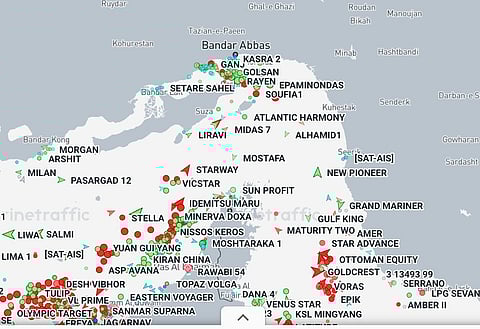
Roughly a fifth of global petroleum supply passes through the narrow waterway each day, making any disruption or attempt at control a matter of international concern.


