Iran threatens immediate strikes on US bases and carriers in event of attack
UN urges talks as threats, sanctions and fears of war grip the region
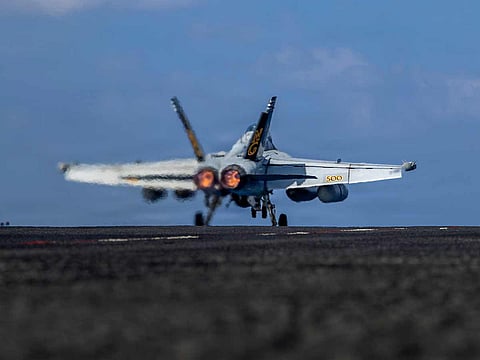
Iran has warned it would strike US military bases and aircraft carriers without delay if it comes under attack, sharply raising tensions with Washington and Europe. The warning came after US President Donald Trump said “time is running out” for Tehran, and the European Union designated Iran’s Revolutionary Guards as a terrorist group.
An Iranian military spokesman said any future response would be far stronger than past actions. Brigadier General Mohammad Akraminia told state television that US aircraft carriers had “serious vulnerabilities” and that American bases across the Gulf were within range of Iran’s missiles.
“If the Americans make such a mistake, it will not go the way Trump imagines,” he said. “This would not be a short operation followed by a victory tweet. Our response would be decisive and immediate.”
Fears of regional chaos
A Gulf official, speaking anonymously, said fears of a US strike were widespread. “It would bring chaos to the region,” the official said, warning of severe economic fallout. Oil and gas prices would surge, affecting not only the Middle East but also the United States, the official added.
Against the rising rhetoric, UN Secretary-General Antonio Guterres urged renewed nuclear talks to prevent “a crisis with devastating consequences for the region”.
EU blacklists Revolutionary Guards
The European Union stepped up pressure by formally listing Iran’s Islamic Revolutionary Guard Corps (IRGC) as a terrorist organisation. EU Commission President Ursula von der Leyen described the move as overdue, accusing Iranian authorities of crushing recent protests “in blood”.
Iran reacted angrily, calling the decision “illogical and irresponsible” and accusing the EU of acting under pressure from the US and Israel. Tehran has blamed both countries for unrest at home, claiming foreign-backed groups turned peaceful protests into violent unrest.
Human rights groups say security forces, including the IRGC, played a central role in suppressing demonstrations sparked by economic hardship.
Voices from Tehran
On the streets of Tehran, many residents spoke of exhaustion and uncertainty. A 29-year-old waitress told AFP that she feared war was becoming unavoidable. “I don’t want war,” she said. “I just want something to change for the better.”
Another woman, also 29 and unemployed, said living conditions had reached a breaking point. “This is the lowest point of my life,” she said. “The economy is bad and people have lost hope.”
Trump shifts focus to nuclear programme
President Trump initially warned Iran over the deaths of protesters but has since shifted his focus to Tehran’s nuclear programme, which Western powers believe is aimed at developing atomic weapons. On Wednesday, he said US forces in the region were “ready, willing and able” to act.
A US naval strike group entered Middle East waters earlier this week, a move seen by Iran as a direct threat.
Disputed death toll
Rights group HRANA says at least 6,479 people were killed during the protests, though verification has been slowed by internet restrictions. Other groups believe the real number could be far higher.
Iranian authorities acknowledge more than 3,000 deaths but say many were security personnel or civilians killed by “rioters”.
In Tehran, large billboards now line the streets, including one depicting a US aircraft carrier being destroyed — a stark image reflecting how close the crisis appears to be.
— With inputs from AFP


