Iran pardons 2,000 but excludes protest cases amid US talks
Clemency offered ahead of revolution anniversary as Tehran keeps hard line on unrest
Dubai: Iran’s supreme leader Ayatollah Ali Khamenei on Tuesday granted pardons or reduced sentences to more than 2,000 convicts, while explicitly excluding anyone linked to recent anti-government protests, as Tehran simultaneously stepped up diplomatic engagement with Washington through talks mediated by Oman.
The judiciary said Khamenei approved the pardon or commutation of sentences for 2,108 people ahead of the anniversary of Iran’s 1979 Islamic Revolution — a period that traditionally sees such acts of clemency. However, the list did not include “defendants and convicts from the recent riots,” judiciary deputy chief Ali Mozaffari said, underlining Tehran’s hard line toward protest-related cases.
The decision comes after weeks of unrest triggered by rising living costs, which escalated into nationwide anti-government demonstrations late last year. Iranian authorities have acknowledged that more than 3,000 people were killed during the violence, including security personnel and civilians, blaming what they called “terrorist acts” and foreign interference.
Rights groups dispute the official toll. The US-based Human Rights Activists News Agency (HRANA) says it has verified 6,964 deaths, mostly protesters.
Diplomacy moves in parallel
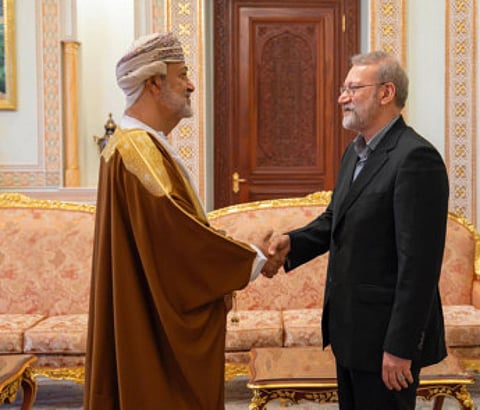
Even as the crackdown continues at home, Tehran is pushing diplomacy abroad. Iran’s top security official Ali Larijani, head of the Supreme National Security Council, met Sultan Haitham bin Tariq in Muscat on Tuesday, days after Oman hosted indirect talks between Iranian and US officials.
Also Read: Iran–US talks in Oman: What we know so far
According to Oman’s state news agency, the two discussed “the latest developments in the Iranian-American negotiations” and explored ways to reach a “balanced and just agreement,” stressing the need to return to dialogue. Larijani also met Omani Foreign Minister Badr Albusaidi, who mediated Friday’s talks, and is expected to travel onward to Qatar.
Iranian officials said Larijani was likely carrying Tehran’s response to the initial Muscat discussions. Iranian media reported he was delivering an “important message,” a method Iran has used in past dealings with Washington.
The talks marked the first direct diplomatic engagement between Iran and the United States since last year’s 12-day Iran–Israel war, which briefly drew in the US military after Israeli strikes on Iranian nuclear facilities and senior commanders.
Nuclear red lines, mounting pressure
Iran insists the negotiations remain focused strictly on the nuclear file in return for sanctions relief. Foreign Minister Abbas Araghchi reiterated this stance at a recent summit in Tehran, saying Iran would not abandon uranium enrichment — a key sticking point for US President Donald Trump.
“Our principles are clear,” Iranian foreign ministry spokesman Esmail Baqaei said. “Our demand is to secure the interests of the Iranian nation based on international norms and the Non-Proliferation Treaty.”
Baqaei also warned of “destructive influences” on diplomacy ahead of Israeli Prime Minister Benjamin Netanyahu’s visit to Washington this week, where Iran is expected to dominate talks.
“The Zionist regime has repeatedly shown that it opposes any diplomatic process in the region that leads to peace,” Baqaei said, accusing Israel of acting as a saboteur.
Netanyahu has said any deal must also curb Iran’s ballistic missile programme and its support for allied armed groups — demands Tehran has flatly rejected.
US military posture
Meanwhile, Washington has ramped up military pressure. The US has moved the aircraft carrier USS Abraham Lincoln and additional warships and aircraft into the region, warning Iran against escalation while keeping open the option of force. US authorities have also issued new maritime advisories urging American vessels in the Strait of Hormuz to keep their distance from Iranian waters.
Iran has warned that any military action would be met with retaliation, pointing to last year’s missile and drone attacks on Israel and a strike on a major US base in Qatar during the brief war.
Whether the talks in Muscat can yield progress remains uncertain — especially as regional tensions, domestic unrest, and Israeli opposition continue to cast long shadows over the diplomatic track.