Iran–US talks in Oman: What we know so far
Indirect negotiations resume amid military warnings and regional tension
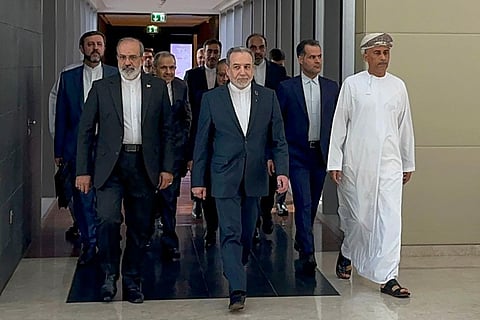
Iran and the United States held indirect talks in Oman on Friday in a renewed attempt to ease escalating tensions, following US military threats and months of stalled diplomacy after last year’s conflict between Israel and Iran.
The talks mark the first diplomatic engagement between Tehran and Washington since the United States joined Israel’s strikes on Iranian nuclear facilities in June, an episode that sharply raised the risk of wider regional conflict.
Who is involved in the talks?
The discussions are being mediated by Oman, which has long served as an intermediary between Iran and the US.
Iran’s delegation is led by Foreign Minister Abbas Araghchi, while the US side is headed by Middle East envoy Steve Witkoff, accompanied by Jared Kushner, President Donald Trump’s son-in-law. Oman’s Foreign Minister Badr bin Hamad Al Busaidi is conveying messages between the two sides.
Iranian state media said the talks are indirect, with no face-to-face meetings between Iranian and American officials.
What is being discussed?
Iran has said the talks are limited strictly to its nuclear programme.
The United States, however, has signalled it wants a broader agenda that includes Iran’s ballistic missile programme and its backing for armed groups in the region. Washington has also made clear that its core objective remains preventing Iran from developing nuclear weapons — a claim Tehran continues to reject.
Oman said the discussions focused on creating conditions to resume diplomatic and technical negotiations, describing the talks as a critical step toward stability.
No official readout has been released by either side.
Why are the talks happening now?
The renewed diplomacy comes against a backdrop of rising pressure on Iran, both externally and internally.
Last month, Iran carried out a sweeping crackdown on nationwide protests, which rights groups say left thousands dead and tens of thousands detained. US officials believe the unrest has weakened Tehran’s position and created an opening for renewed negotiations.
At the same time, the US has increased its military presence in the region, deploying an aircraft carrier group and additional warships, while President Trump has repeatedly warned that military options remain on the table if diplomacy fails.
What has each side said?
Iranian Foreign Minister Araghchi said Tehran was engaging in diplomacy “with open eyes and a steady memory of the past year,” adding that Iran would firmly defend its sovereignty against what it called excessive demands.
US officials, meanwhile, have stressed that diplomacy is preferred but not guaranteed. The White House has said President Trump has “many options” beyond negotiations, underscoring the military pressure accompanying the talks.
Iran has warned it would retaliate against US bases in the region if attacked.
What role does Oman — and the Gulf — play?
Oman’s role as mediator reflects a broader role in regional diplomacy, with Gulf states increasingly serving as neutral venues for sensitive negotiations.
The Muscat talks follow earlier mediation efforts hosted elsewhere in the region, including Abu Dhabi, where the UAE has played a role in facilitating talks involving major powers, including Russia and Ukraine.
Gulf Arab states are particularly wary of a US–Iran confrontation, fearing it could spark a wider regional war and disrupt shipping routes and energy supplies. Recent incidents near the Strait of Hormuz and US naval vessels have heightened those concerns.
What happens next?
It remains unclear whether the talks will continue beyond the current round or lead to substantive negotiations.
While no breakthrough has been announced, diplomats say the very fact that Iran and the US have returned to dialogue — even indirectly — is significant after months of armed conflict, political unrest and escalating rhetoric.
For now, the talks appear to be a tentative step toward de-escalation, with both sides testing whether diplomacy can still work under intense pressure.
- with inputs from AFP and AP


