Iran ceasefire: Why the US hit pause instead of push
Economic pressure, fragile talks and uncertainty shape Washington’s next move
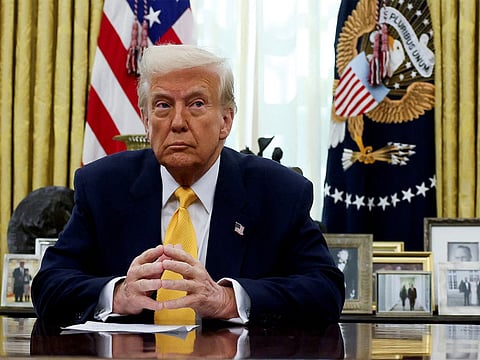
The United States’ decision to extend its ceasefire with Iran is less a sign of breakthrough than a reflection of a complex moment — one where diplomacy, pressure and uncertainty are all unfolding at once.
President Donald Trump pushed back the end of the two-week truce to allow more time for negotiations, while maintaining intense economic pressure on Tehran through a naval blockade and restrictions on key energy routes, according to AFP and CNN reporting.
The move comes as talks mediated by Pakistan remain inconclusive, with no confirmed Iranian proposal on the table and both sides continuing to accuse each other of violations. At the same time, tensions around the Strait of Hormuz — a vital artery for global oil flows — continue to keep markets and governments on edge.
What emerges is a familiar pattern in high-stakes diplomacy: a ceasefire not as an end, but as a pause — buying time, shaping leverage, and testing whether a deal is possible.
Why did Trump extend the ceasefire?
At its core, the extension reflects three overlapping calculations: keeping negotiations alive, sustaining pressure on Iran, and managing a volatile regional situation.
Also Read: Clock ticking as Iran talks clouded by doubt
Trump said he agreed to extend the truce following a request from Pakistani mediators and to give Iran’s leadership time to formulate a response.
At the same time, Washington is maintaining — and even highlighting — economic pressure. Trump claimed Iran was “collapsing financially” under the blockade linked to the Strait of Hormuz, writing that the country was “Starving for cash! Losing 500 Million Dollars a day.”
The extension therefore serves a dual purpose: keeping diplomatic channels open while reinforcing the conditions under which Iran is expected to negotiate.
Is this about peace — or leverage?
Both.
According to CNN, Trump has positioned himself as a deal-maker seeking a broader settlement, but the strategy relies heavily on pressure — military, economic and political — to bring Iran to the table.
The naval blockade of Iranian ports, imposed shortly after the ceasefire began, remains in place. Iran has criticised it as a violation of the truce, while US officials view it as a critical tool to extract concessions.
This combination of negotiation and coercion reflects a long-standing US approach: talks continue, but under conditions designed to shift the balance.
Key facts: US–Iran ceasefire extension
Ceasefire extended: Trump pushed back the truce to allow more time for negotiations and mediation
Economic pressure continues: US naval blockade remains in place, targeting Iran’s energy flows
Hormuz in focus: A key global oil route remains disrupted, affecting markets and security
Talks uncertain: No confirmed Iranian proposal; previous negotiations collapsed
Tensions persist: Both sides accuse each other of violations amid ongoing regional instability
How fragile are the negotiations?
Very.
The ceasefire extension underscores the absence of a concrete agreement. A previous round of talks collapsed, with Iran accusing Washington of making excessive demands, and uncertainty continues over whether Tehran will formally participate in the next round.
Even as diplomatic efforts continue, incidents on the ground persist. A reported attack by an Iranian gunboat on a vessel near Oman and continued tensions involving Iran-backed groups highlight how quickly the situation could deteriorate.
Both sides have also accused each other of breaching the ceasefire — a reminder that the truce remains tenuous.
What role does the Strait of Hormuz play?
A central one.
The strait is one of the world’s most critical energy corridors, carrying roughly a fifth of global oil trade. Iran has effectively restricted movement through the waterway during the conflict, amplifying global concerns.
Trump’s strategy appears to link economic pressure directly to this chokepoint. By maintaining a blockade and restricting maritime access, Washington is targeting one of Iran’s key economic lifelines while signalling the broader stakes for global markets.
Oil prices and stocks have already shown sensitivity to developments, reflecting how closely investors are watching the situation.
Is Iran under economic strain?
The US says yes — Iran says no.
Trump has repeatedly argued that the blockade is severely impacting Iran’s finances. “They want the Strait of Hormuz opened immediately,” he said, describing the country as “Starving for cash.”
However, Iranian officials have pushed back. The country’s agriculture minister said the blockade has had limited impact on food supplies, citing domestic production and alternative trade routes.
The truth likely lies in between: while Iran may be able to cushion essential supplies, broader economic pressures — particularly linked to energy exports — remain significant.
What happens next?
The extension buys time — but not certainty.
Talks mediated by Pakistan could resume, but key questions remain unanswered: whether Iran will submit a proposal, how far Washington is willing to compromise, and whether both sides can maintain the ceasefire long enough to reach an agreement.
Meanwhile, regional tensions remain high, with parallel conflicts and sporadic incidents continuing to test the limits of the truce.
For now, the ceasefire is less a resolution than a holding pattern — a pause shaped by pressure, negotiation and risk.


