Europe's Navy Eyes Hormuz: Britain and France ready mine-hunting drones to reopen the world’s oil chokepoint, but only if the guns fall silent
Europe's naval mission hinges on peace to secure vital oil shipping lanes
Britain is co-leading planning with France for a "Multinational Military Mission" meant to give commercial ships safe passage through the Strait of Hormuz.
The solution has an autonomous mine countermeasures capability already working in the region, according to an answer given in Parliament.
On October 24, UK Defence Journal reported that the Royal Navy withdrew its last Sandown-class minehunters from the Gulf and replaced crewed mine-warfare vessels there with uncrewed systems operated from a support ship, drawing on the joint British-French Maritime Mine Counter Measures programme.
The report restates a plan in place since the spring. No announcement of the post-war launch date was given.
Get it: Fast, verified news for FREE ... download the Gulf News app — simply click here
The mission has been planned for months and is anchored on a peace that isn’t there yet.
How it got here
April 17: Starmer and Macron co-chaired a leaders’ meeting in Paris, where Starmer said the mission would be strictly peaceful and defensive, aimed at reassuring commercial shipping and supporting mine clearance, with over a dozen countries offering assets. The force would deploy only once peace in the region was agreed, and neither the US nor Iran took part.
May: Defence Secretary John Healey pledged HMS Dragon, Typhoon jets, mine-hunting drones and £115 million in new funding at a forty-nation virtual summit.
July: Oman agreed to work with the UK and France to keep its territorial waters safe for navigation. France deployed two minehunters, two frigates and a patrol aircraft, which Macron said were ready to help restore navigation.
October 6: A French rear admiral said France’s mine-countermeasure vessels and autonomous systems were “ready to go now.”
At least 10 European NATO countries, including Germany, the Netherlands and Belgium, are expected to contribute once conditions are permissive.
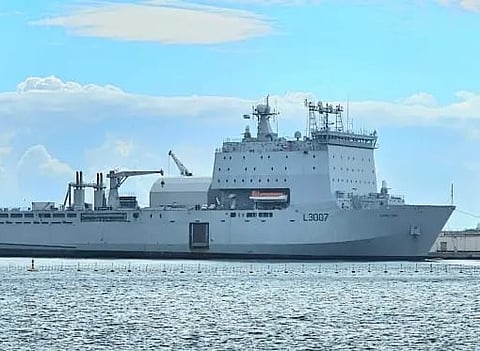
RFA Lyme Bay is already in the Middle East with over 270 sailors, including more than 100 Royal Navy mine-warfare specialists.
Why it hasn’t launched
The operation proceeds only once hostilities have ceased. Fighting is still going on, with Houthi strikes on Saudi Arabia over the weekend and Trump keeping a US strike on Iran on the table.
Iran’s deputy foreign minister warned that any warship in the strait would face a “decisive and immediate response.”
On Monday, Iran Foreign Minister Araghchi said the strait’s routes and management will not return to pre-war norms.
The parallel US effort
The US is already escorting ships on its own. CENTCOM says it has helped partners export more than 1.5 billion barrels since the summer.
Trump has criticised NATO for not helping in Hormuz, and he dismissed Europe’s efforts in April.
What it means
For shipping and prices: Insurers and shipowners want confidence the lane is clear of mines. A credible multinational mission could help cut war-risk premiums and tanker rates, but only once it deploys. Brent settled at $116.72 on Friday (Oct. 23) and $114 on Monday Oct. 26).
For diplomacy: An Beijing-based analyst argued Europe is trying to show strategic independence from Washington and protect its own energy supply. The same source says the practical impact will likely be limited.
For the Gulf: Iran rejects foreign naval forces, so a launch without a deal risks confrontation.
What happens next
Whether the US-Iran talks, including the Pakistan-brokered interim framework, produce a settlement that opens the door.
Any move by Rapid assets such as Lyme Bay in Omani waters.
Iran’s response if European ships approach.
Trump’s decision on renewed strikes, which could push the mission further back.