How Yemen’s Houthis became a threat to Saudi Arabia — and what they really want
From mountain rebels to missile power, how Iran’s support and Yemen’s war fuel attacks
Dubai: Why are Yemen’s Houthis intensifying attacks on Saudi Arabia, targeting airports, oil installations and major cities despite the danger of triggering a wider regional war?
The question became more urgent on Sunday as Houthi forces launched widespread attacks across southern Saudi Arabia, prompting security alerts in several cities. The Saudi-led coalition said it intercepted at least 10 ballistic missiles, AFP reported.
Residents reported powerful explosions in Khamis Mushait, while warnings were issued in Abha, Taif, Namas and Jazan. Air defences also intercepted a cruise missile targeting Khamis Mushait.
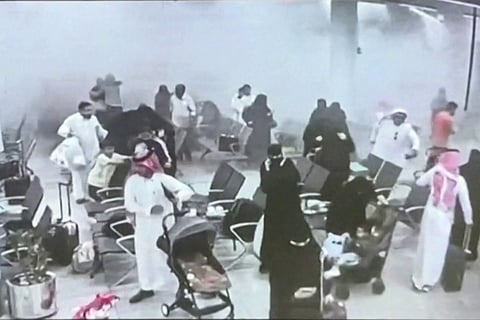
In Riyadh, three explosions were heard early Sunday as the capital’s international airport prepared to resume limited operations after a two-week closure following deadly Houthi attacks.
The Houthis warned that King Khalid International Airport remained a military target, despite plans to reopen it. An earlier attack this month killed 13 people and wounded more than 300.
But the confrontation goes far beyond airports and missiles. It involves Yemen’s future, Iranian influence, regional security and control of vital global oil routes.
Here are seven key questions explaining the escalating conflict.
Why are the Houthis escalating attacks now?
The immediate trigger is renewed fighting inside Yemen, but the Houthis also see an opportunity to strengthen their negotiating position as Saudi Arabia faces growing regional security pressures.
A fragile truce established in 2022 had largely halted major cross-border attacks. That arrangement began unravelling amid disputes over Yemen’s airports, ports and political future.
In September, the Houthis expanded their control along Yemen’s Red Sea coast, capturing strategic positions near Bab Al Mandab. Saudi-backed Yemeni government forces subsequently launched a counteroffensive.
The Houthis describe their attacks as retaliation for Saudi military operations and restrictions on areas under their control.
Analysts, however, see a broader strategy: Raising the economic and political cost of Riyadh’s involvement in Yemen.
What do the Houthis ultimately want?
Political control in Yemen: Preserve their hold over Sanaa and northern Yemen while gaining a decisive role in the country’s future government.
An end to restrictions: Secure the reopening of airports and ports under their control and reduce outside military pressure.
Concessions from Saudi Arabia: Push Riyadh towards an agreement that recognises Houthi influence and limits support for their Yemeni opponents.
Control over strategic routes: Use their position near Bab Al Mandab to strengthen their military and negotiating leverage.
Greater regional influence: Demonstrate their ability to challenge Saudi Arabia, the United States and other regional powers.
Continued Iranian support: Maintain a strategic relationship that provides military advantages while pursuing their own objectives in Yemen.
Are the Houthis acting for Iran or pursuing their own agenda?
Both factors are important, although the extent of Iranian control remains contested.
Iran has provided weapons technology, military expertise and other assistance, helping the Houthis develop long-range missile and drone capabilities.
Reuters reported this month that the attacks were partly intended to pressure Saudi Crown Prince Mohammed bin Salman into securing concessions in Yemen and persuading Washington to ease economic pressure on Iran.
However, the Houthis are not simply an Iranian creation.
The movement emerged in northern Yemen during the 1990s, seized Sanaa in 2014 and developed its own political and military ambitions.
Its objectives include consolidating territorial control, weakening Yemen’s internationally recognised government and securing political recognition.
Even a US-Iran agreement would not necessarily end the Saudi-Houthi confrontation.
Why target airports and oil installations?
The Houthis are seeking to inflict economic damage and disrupt normal life without matching Saudi Arabia’s conventional military strength.
Airports, pipelines, refineries and shipping terminals are vital to the Kingdom’s economy.
Attacks can interrupt flights, increase security costs, unsettle investors and threaten energy exports.
Riyadh’s international airport has become a particularly prominent target following the deadly October 10 strike.
On Saturday, the Houthis claimed attacks against airports and energy infrastructure, including facilities around Yanbu and Rabigh and the East-West Pipeline.
Saudi authorities reported missile interceptions, although the full extent of damage from the claimed attacks remains unverified.
Even unsuccessful strikes can force costly defensive operations and temporary shutdowns.
How has the US-Iran war changed the conflict?
The wider war has increased the strategic importance of Houthi missile and drone capabilities.
With shipping through the Strait of Hormuz disrupted, Saudi Arabia has increasingly relied on western oil infrastructure and Red Sea export routes.
That makes facilities near Yanbu and shipping through Bab Al Mandab particularly important.
By threatening these routes, the Houthis can complicate efforts to maintain Gulf energy exports and potentially strengthen Iran’s bargaining position against Washington.
Regional sources cited by Reuters suggest the campaign also seeks to exploit Saudi economic vulnerabilities.
However, analysts caution against assuming Tehran directly controls every Houthi military decision.
Why is Bab Al Mandab so important?
Bab Al Mandab connects the Red Sea with the Gulf of Aden and forms a vital part of the shipping route between Europe and Asia through the Suez Canal.
It is also crucial for Saudi oil exports from western terminals.
The Houthis seized Yemen’s entire Red Sea coast in a lightning offensive last month, according to AFP, significantly increasing concerns about maritime security around Bab Al Mandab, one of the world’s most important shipping chokepoints. Saudi-backed forces subsequently launched operations to recover territory.
If both Hormuz and Bab Al Mandab face serious disruption, Gulf exporters could find their alternative shipping routes constrained simultaneously.
That could drive up tanker insurance premiums, freight costs and global energy prices.
Can Saudi Arabia stop the missile and drone attacks?
Saudi Arabia operates sophisticated air defence systems and has intercepted numerous Houthi missiles and drones.
Recent interceptions around Riyadh, Taif, Yanbu and Khamis Mushait demonstrate those capabilities.
However, no defence network can guarantee complete protection.
The Kingdom must defend vast distances and numerous potential targets, including airports, cities, oil installations and industrial facilities.
Low-flying drones, cruise missiles and ballistic missiles present different detection and interception challenges.
Even successful interceptions can create risks from falling debris and disrupt civilian operations.
The challenge is maintaining economic activity and public safety during repeated attacks.
What could end the escalation?
A lasting settlement would require progress on Yemen’s political future, territorial control and security arrangements.
The Houthis want greater recognition, fewer restrictions on ports and airports and an end to military operations against areas they control.
Saudi Arabia and Yemen’s internationally recognised government seek security guarantees and a settlement that prevents renewed cross-border attacks.
The US-Iran confrontation makes negotiations more complicated.
Continued escalation could trigger stronger Saudi retaliation, particularly if another major attack causes mass casualties or seriously damages energy infrastructure.
A wider campaign against commercial shipping could also draw additional countries into the fighting.
For the Houthis, military pressure is a means of gaining political leverage.
The question is whether that strategy will secure concessions or push the region towards a much wider conflict.
-- With AFP inputs


