Watch: Saudi officials appeal to youth by not wearing shemagh
Traditional headdress not worn at “Launch’ event for technology sector
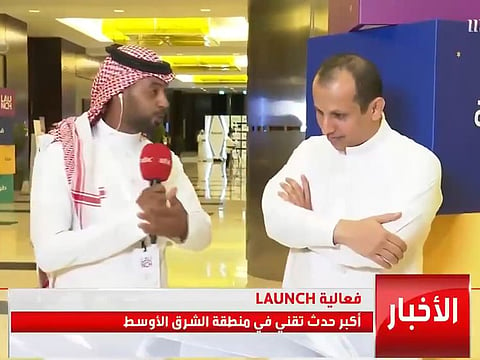
Abu Dhabi: Senior Saudi officials did not wear the shemagh – the traditional checkered headdress – at high-profile event ‘Launch’, during which a series of technology initiatives worth over $1.2 billion aimed at improving the digital skills of 100,000 Saudi youngsters by 2030, were launched.
The event was hosted by the Saudi Federation for Cybersecurity, Programming and Drones (SAFCSP), as well as the Ministry of Communications and Information Technology (MCIT), the Saudi Data and Artificial Intelligence Authority (SDAIA), and the Saudi Federation for Data and Artificial Intelligence Authority (SDAIA).
Mutaib Al Qenni, CEO of the Saudi Federation for Cybersecurity, Programming and Drones, said some officials did not wear the shemagh inan attempt to appeal to young people.
He stressed during an interview with MBC, their pride in the shemagh and national identity, but added: “We are talking to a young segment. We try to appear in a way that they accept us and interact with our initiatives. This was a clear message for dialogue with youths.”
The traditional Saudi headdress is popularly known as ghutra. Western and Asian visitors to the Kingdom can see hordes of Saudi men and children wearing the ghutra and igal. Many believe that it is worn to keep away the heat from the scorching desert sun, while others argue that it is an age-old tradition among Saudis and Arabs.
One important component of wearing the ghutra is securing it on the head. It is often seen that even when a Saudi man walks fast his ghutra never falls off. It is the igal, the black rope-like cord, that holds the ghutra in place.
Not many people are aware that the present day favourite in the Kingdom — the red and white-checkered ghutra — has its roots in far away Europe. It is believed that it was introduced in ancient Arabia, while others say it arrived in Saudi Arabia only a few decades ago.
Different tribes, countries and even neighbourhoods have their own traditional colours for the keffiyeh.
In the UAE, the most prevalent color of the keffiyeh is white, which is worn with a black igal.
In Saudi Arabia, the ghutra is available in all kinds of shapes and sizes. If you are looking for a ghutra for everyday use, you should opt for one in cotton. However, soft and flexible headgears are mostly made of wool. Other materials used are acrylic and nylon.


