How to plan your Hajj 2026 journey, from registration and health to spiritual readiness
The pilgrimage every Muslim dreams of and why millions will journey to Mecca this May
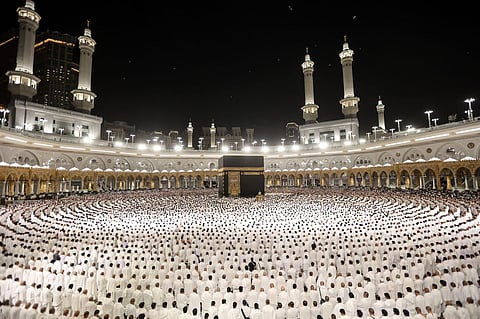
Dubai: With less than two months remaining until the start of Hajj 2026, preparations are accelerating across the Muslim world as millions prepare for the annual pilgrimage to Mecca, one of the largest religious gatherings on Earth.
Hajj, the fifth pillar of Islam, is an obligation upon every Muslim who is physically and financially capable of undertaking the journey at least once in their lifetime. More than just a series of rituals, it is considered a transformative experience that symbolises humility before God and unity among Muslims regardless of nationality, wealth or social status.
Get updated faster and for FREE: Download the Gulf News app now - simply click here.
The pilgrimage takes place annually during the Islamic month of Dhul Hijjah, with Hajj 2026 expected to begin around May 25, corresponding to the 8th of Dhul Hijjah. The Day of Arafah is likely to fall on May 26, followed by Eid Al Adha on May 27, with the main Hajj rituals expected to conclude around May 29-30, although all dates remain subject to the official moon sighting.
Hajj history
The origins of Hajj trace back thousands of years to the time of Prophet Ibrahim (Abraham), whose devotion and sacrifices form the foundation of many of the rituals performed today. Muslims believe the pilgrimage commemorates key events in the lives of Prophet Ibrahim, his wife Hajar, and their son Ismail, while also following the practices established by Prophet Muhammad during his farewell pilgrimage more than 1,400 years ago.
Each year, the pilgrimage draws around two million people from across the globe, creating one of the largest annual gatherings anywhere in the world. Despite differences in language, culture and background, pilgrims dress in similar simple clothing, reinforcing the Islamic concept that all people stand equal before God.
The requirement to perform Hajj applies only to Muslims who are adults, mentally sound, and able to afford the journey without causing hardship to their families. Those who are ill, financially unable or otherwise incapable are exempt from the obligation.
Understanding the types of Hajj
While the goal of every pilgrim is the same, there are different ways in which Hajj can be performed. The most common form is known as Hajj Tamattu, in which pilgrims perform Umrah first, exit the state of Ihram temporarily, and then re-enter it to complete the Hajj rituals.
Another form, Hajj Qiran, involves performing Umrah and Hajj together without leaving the sacred state, while Hajj Ifrad involves performing only the Hajj rituals without Umrah.
Scholars often recommend Hajj Tamattu for first-time pilgrims because it allows greater flexibility and reflects the practice followed by the Prophet Muhammad during his farewell pilgrimage.
The beginning of the pilgrimage
The pilgrimage begins with pilgrims entering a sacred state known as Ihram before reaching Mecca. Men wear two simple white garments, while women dress modestly according to Islamic guidelines. The clothing is intentionally simple, symbolising the removal of worldly distinctions.
While in Ihram, pilgrims must avoid cutting their hair, using perfumes, engaging in arguments or harming others. The purpose of these restrictions is to promote patience, discipline and mindfulness throughout the journey.
Upon arrival in Mecca, pilgrims perform Tawaf, the act of circling the Kaaba seven times. This act symbolises the centrality of faith in a Muslim’s life. Many pilgrims also attempt to touch or gesture towards the Black Stone as part of the ritual, although this is not mandatory.
Following Tawaf, pilgrims perform Sa’i, walking seven times between the hills of Safa and Marwa, commemorating Hajar’s desperate search for water for her infant son.
The most important day: Arafah
The most significant moment of Hajj comes on the Day of Arafah, when pilgrims gather on the plains of Arafah in prayer and reflection. This day is considered the spiritual peak of the pilgrimage, and missing it invalidates the Hajj.
From Mina to Arafah and then to Muzdalifah, pilgrims follow a sequence of movements that reflect both the historical traditions of the pilgrimage and the spiritual journey of repentance and devotion. Pilgrims spend the night in Muzdalifah, collecting small stones used later in the symbolic stoning of the Jamarat, representing the rejection of evil.
The following days include the ritual stoning, the sacrifice of animals commemorating Prophet Ibrahim’s willingness to sacrifice his son in obedience to God, and the shaving or trimming of hair to mark spiritual renewal.
The pilgrimage concludes with a farewell Tawaf before pilgrims depart Mecca.
The practical side: registration and quotas
Behind the spiritual journey lies a complex logistical process. Each year, Saudi Arabia allocates country-specific quotas to manage the number of pilgrims. Registration procedures differ depending on where pilgrims live, but most involve applying through government-approved Hajj authorities or licensed travel operators.
International pilgrims often register through official platforms or authorised agencies, submit required documentation and select travel packages based on budget and services offered.
The cost of performing Hajj
The cost of Hajj varies significantly depending on the country of departure, package type and level of accommodation. Domestic Saudi packages can begin at roughly SAR 8,000 (Dh7,826 approx) for basic arrangements, while luxury domestic options may exceed SAR 52,000 (Dh50,869 approx). International packages are typically more expensive, with prices ranging from around $11,000 for economy options to more than $27,000 for premium experiences.
Packages are generally divided into standard, premium and luxury categories, with differences mainly relating to hotel quality, distance from holy sites, transport arrangements and duration of stay.
Preparing for the journey
Preparation for Hajj is often described as spiritual as much as logistical. Scholars advise pilgrims to learn the rituals thoroughly beforehand to avoid mistakes that could invalidate the pilgrimage. Physical preparation is also recommended, as pilgrims may walk long distances in high temperatures.
Health authorities typically require vaccinations and recommend carrying essential medications. Pilgrims are also advised to pack practical items such as comfortable footwear, unscented toiletries and copies of important documents.
Beyond logistics, however, many scholars emphasise that the most important preparation is sincerity of intention. Pilgrims are encouraged to focus on worship, avoid disputes and approach the journey with humility.
Common mistakes to avoid
Despite careful preparation, some pilgrims make avoidable errors, such as leaving Arafah early, misunderstanding certain rituals or focusing excessively on photography and social media rather than worship. Religious guides often stress the importance of patience, cooperation and respect for fellow pilgrims.
For millions of Muslims, Hajj is a dream they carry in their hearts for years, sometimes for a lifetime. It is a journey people save for, pray for, and wait patiently to experience. Those who perform it often describe it as a moment of spiritual cleansing, a chance to leave behind past mistakes and return with a lighter heart and stronger faith.
Muslims believe that Hajj is not the end of a journey, but the beginning of a new, more mindful chapter in their lives.


