Oman’s Mirbat sand dunes – from Ice Age until now
Beautiful dunes are 2.5km in length and about 350 metres in width
Also In This Package


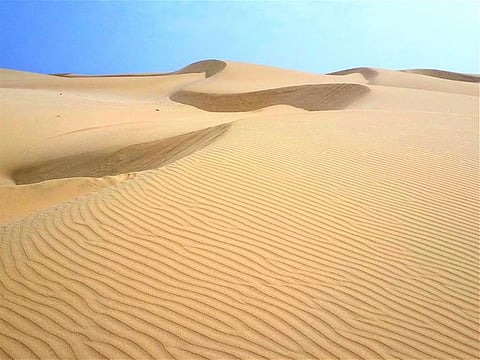
Msucat: Located between Oman’s Jabal Samhan mountain range and the sea are the undulating sand dunes of Mirbat, with their perfectly formed semicircular dunes. These dunes, which are 2.5km in length and about 350 metres in width, provide a beautiful view of the sea shore, the city of Mirbat and Jabal Samhan.
A recent report published in Atheer, a leading news site in Oman, quoted Dr. Mohammad bin Hilal al Kindi, a researcher and geologist, as saying that the
Mirbat dunes were formed thousands of years ago during the Ice Ages when the Arabian Peninsula and the earth in general were going through fluctuating Ice Ages, which led to a drop in sea level and increased the strength of cold and dry winds.
“These winds from the southeast to the northwest are similar to the movement of winds in the Khareef season in the Governorate of Dhofar. The dunes are constantly re-forming due to the change in wind movement, especially in the winter seasons.”
As a result of the overlapping of winds from opposite direction, since ice ages till the present time, Mirbat sand dunes consist of transverse dunes at the bottom, topped by crescent dunes at the top. Jabal Samhan acted as a natural dam that prevented the erosion of sand and thus contributed to the survival of the sand dunes.
Dr Mohammed stressed the need to preserve and protect the Mirbat sand dunes, because the carbonates from which the dunes were formed are not environmentally reconstructive, apart from their aesthetic and tourism appeal.


