Oman moves to set up Eye Bank in final stage
The light at the end of a dark tunnel is getting brighter for the visually challenged citizens
Muscat: The light at the end of a dark tunnel is getting brighter for the visually challenged citizens in Oman as the Ministry of Health (MoH) has finally set the ball rolling for an Eye Bank, only the second in the GCC after Saudi Arabia.
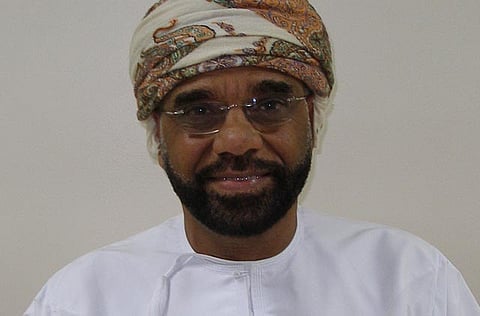
"We have had final discussion on the new building for the Eye Bank in the compound of tertiary care hospital (Al Nahda) in Muscat," Dr. Abdul Latif Al Raisi, Head of the Ophthalmology Department with the MoH, told Gulf News in an exclusive interview on Friday.
Plans to set up Eye Bank in Oman have been undertaken for over five years at the MoH but somehow it has taken time for the project to take off.
Dr. Al Raisi stressed that finally everything was in place. "If all goes smoothly then by the end of 2011 or beginning of 2012, the Eye Bank will be operational," he enthused.
Islamic scholars have had deferring point of view regarding organ donation. Shaikh Khalfan Al Esry, a member of the Sultan Qaboos Grand Mosque's Steering Committee for Islamic Information Centre, (Gulf News Interview September 17, 2008) has had his own reservation on the subject.
However, Dr Al Raisi reiterated that they had a go-ahead to set up the Eye Bank. "We have got green signal from Grand Mufti," he revealed. He added that Oman had already started kidney transplant therefore eye donation was not an exception.
He also said that Oman had done eye transplant operations in the past. "We used to import corneas from abroad for transplant but had to stop due to poor quality," he said.
The senior ophthalmologist in the country is optimistic that the 100-150 thousand Omani riyals project would help give sight to at least 40 people every year.
"To start with, each patient would be given cornea only in one eye so that more patients could be given eye sight," he said.
He said that an awareness campaign would be carried out to encourage people to donate eyes. "We have already have queries from expatriate population wishing to donate eye," he said.
Dr. Al Raisi also acknowledged that expatriates in Oman had made blood donation a success. "The expatriate share in blood donation is big and now even Omanis are coming forward to donate blood," he added.
He was hopeful that even eye donation would be a success and Omani would join expatriates in donating eyes to give vision to hundreds of people.
"The blindness in the country is not a very big issue with only 0.9 per cent of the total of 2.4 million population suffering from blindness," he said.
However, he urged people to get treated for Glaucoma, which is a group of diseases that can steal sight without warning or symptoms.
"Its (Glaucoma) management needs comprehensive approach," he said. Dr. Al Raisi believes that if Glaucoma can be discovered early it can be managed properly and blindness can be avoided.
"Since it doesn't affect the complete vision in the beginning, majority patients report at late stage and then management of the disease becomes difficult."
According to him the National Survey to determine prevalence of glaucoma in community showed a high 4.75 per cent in the age group of 30 and above. "In the developed world it is only one to two per cent," he pointed out.
Dr Raisi feels that eye care in the country was adequate but with better awareness and operation of Eye Bank, more people can be saved from losing eyesight in the country.

