'Even the wind carries heat now': Why even desert camels in Africa are struggling
Rising temperatures are overwhelming even the animals best adapted to desert life
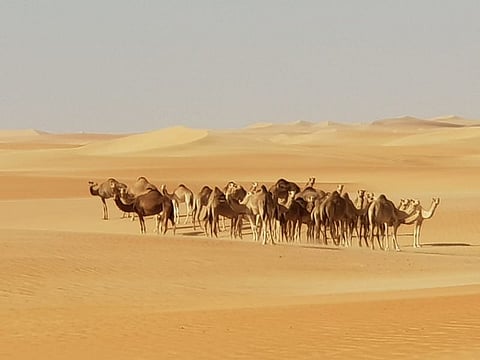
Dubai: Ask anyone to name the toughest animal in the desert, and camel wins without much of a fight. Turns out even that title has its limits.
Camels have earned their reputation as the toughest animals in the desert, capable of surviving conditions that would kill most other livestock. That reputation is now being tested. Across North Africa and the Horn of Africa, home to roughly 80 per cent of the world's dromedary camel population, herders and vets are reporting rising sickness and death linked directly to extreme heat.
In Ethiopia's Afar region, one of the hottest, driest places on the planet, camel herder Ali Umer told the BBC he'd lost eight calves in a single month to heat-related causes, describing blistered feet, watery eyes and burned skin among his 500-strong herd. "I can see my camels suffering from extreme heat," he said, adding that even the wind, which once brought relief, now carries heat instead.
The numbers behind the crisis
The scale of the problem is significant. Research published this year in Somalia found drought-linked camel deaths affecting nearly half of all camel-owning households surveyed, with mortality in the northern Sool region reaching around 73 per cent. A separate 2025 study of herders in southern Ethiopia found consistent reports of declining camel health, productivity and reproduction tied to rising temperatures. In Algeria, researchers recorded a marked rise in camel deaths during summer heatwaves, and called for targeted measures like emergency water provision during the hottest months.
The World Meteorological Organization has tracked a clear upward trend in North African heatwaves since 1981, with several countries in the region recording temperatures above 50C in 2024. Its most recent climate report found North Africa warming faster than any other subregion of the continent.
Why extreme heat breaks down even a camel's defences
Camels are naturally built to handle heat up to around 40C, largely by letting their body temperature fluctuate through the day rather than sweating it away, which helps them conserve water. Dr Mohammed Bengoumi, a camel health scientist with the UN's Food and Agriculture Organization, says camels can experience heat stress once conditions push past that comfort range.
Past that threshold, their systems start to fail. Professor Abdelmadjid Chehma of the University of Ghardaia in Algeria, who has studied camels directly in the Sahara, found that prolonged heat above 41 to 45C directly attacks their cells and weakens the immune system, leaving camels vulnerable to infection.
Vets on the ground are seeing the consequences firsthand. In northern Kenya, veterinary officer Hassan Nuya Guyo has recorded "a more than 15 per cent increase in camel deaths" in his county over the past two years, driven by heat-related illness. Once heat stress sets in, a camel's metabolism slows to limit internal heat production, which cuts appetite, drains energy, and eventually reduces milk yield and fertility.
A resilience strategy under threat
The irony is hard to miss. Herders across the region switched to camels exactly because they could survive conditions that killed cattle and goats. Camel milk and meat now support a sizeable global market, and organisations like the FAO have promoted camel farming as a climate adaptation strategy for exactly this reason.
That strategy is now facing its own limits. Some herders in northern Ethiopia have already made a permanent move south in search of water and vegetation, not as a seasonal migration, but as a lasting relocation, researchers say. The Horn of Africa, still recovering from a severe drought that ran from 2020 to 2023, is now facing another one, with water prices in parts of Somalia reportedly climbing by more than 2,000 per cent.
Prof Chehma warns that the animal long considered pastoralists' last line of defence against the desert may itself be turning into what he calls a climate victim.
What's actually being done about it
There's no major rescue effort built specifically to shield camels from heat, but adaptation is happening at both herder and research level.
A 2025 study published in the journal Pastoralism, based on herders in southern Ethiopia's Borana zone, found herd mobility is the top coping strategy, moving animals toward water and vegetation, sometimes permanently. Diversifying livestock, destocking before drought peaks, and feed conservation followed close behind.
Researchers behind a 2026 Algerian study on camel heat mortality called for targeted measures during peak summer months specifically, including emergency water provisioning, supplemental feeding, and closer disease monitoring. A separate 2023 study on Algerian Sahara camel livestock proposed a genetic improvement programme aimed at boosting resilience and productivity.
At policy level, Kenya, Ethiopia and Somalia have introduced initiatives supporting camel dairy value chains and herd restocking, according to a 2024 review published in the African Researchers Magazine, while the International Livestock Research Institute is studying how young people and women, key players in camel milk marketing, can be better supported as the industry grows.