Philippines: President Marcos Jr. courts investors with business pitch ahead of UAE trip
Philippine leader expected to witness signing of the CEPA in Abu Dhabi on Tuesday
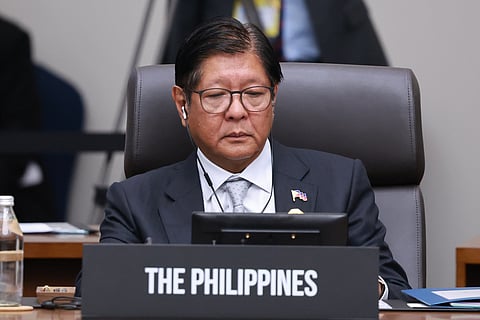
Manila: The Philippines, currently the world’s 30th-biggest economy, has plenty of room to grow, President Ferdinand Marcos Jr told Gulf News in an exclusive interview ahead of his January visit to the UAE.
He cited recent key reforms: the unlocking of 99-year land leases to attrack long-term investors, reduced income tax rates/duties, and the updated Public-Private Partnership law, among others, enabling the country to snag multi-billion investments in key industries.
And then, there's the updated Right-of-Way Law (ARROW Act).
This new legislation, enacted in September, now speeds up major infrastructure projects, instead of bringing them to a near standstill as landowners, valuation disputes, and court cases delay land transfer and compensation.


The Philippine leader, 68, aims to do more.
More importantly, he highlighted the benefits of the upcoming Comprehensive Economic Partnership Agreement (CEPA) between the UAE and the Philippines, Manila's first such agreement with a Middle East nation.
“Indeed, the future of the Philippines is bright. We will continue to work tirelessly to bring in investments, create jobs, and uplift the lives of our people,” the President stated.
UAE visit
On Tuesday (January 13, 2026), President Ferdinand R. Marcos Jr. is expected to witness the signing of the CEPA in Abu Dhabi, UAE.
The Philippine leader visited the UAE in 2024, marking 50 years of diplomatic relations between the two countries.
During his visit, he discussed with UAE President His Highess Sheikh Mohamed Bin Zayed Al Nahyan opportunities to further deepen cooperation across vital fields, including economy, trade, and sustainability.
Amid reforms and growth record which brought current Philippine GDP to $1.479 trillion (based on purchasing power parity, PPP, an IMF measure), the country is widely expected to hit upper middle income nation (UMIC) status shortly.
While challenges remain, the Philippine economy is expected to steadily rise in global rankings.
Indeed, the future of the Philippines is bright. We will continue to work tirelessly to bring in investments, create jobs, and uplift the lives of our people.Philippine President Ferdinand R. Marcos Jr.
The London-based think tank Centre for Economics and Business Research (CEBR) reckons the Philippines’ gross domestic product (GDP) to hit $1.5 trillion soon.
This represents a nine-rank improvement from the country’s 2025 ranking of 33rd among 190 economies. CEBR projects the Asian nation could land as the 24th largest economy by 2040.
Following are excerpts of Gulf News' extensive interview with the Philippine leader:
What is the Comprehensive Economic Partnership Agreement (CEPA) between the United Arab Emirates and the Philippines?
“The CEPA with the UAE is a comprehensive trade agreement that aims to increase the flow of goods and services between the Philippines, the UAE, and the broader Gulf region, while attracting more investments and creating opportunities for professionals and service providers.
“As a comprehensive agreement, it will also enhance collaboration between the Philippines and the UAE in areas of mutual interest,” he told Gulf News.
"The CEPA is envisioned to be the Philippines' first trade agreement in the Middle East and with a Gulf Cooperation Council (GCC) member. It will be an entry point to the GCC countries."
The CEPA will open up trade opportunities to an estimated market of around 11 million people, while also reinforcing linkages with the Middle East, where the UAE hosts the 2nd largest Filipino population in the region.
“On a larger scale, the CEPA is envisioned to expand market access across regions as UAE is strategically located in the world's busiest sea trade route between Asia and Europe, as well as at the crossroads of the GCC, Indian subcontinent, Africa and Central Asia covering a broader regional market.”
The CEPA is aligned with the current Administration’s trade policy direction to expand the country's FTA network and forge more economic partnerships.
The CEPA with the UAE is important because it will be the country's first free trade agreement with a Middle Eastern country.Philippine President Ferdinand R. Marcos Jr.
Why is the CEPA important to the Philippines?
The CEPA with the UAE is important because it will be the country's first free trade agreement with a Middle Eastern country.
The UAE is a major Philippine trading partner, ranking as the 21st out of 205 export destinations, 16th out of 221 import sources, and 18th out of 230 total trade partners.
Securing preferential market access in goods will enhance the competitiveness of Philippine exports in the UAE.
Notably, the top exports of the Philippines to the UAE includes projectors, machines, static converters, aerospace parts, pineapples, bread, pastry products, storage units, bananas, and sauces.
As a comprehensive agreement, the CEPA is a far-reaching and progressive economic partnership scheme that will boost opportunities in other areas of emerging interest including services, financial services, telecoms services, digital trade, MSMEs, and trade and sustainable development (including the promotion and protection of labour and environment), protection and enforcement of intellectual property rights, competition and consumer protection, among others.
Thus, beyond boosting trade in goods, the CEPA is also designed as an enabling agreement that will further open the UAE market for Filipino professionals by providing more stable and predictable rules for service suppliers.
The CEPA secures UAE commitments to allow Filipino service suppliers, including MSMEs, to operate on a non-discriminatory basis.
The UAE's leadership in ICT and its position as one of the region's largest data center hubs create strong opportunities for Filipino talent in computer and information services.
In sum, CEPA offers benefits and opportunities not only in trade in goods but also other areas like services, investments, and economic cooperation in areas of mutual interests.Philippine President Ferdinand R. Marcos Jr.
Construction and engineering services also stand to benefit from the UAE's various initiatives that drives major development and economic growth.
Retailing services from the Philippines can also tap into the UAE's optimistic outlook, supported by rising retail spending, tourism growth, construction activity, population increase, and higher disposable incomes.
In sum, CEPA offers benefits and opportunities not only in trade in goods but also other areas like services, investments, and economic cooperation in areas of mutual interests.
What are the existing Bilateral Agreements between the UAE and Philippines?
In early 2025, both countries discussed a defense agreement that would
strengthen cooperation in military and cybersecurity efforts. The discussions dealt on how to facilitate access to traditional military equipment, new technologies, and tools to combat cyber warfare threats.
These are the current Bilateral Agreements:
(1). PH-UAE Agreement on Security Cooperation between the Government of the United Arab Emirates and the Government of the Republic of the Philippines: Signed on 21 April 2025 in Abu Dhabi. Secretary of Interior and Local Government Hon. Juanito Victor C. Remulla signed for the Philippines while UAE Deputy Prime Minister and Minister of Interior His Highness Lt. Gen. Sheikh Saif bin Zayed Al Nahyan, signed for the United Arab Emirates.
(2). PH-UAE Agreement on Artificial Intelligence and Digital Economy: Signed on 12 February 2025 in Dubai during the World Governments Summit (WGS) 2025. Former Secretary of Information and Communications Technology Ivan John Uy signed for the Philippines, while UAE Minister of Investment Mohamed Hassan Alsuwaidi signed for the United Arab Emirates.
(3). PH-UAE Judicial Treaties: Signed on 12 February 2025 in Dubai by Former Secretary of Justice Jesus Crispin C. Remulla for the Philippines and UAE Minister of Justice H.E. Abdullah Sultan bin Awad Al Nuaimi signing for the United Arab Emirates.
- Treaty on Extradition;
- Treaty on Mutual Legal Assistance in Criminal Matters; and
- Treaty on the Transfer of Sentenced Persons.
(4). PH-UAE Memorandum of Understanding on Reducing Waste Leakage to River Systems: Signed on 12 February 2025 at the sidelines of the World Governments Summit (WGS) 2025 in Dubai. Former Department of Environment and Natural Resources (DENR) Secretary Maria Antonia Yulo-Loyzaga signed for the Philippines while Erth Zayed Philanthropies, represented by Clean Rivers Ltd., signed for the United Arab Emirates.
The new law amending the decades-old Investors’ Lease Act (RA 7652) extending allowable lease periods to as long as 99 years for projects in priority sectors, aligning the Philippines more closely with regional investment hubs in the Association of Southeast Asian Nations (Asean).Philippine President Ferdinand R. Marcos Jr.
(5). PH-UAE Memorandum of Understanding on Cooperation in the Field of Improvement and Development of Government Activities: Signed on 11 February 2025 in Dubai. Former Secretary of Budget and Management Amenah Pangandaman signed for the Philippines, while H.E. Abdullah Nasser Lootah, UAE Deputy Minister of Cabinet Affairs for Competitiveness and Experience Exchange, signed for the United Arab Emirates.
(6). Memorandum of Understanding on Potential Areas of Collaboration between the Board of Investments of the Republic of the Philippines and Abu Dhabi Future Energy Company PJSC – Masdar: Signed on 15 January 2025 in Abu Dhabi.
Trade and Industry Undersecretary Dr. Ceferino S. Rodolfo signed for the Philippines while Masdar Chief Executive Officer Mohamed Jameel Al Ramahi signed for the United Arab Emirates.
(7). PH-UAE Memorandum of Understanding (MOU) on Energy Transition Cooperation: Signed on 26 November 2024 in Abu Dhabi. Former Department of Energy Secretary Raphael P.M. Lotilla signed for the Philippines while UAE Minister of Energy and Infrastructure H.E. Suhail Mohamed Al Mazrouei signed for the United Arab Emirates.
(8). PH-UAE Memorandum of Understanding (MOU) on Cooperation in the Culture Sector: Signed on 26 November 2024 at Emirates Palace Mandarin Oriental Abu Dhabi during the Working Visit to the United Arab Emirates of President Ferdinand R. Marcos, Jr. Former National Commission for Culture and the Arts Chairperson Victorino Mapa Manalo signed for the Philippines while UAE Minister for Culture H.E. Sheikh Salem bin Khalid Al Qassimi signed for the United Arab Emirates. The MOU signing was witnessed by First Lady Louise Araneta-Marcos.
We have vigorously pursued critical structural reforms that make the Philippines a very attractive foreign investment destination.Philippine President Ferdinand R. Marcos Jr.
(9). Investment Memorandum between the Maharlika Investment Fund of the Republic of the Philippines and the Ministry of Investment of the United Arab Emirates on Investment Cooperation: Signed on 27 November 2024 in Abu Dhabi. President and CEO of the Maharlika Investment Fund H.E. Rafael Jose D. Consing, Jr. signed for the Philippines while UAE Minister of Investment H.E. Mohamed Hassan Alsuwaidi signed for the United Arab Emirates.
(10). PH-UAE Memorandum of Understanding on Economic and Technical Cooperation: Signed on 2 December 2023 in Dubai. Former Secretary of Trade and Industry H.E. Alfredo E. Pascual signed for the Philippines while UAE Minister of State for Foreign Trade and Minister of Economy H.E. Dr. Thani bin Ahmed Al Zeyoudi signed for the United Arab Emirates.
(11). PH-UAE Memorandum of Understanding (MOU) on Climate Change: Signed on 2 December 2023 at the sidelines of the 28th Conference of Parties to the UN Framework Convention on Climate Change (COP28) in Dubai. Philippine Climate Change Commission (CCC) Vice-Chairperson and Executive Director Robert E.A.
Borje signed for the Philippines while UAE Minister of Climate Change and Environment Mariam Almheiri signed for the United Arab Emirates.
(12). PH-UAE Memorandum of Understanding on Investment Cooperation in Data Center Projects: Signed on 30 November 2023 in Abu Dhabi. Former Trade and Industry Secretary Alfredo E. Pascual signed for the Philippines while UAE Minister of Investment H.E. Mohamed Hassan Alsuwaidi signed for the United Arab Emirates.
What is your appeal (or pitch) to foreign investors?
We have vigorously pursued critical structural reforms that make the Philippines a very attractive foreign investment destination.
We are offering the following:
The new law amending the decades-old Investors’ Lease Act (RA 7652) extending allowable lease periods to as long as 99 years for projects in priority sectors, aligning the Philippines more closely with regional investment hubs in the Association of Southeast Asian Nations (Asean);
The Corporate Recovery and Tax Incentives for Enterprises to Maximize Opportunities for Reinvigorating the Economy or CREATE MORE Act, which reduces income tax rates and also the cost of doing business by reducing duties;
The Green Lanes for Strategic Investments institutionalises a “One Stop Action Center”, which eases the entry of strategic investments into the country by expediting the issuance of permits and licenses, and approvals for high-impact projects aligned with national development plans. All government agencies were likewise instructed to establish “Green Lanes” that will expedite, streamline, and automate government processes for strategic investments.
The Public-Private Partnership Code which provides a modern framework to scale transformative infrastructure and service delivery. The code consolidates prior statutes like the Build-Operate-Transfer (BOT) Law and addresses gaps to promote efficient resource mobilisation across the country's archipelago.
[Sources: Presidential Communications Office, Department of Trade and Industry]


