$47.4 billion in private funds pour into Philippine infrastructure — rail, roads, schools, housing, healthcare, more to come
₱2.81 trillion infra boom: How private money is reshaping the Philippines
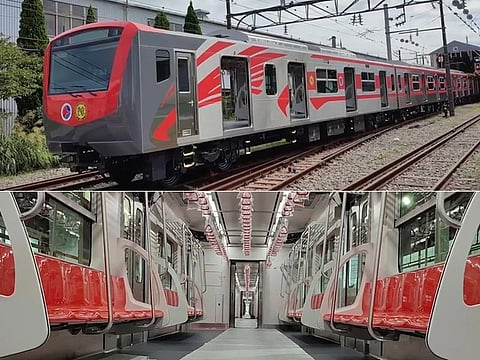
Manila: Amid the corruption horror that shows Filipino taxpayers' billions looted (via flood control scams, pork barrel ghosts, judicial acquittals), a dramatic reversal electrifies Philippine infrastructure: private sector cash tsunami now pours into public projects.
Propped up by latest tweaks in the country's Right of Way Law to speed up project approvals, investors are going all-in: ₱2.81 trillion ($47.4 billion) already committed or underway.
This has sparked a massive infrastructure boom in the Asian country, with more expected to come in 2026.
Emerging trend
The amount, reported as of December 21, 2025, represents 251 projects, according to the Public Private Partnership (PPP) Centre.
Here's an explainer on what behind this boom:
What is the legal framework for PPPs?
The projects come under legislation known as Republic Act No. 11966 (Public-Private Partnership Code of the Philippines), passed in December 2023.
The new law, which amended the Build-Operate-Transfer Law (RA 7718, passed in 1994), kicked in with the Implementing Rules and Regulations (IRR) rolled out in April 2024.
The year 2025 marks the first full year under RA11966, which unifies the country’s fragmented legal frameworks for PPP projects.
Initial results of new PPP Code are starting to show.
What changes under the new law?
The new law creates a single, predictable system for private sector involvement in infrastructure and development, enhancing transparency, efficiency, and investor interest.
7 key changes under RA 11966:
Broader scope: Adds joint ventures (JV), tollways, long-term leases (>1yr) to BOT schemes — i.e. San Juan City's 50-year high-rise affordable housing PPP.
Simplified approvals: LGUs approve all local projects — no more national government hurdles for small ones.
Unsolicited proposal rules: PPP Center vets completeness; auto-approves if relevant agency sleeps for 90 days.
Government guardrails: Caps subsidies, bans loan guarantees, limits equity to 50% in joint venture (JVs) — i.e. anti-pork curbs.
Contract must-haves: Deadlines, risk plans, tech transfer, performance warranties — no loopholes.
LGU autonomy: Local codes stay valid, i.e. local government unit writes own rules under national framework.
PPP Governing Board: Centralises policy, creates Risk Management Fund.
In short: RA 11966 bolsters transparency, predictability and review procedures in the country's PPP ecosystem.
The impact is becoming more apparent: beyond big-ticket national projects, a growing number of local government units (LGUs, 149 cities and 1,493 municipalities), are initiating projects.
What are the key or newly-awarded PPP projects?
Awarded projects cover key sectors such as transport, water, traffic management, and health.
Among the first projects to be processed fully under the new PPP Code include:
The National Single Window through an Integrated Trade Facilitation Platform Project (aims to streamline and digitise import, export, and trade-related regulatory processes.
The Bataan Single Ticketing System
South-Luzon Integrated Terminal Exchange (SLITEX)
Mangatarem Water Supply System in Pangasinan
Palayan City Hospital PPP project in Nueva Ecija
The distribution in various locations of these projects reflects the growing sectoral and demographic reach of PPPs nationwide.
How many PPP projects have been proposed and awarded recently?
As of December 21, 2025, the PPP Center received a total of 98 proposals from the private sector.
Of this figure, 31 were deemed “complete” and were endorsed to implementing agencies for detailed evaluation.
This represents a significant increase in the number of submitted unsolicited proposals from the private sector.
From December 2024 to December 2025, the first full year of RA 11966, 124 projects were added to the country’s PPP pipeline, bringing a total to 251 projects with an estimated value of ₱2.81 trillion ($47.4 billion).
How many projects are already underway?
In terms of the projects under implementation, there’s now a total of 288, comprising 184 national and 104 local projects.
Of these, 166 are national projects, and 85 are local (194 solicited projects, and 57 “unsolicited” proposals).
Projects under implementation and being monitored by the Center.
How many projects were awarded in 2025?
In 2025, 13 projects were awarded, consisting of 11 local and 2 national projects.
What is the role of the PPP Center?
The PPP Center is the central clearing house of PPP projects and supports implementing agencies through:
Tracking project performance
Identifying risks and bottlenecks, and
Facilitating coordination to help keep projects on track from contract signing through operations.
In 2025, the PPP Governing Board, the overall policy-making body for all PPP-related matters, approved key guidelines to strengthen transparency, accountability, and project oversight.
These cover:
negotiations,
evaluation of unsolicited proposals,
alignment of joint ventures (JVs) and lease agreements with the PPP Code and its IRR (amended guidelines for approval of local PPPs, review of national PPP contracts)
implementation of a comprehensive PPP project monitoring framework.
The PPPC aims to ramp up efforts to boost local PPPs, advance climate resilient and sustainable PPPs by working with institutional partners, and using tech for real-time project monitoring.
Does the public have access to information on these projects?
Yes, PPPC ensures open-access to project information.
This aligns with the current administration’s Build Better More (BBM) infrastructure drive, which seeks to address the country’s infrastructure gaps.
“The PPP Center remains steadfast in its belief that well-executed public–private partnerships are a primary driver of sustained economic growth that benefits every Filipino,” the agency stated.
What about renewable energy projects?
The PPP Center has bolstered the enabling framework for Waste-to-Energy (WTE) PPP through coordinated policy support and partnership-driven initiatives.
It contributed to policy WTE development by providing its insights to the Department of Energy’s (DOE) newly-issued framework for integrating WTE facilities to the country’s power generation mix.
Key Philippine Waste-to-Energy (WTE) PPP examples include:
Quezon City biogas plant (with Pangea Green Energy)
Clark Freeport WTE facility (BCDA and an Indian consortium)
Payatas landfill gas-to-energy project.
All these projects leverage private investment to convert waste into electricity, though critics highlight environmental and social concerns.
Are there education projects under PPP?
Yes. PPP projects geared towards education include:
PPP for School Infrastructure Project (PSIP) Phases IV and V
PSIP Connect, which address classroom shortages and enhance digital readiness in public schools.
One of the potential sites for the PSIP Phase II is in the Caraga Region.
The PPP for School Infrastructure Project (PSIP) Phases IV and V are major Philippine government initiatives led by the DepEd and PPPC to address the nation's classroom shortage.
As of late 2025, PSIP Phase IV, specifically, aims for 40,000 classrooms in Visayas and Luzon, with the International Finance Corporation (IFC) engaged for advisory services as of late 2025.
These involve private sector partners to design, finance, build, and maintain new classrooms, often integrating digital readiness (like PSIP Connect for internet/tablets) and sustainable features like solar power, expanding access to modern learning environments for millions of Filipino students.
Top 10 Renewable Energy Projects (PPP-linked)
#1. RENEWSTABLE Green Hydrogen Power Plant – Marinduque
A planned renewable power station combining solar generation with hydrogen and lithium-ion battery storage to supply stable, clean energy for local grids under PPP pipeline endorsement, as per the Philippine Ports Authority (PPA).
#2. 3000 TPD Manila Waste-to-Energy Facility Project
A PPP pipeline project to sustainably process municipal solid waste into electricity—turning waste into renewable power under a public-private scheme, as per PPA.
#3. Kalayaan 2 Wind Power Project
Fast-tracked under green lanes and aligned with broader public-private strategies to expand wind energy deployment.
#4. Roxas Onshore Wind Power Project (1,246 MW)
Endorsed by the Department of Energy as part of green energy expansion efforts linked with private participation.
#5. Cebu Wind Energy Project (500 MW)
Privately proposed large-scale wind power project with pipeline support from DOE and PPP facilitation approaches.
#6. Agrovoltaic Solar + Battery Storage Project in General Santos (180 MW)
Integrates solar and BESS technologies with PPP-compatible investment structures.
#7. Batangas 1 Solar + Battery Baseload Project (197 MW + 320 MWh BESS)
A major agrisolar project recently inaugurated, representing successful private deployment in the renewable space (PPP-style facilitation and public support). YOG INFRA+1
#8. Cleantech/CTGRI Wind Power Projects (Multiple Onshore Sites)
Five onshore wind energy projects across Central Luzon and CALABARZON totaling over PHP 108 billion in investment are being advanced with streamlined approvals and private capital mobilization.
#9. Battery Energy Storage Systems (BESS) Complementing RE Growth
Several private BESS initiatives (e.g., San Manuel Solar BESS upgrades) support renewable integration and grid stability, aligning with PPP-presented energy pipelines.
#10. Hydropower & Renewable Power PPP Pipeline Projects
Mega pumped-storage hydroelectric (PSH) projects in the PPP pipeline —the Maton and San Roque pumped-storage plants (2000 MW, 1000 MW, 1000 MW respectively) — are crucial renewable/storage infrastructure blending private financing models.
Sources: YOG Infra, Philippine Ports Authority (PPA)


