From rivals to co-builders: Why the Philippines needs a shared national vision
Marcos–Robredo meet signals quiet turn from rivalry to results — healing power of collab
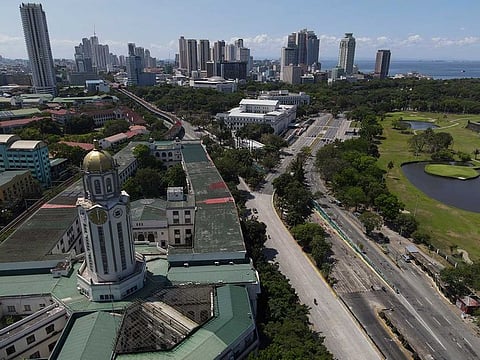
Manila: The Philippines does not lack leaders.
It lacks alignment.
In a nation of 7,641 islands — fragmented by geography, up to 187 languages, history and politics — no single party, alliance, or strongman can carry the weight of national transformation alone.


Our challenges are too layered, too entrenched, too widespread.
Poverty in far-flung barangays.
Flooding in urban centres and farming communities.
Insurgency in remote provinces.
Inequality everywhere.
Millions of overseas Filipinos spread in over 200 countries and territories.
What's needed: Vision
The country needs its leaders — from Malacañang down to the smallest barangay hall — to work toward a common vision.
But that vision must first be agreed upon. Leadership today cannot be reduced to bombastic speeches, viral soundbites, or campaign-season theatrics.
What the Philippines requires is deliberate governance.
That means steady planning, coordinated implementation, and measurable results.
Real progress is built one bridge, one classroom, one factory, one power plant, one rail line, one irrigation system at a time.
One reform, one sure step. One day at a time.
Let's get rid of 'smallism'
Problems cannot be solved by belittling them.
Physically, the Philippines may look small beside the vast Pacific Ocean — the largest on Earth — but governing this archipelago is anything but small work.
It's time to kick the habit of "smallism".
Mindanao alone is equivalent to three Belgiums. Luzon is more than twice the size of the Netherlands (go look it up!).
Running a country with this unique and challenging geography requires a one-body-many-parts kind of vibe — across islands, tribes, creeds, and personalities.
The pain of one is the pain of the whole. And Manila is not the whole Philippines.
But why, out of the 24-member Philippines Senate, most are from Manila?
To add insult to the injury, 8 of them are siblings!
Something surely doesn't add up. And this can only breed generational resentments among outsiders.
Key challenge: Systematic theft of public funds
It's a mindset.
The great malady of our Republic is not poverty of land, nor poverty of talent.
It is the steady, practiced theft of the people’s purse.
It has grown from habit into system. From system into culture.
From culture into creed.
Men enter office and ask not, “What may I give?” but “What are we in power for?”
And there's deep tribalism.
When one tribe (Ilocos, Tagalog, Bicol, Waray-waray, Ilonggo, Bisaya, Moro, Mindanao) ascends, the whole tribe feeds.
The law, meant to be shield of the weak, too often serves as curtain for the cunning.
Ancient bank secrecy.
Judges glacially slow to act.
Cases buried beneath the phrase, “insufficient evidence.”
A switch seems to turn in the soul of public service.
Competence yields to calculation: Work is made light, kickbacks are made heavy.
Yet I say: all is not lost
For even in divided times, Providence stages a quieter lesson. Consider this: two rivals, twice tested before the people.
Ferdinand Marcos Jr. and Leni Robredo: She prevailed in the vice presidency of 2016. He prevailed in the presidency of 2022.
Two contests. Two outcomes. One nation.
On February 21, in Naga, they stood not as combatants, but as public servants.
The president came to inspect “Oplan Kontra Baha,” the flood programme for the Bicol River Basin. Filipinos everywhere know what deluge means.
When pressed on alliances and ambitions for 2028 (general elections), he answered plainly: service before politics.
And in a moment light enough to carry weight, he lifted his trouser hem and revealed pink socks — the colour of his former rival.
The country erupted in good humour. No rancor. No sharpness.
Only work.
Madam Mayor Leni spoke the same: when it is time to labour, let us labour. Elections come in their season.
In an age of suspicion and retaliation, such small civility is no small thing.
New generation, new hope
Meanwhile, a new generation rises.
They scroll through their smartphones and behold the ordered prosperity of Singapore — a land scarce in soil, yet rich in discipline.
They speak of the island-nation's founding father Lee Kuan Yew and the stern devotion that built a nation from being a marshy pirates' lair to a global business hub.
Richer per capita than most Europeans today. Passport power on top.
The Philippines is not barren. She, our Inang Bayan (motherland) is blessed.
What Filipinos need
Let us then resolve: as one people spread across these islands yet bound by one flag, that there shall be no substitute for bridges built and labours honestly rendered.
A nation so scattered must work doubly — and trebly — to bind its vision, to honour freedom, safeguard property, account for people's money and reward industry.
Great republics do not ascend by marching in opposite directions, nor by the ceaseless sport of tearing one another down.
Our people cannot thrive on crab culture. We do thrive on the constancy of reform, and restraint. Both on a personal, and community level.
We rise by steady hands, clean accounts, and measurable deeds.
Not by secrecy and spectacle. Not by the narrow call of tribe.
But by the wide summons of razor-sharp focus, and single-minded purpose topped by honouring the dignity of the individual, even if that person sometimes croons Franky's "I Did It My Way" way off beat or out of tune.
Even if that child is yet unborn.
As in song, so in statecraft: we are not free to make noise or end someone's life as we please; we are free to join in harmony.
Bombastic speeches or impossible promises can win landslide votes, but they cannot solve enduring problems.
Good laws do. Honest work does.


If we will but keep the tempo of service, the melody of justice, the rhythm of discipline, and the challenge of constant renewal, this fragmented archipelago may yet become one strong and enduring chorus.
If it's too much to ask to amend the 1987 Charter anytime soon or at all (moving from unitary/presidential, to federal/parliamentary form), then let there be an economic freezone, at least one in every province.
Allow a freeport for each of the 18 administrative regions. Why allow it only for BARMM, but not the rest?
Unlock the magic of decentralisation. Encourage internal competition. Only then can we truly compete with the wider world.
Sure, the sight of pink socks will not improve competitiveness, cure corruption or the damage of a murderous rule.
But it whispers of something rarer than victory — restraint.
And where restraint lives, reform (the personal and social kind) may yet find a home.


