Philippine school shooting reignites calls for social media ban, tougher campus security, debate on youth criminal liability
Lawmakers weigh social media ban, tighter school security after Tacloban shooting
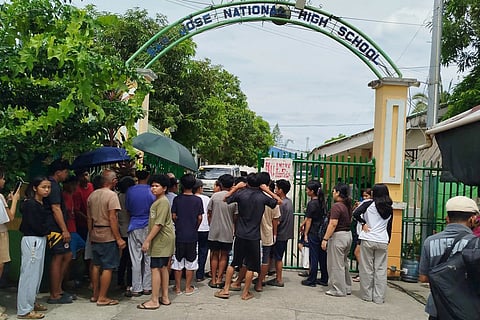
Manila: The deadly school shooting in Tacloban City has triggered renewed calls from Philippine lawmakers for stricter regulation of children's social media use, stronger security in schools and a fresh review of the country's juvenile justice law, as officials debate how to prevent similar attacks.
Senate President Sherwin Gatchalian urged Congress to pass the proposed Social Media Safety for Children Act, which would prohibit children younger than 16 from using social media platforms.
He argued that violent online content and interactive games may have contributed to the actions of two minors accused in last week's attack at San Jose National High School, where three students were killed and 20 others wounded.


Speaking to dzBB radio, Gatchalian said excessive social media use has exposed children to online exploitation, worsened mental health problems and increased the risk of violent behavior.
He pointed to studies linking prolonged exposure to violent online content and gaming with behavioral changes among young people, saying many countries are adopting stricter protections for minors online.
"The influence of social media on children has become extremely strong," Gatchalian said, adding that rising cases of youth depression, suicide and violent incidents underscore the need for stronger safeguards.
Violent game under scrutiny
Gatchalian expressed particular concern over reports that the 14-year-old suspect had played the online game GoreBox before the shooting.
Authorities have since blocked access to the game through the Cybercrime Investigation and Coordinating Center (CICC) as a precaution while investigators determine whether it played any role in the incident.
The senator described GoreBox as an online multiplayer game featuring graphic violence, saying it exposes young users to simulated killing, substance use and other harmful content.
However, experts have long cautioned that while violent games may influence some individuals, research has not established a direct causal link between video games alone and mass violence. Mental health, family environment, access to weapons and other social factors are generally considered significant contributors.
Parents, schools share responsibility
Beyond regulating online platforms, Gatchalian said preventing youth violence requires stronger parental involvement and better support systems inside schools.
He called for more guidance counselors, additional security personnel and full implementation of the Parent Effectiveness Service Program Act, which seeks to strengthen parenting education.
"At the end of the day, it is about how a child is raised," Gatchalian said, emphasizing that parents remain primarily responsible for instilling values and monitoring their children's activities.
Tulfo pushes tougher campus security
Sen. Raffy Tulfo renewed his call for tighter school security, saying the Tacloban tragedy exposed weaknesses in campus safety measures.
Tulfo criticized the Department of Education (DepEd) for failing to implement recommendations he first raised in 2025, including deploying security guards equipped with metal detectors and installing CCTV cameras in schools.
According to Tulfo, Education Secretary Sonny Angara told him the school lacked a perimeter fence, allowing the armed students to enter through the rear of the campus despite the presence of security guards.
Tulfo said his proposed Senate Bill No. 411 would require schools to install surveillance cameras and strengthen security personnel to help deter violence and improve investigations.
Debate resumes over juvenile justice law
The shooting has also revived discussion over whether the Juvenile Justice and Welfare Act should be amended.
President Ferdinand Marcos Jr. has expressed openness to reviewing the current age of criminal responsibility. Gatchalian and Sen. Panfilo Lacson likewise said Congress should consider possible amendments.
Lacson cited the 1993 murder of two-year-old James Bulger in England by two 10-year-old boys as an example of why lawmakers should revisit whether age should automatically exempt minors from criminal liability.
He argued that recent Supreme Court rulings requiring prosecutors to prove discernment beyond reasonable doubt could serve as an important safeguard.
Opposition favours rehabilitation over punishment
Several educators, religious leaders and lawmakers opposed lowering the age of criminal responsibility, arguing that harsher penalties would not address the underlying causes of youth violence.
The Catholic Educational Association of the Philippines (CEAP) said schools should adopt restorative approaches that address trauma, conflict and social conditions rather than relying primarily on punishment.
Military Ordinariate Bishop Oscar Jaime Florencio called for a "whole-of-society" response involving families, schools, churches and government institutions instead of focusing solely on legal reforms.
Gabriela party-list Rep. Sarah Elago warned against placing greater criminal liability on children while overlooking poverty, inadequate social services and broader societal violence.
Manila 3rd District Rep. Joel Chua said existing laws already provide mechanisms to hold minors accountable through rehabilitation or criminal proceedings when appropriate, arguing that authorities should focus on enforcing the law effectively rather than immediately lowering the age threshold.
National response continues
The Tacloban shooting — the deadliest school attack in recent Philippine history — has intensified calls for reforms spanning online child safety, campus security, mental health services, responsible parenting and juvenile justice.
Vice President Sara Duterte visited the wakes of the three students killed in the attack, as government officials continued reviewing measures aimed at preventing similar tragedies.


