Philippines passport unlocks 78 countries: Your visa-free, visa-on-arrival & ETA to-go list here
The power of the Philippine passport as of January 2026: An overview
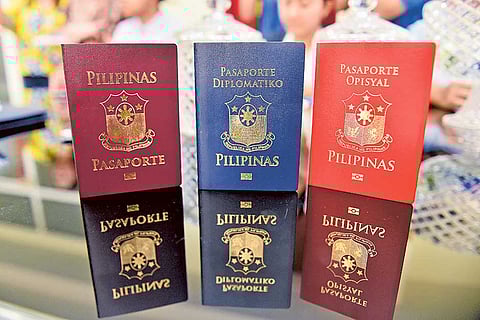
Manila: The Philippine passport now ranks 68th globally, unlocking 78 countries, equivalent to a world reach of 39%, the latest Passport Index shows.
If that sounds like a lot of numbers, let's break it down.
This means: Filipinos can access about two-fifths of the world's countries with relative ease.
With a population of over 116 million, these metrics highlight both the opportunities – and limitations – for Filipino travellers in an increasingly interconnected world.


As of January 2026, data from Passport Index — a leading global mobility intelligence platform — positions the Philippine passport with a “mobility score” of 78, granting holders access to 78 destinations without a prior visa.
Breakdown of travel access given to Filipinos:
Visa-free entry
Visa on arrival (VoA)
Electronic travel authorisation (eTA).
In 2025, the Philippines jumped 3 places up in Henley Passport Index’s global rankings to the 72nd from 75th in 2024. The passport hit a low of 80th in 2022, amid pandemic curbs.
This steady improvement, even if incremental, reflects continued diplomatic efforts and agreements aimed at expanding the global mobility of Filipino citizens.
Economy
The passport power ranking is a sharp contrast to its economy – 9th in Asia, and 32nd globally based on GDP of approximately $1.48 trillion (in terms of Purchasing Power Parity (PPP), as per latest IMF data.
Despite risks from global factors, tariffs and local governance issues like corruption scandals, the IMF projected the Philippines’ economy to grow by a decent 5.4% in 2025.
'Red' areas
The Philippine passport is still marked “red”, i.e. prior visa required, when used to enter major economies in Europe, North America, and parts of Asia (China, South Korea, Japan).
ASEAN
Strong ties in ASEAN facilitate easy travel within Southeast Asia. The Philippine Department of Foreign Affairs (DFA) continues to negotiate more reciprocal deals, challenges, such as stringent requirements from Western countries amid migration concerns.
Schengen
Filipinos with ordinary passports do need a Schengen visa for short stays in the Schengen Area (tourism, business, or visiting family), requiring an application before travel to the embassy/consulate of their main destination country.
The visa allows travel across all 29 Schengen member states for up to 90 days within a 180-day period, with specific requirements (travel insurance and detailed itineraries).
South Korea
While Filipino citizens generally need a visa to visit South Korea, exceptions exist for Jeju Island (visa-free for up to 30 days) and specific group tours to certain regions like Jeolla Province (via Muan Airport). For mainland South Korea, Filipinos must apply for a short-term visitor visa (C-3) through the Korea Visa Application Centre in Manila or a designated travel agency, with requirements varying by purpose and status.
Japan
Philippine passport holders also need a visa to enter Japan, even for tourism, but there are different types like single-entry (short 15-day or up to 90-day stays) or multiple-entry for frequent travellers, with applications now primarily handled by the Japan Visa Application Center (JVAC) via VFS Global since April 2025.
Dashboard
The latest Passport Index “dashboard” includes a mobility score graph, and lists of visa-free accessible countries.
The dashboard's world map visually categorizes global destinations by color-coded visa requirements:
Green: Visa-free countries, primarily in Southeast Asia, Latin America, and parts of Africa (e.g., Brazil, Indonesia, Morocco).
Blue: Visa on arrival, scattered across Africa, the Pacific, and the Middle East (e.g., Maldives, Mauritius).
Yellow: eTA-required, limited to a few like Kenya and Pakistan.
Red: Visa required, encompassing major economies in Europe, North America, and parts of Asia (e.g., the United States, China, most EU nations).
The Philippine passport's key metrics as of January 2026 are:
Mobility Score: 78 (total destinations with visa-free, VoA, or eTA access)
Visa-Free Access: 35 countries
Visa on Arrival: 40 countries
Electronic Travel Authorization (eTA): 3 countries
Visa Required: 120 countries
Passport Power Rank: 68th (out of approximately 199 passports evaluated)
World Reach: 39% (percentage of global destinations accessible without a visa)
Population: 116,786,962 (as per the dashboard, reflecting the scale of impact)
Henley Pass Index (HPI)
These figures align with the Henley Passport Index (HPI), another prominent ranking, which reported 65 visa-free or VoA destinations for Filipinos as of mid-2025, ranking it 72nd.
The slight discrepancy arises from methodological differences: Passport Index includes eTAs in its mobility score, while HPI focuses more narrowly on visa-free and VoA access.
Both indices confirm the Philippine passport's mid-tier status, stronger than many in South Asia or Africa but trailing behind Southeast Asian neighbours like Malaysia (mobility score: 180) or Singapore (193).
Lists of Accessible Countries
Based on data from Passport Index and other published sources (travel sites like Klook), below are categorised lists of destinations.
Visa-Free Countries (35)
These allow entry without any prior visa, often for tourism or short business stays.
| Country | Stay Duration (Days) |
|---|---|
| Barbados | 90 |
| Benin | 30 |
| Bolivia | 90 |
| Brazil | 90 |
| Brunei | 14 |
| Cambodia | 30 |
| Colombia | 90 |
| Costa Rica | 30 |
| Cote d'Ivoire (Ivory Coast) | 90 |
| Dominica | 21 |
| Fiji | 120 |
| Haiti | 90 |
| Hong Kong | 14 |
| Indonesia | 30 |
| Kazakhstan | 30 |
| Kiribati | 90 |
| Laos | 30 |
| Macao | 30 |
| Malaysia | 30 |
| Micronesia | 30 |
| Mongolia | 21 |
| Morocco | 90 |
| Myanmar | 14 |
| Palestinian Territories | Unlimited (varies) |
| Paraguay | 30 |
| Peru | 180 |
| Rwanda | 90 |
| Singapore | 30 |
| St. Vincent and the Grenadines | 90 |
| Suriname | 30 |
| Taiwan | 14 |
| Tajikistan | 30 |
| Thailand | 60 |
| Vanuatu | 120 |
| Vietnam | 21 |
Visa on Arrival (40)
Available at the port of entry, often with a fee; some may require pre-registration.
| Country | Stay Duration (Days) |
|---|---|
| Armenia | 120 |
| Burundi | 30 |
| Cape Verde | 30 |
| Comoros | 45 |
| Djibouti | 90 |
| Ethiopia | 90 |
| Guinea-Bissau | 90 |
| Iran | 30 |
| Jordan | 30 |
| Kyrgyzstan | 60 |
| Madagascar | 90 |
| Malawi | 30 |
| Maldives | 30 |
| Marshall Islands | 90 |
| Mauritania | 30 |
| Mauritius | 60 |
| Mozambique | 30 |
| Nepal | 90 |
| Nicaragua | 30 |
| Palau | 30 |
| Papua New Guinea | 60 |
| Saint Lucia | 42 |
| Samoa | 90 |
| Senegal | 30 |
| Seychelles | 90 |
| Sierra Leone | 30 |
| Somalia | 30 |
| Sri Lanka | 30 |
| Tanzania | 90 |
| Timor-Leste | 30 |
| Togo | 7 |
| Tonga | 31 |
| Trinidad and Tobago | Varies |
| Tuvalu | 30 |
| Uganda | 90 |
| Zambia | 90 |
| Zimbabwe | 90 |
| And others (e.g., Bolivia alternative, etc.) | Varies |
(Note: Full count is 40; this list is comprehensive based on sources, with some overlaps or alternatives.)
Electronic Travel Authorisation (eTA)
Simple online pre-approvals, similar to eVisas but faster.
| Country | Stay Duration (Days) |
|---|---|
| Israel | 90 |
| Kenya | 90 |
| Pakistan | 30 |
Note: Policies can change due to geopolitical events or bilateral agreements, so travellers should always confirm with official sources like the Department of Foreign Affairs (DFA) or embassy websites.


