54 tremors: What is an 'earthquake swarm'? Why dozens of quakes are shaking Masbate, Philippines — what volcanologists say it means
Philippine experts say Masbate’s quake swarm shows stress release, not eruption
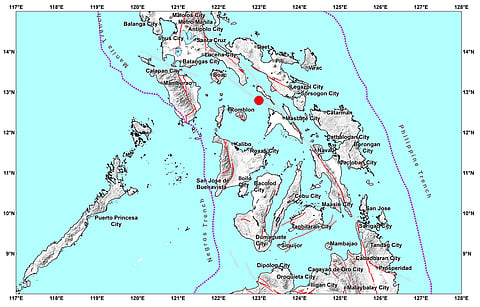
Manila: A series of earthquakes off the coast of Claveria, Masbate has raised concerns among residents.
Philippine volcanologists say the activity is consistent with an "earthquake swarm" — which they describe as a "natural phenomenon".
Get updated faster and for FREE: Download the Gulf News app now - simply click here
It does not necessarily signal a major earthquake or volcanic eruption, they say.
Since July 13, the Philippine Institute of Volcanology and Seismology (PHIVOLCS) said it has recorded at least 54 earthquakes offshore since the swarm began, with magnitudes ranging from weak tremors to a magnitude 5.4 earthquake, followed by numerous aftershocks.
More recent events included a magnitude 4.7 quake at 3.18pm on Tuesday (July 14, 2026) and several smaller tremors, indicating the "swarm" remains active.
PHIVOLCS said there is no evidence of a tsunami threat, but advised residents to remain alert for possible stronger shaking and aftershocks.
What is an earthquake swarm?
Unlike a typical earthquake sequence — where one large quake is followed by progressively smaller aftershocks — an earthquake swarm consists of numerous earthquakes of similar size occurring within a relatively short period in the same area, without a single dominant mainshock.
PHIVOLCS says swarms occur when stress is released gradually along faults through repeated small earthquakes rather than one major rupture.
Science Secretary Renato Solidum Jr., a former PHIVOLCS director, has previously explained that earthquake swarms are "not unusual" in tectonically active regions like the Philippines and do not automatically mean a destructive earthquake is imminent, although they warrant close monitoring.
Why is it happening in Masbate?
Masbate sits along the Philippine Fault Zone, one of the country's most active fault systems.
The offshore area near Claveria contains several active faults capable of producing frequent seismic activity.
PHIVOLCS says the current swarm is believed to be caused by tectonic movement along these faults, rather than volcanic activity.
Volcanologists emphasised that the swarm is not associated with a volcano, despite PHIVOLCS being the country's lead agency for both earthquakes and volcanic hazards.
Does an earthquake swarm mean a bigger earthquake is coming?
Not necessarily.
According to PHIVOLCS, most earthquake swarms eventually diminish without producing a major earthquake.
However, scientists cannot completely rule out the possibility that a stronger earthquake could occur because the Philippines remains one of the world's most seismically active countries.
For that reason, PHIVOLCS continues to monitor the swarm around the clock and updates its earthquake bulletins as new events are detected.
What should residents do?
PHIVOLCS advises residents in Masbate and nearby areas to:
Stay alert for aftershocks.
Follow local government advisories.
Inspect homes for structural damage after any strong shaking.
Prepare emergency kits and family evacuation plans.
Practice the "Drop, Cover and Hold On" earthquake safety procedure.
Authorities also reminded coastal communities that the current swarm has not generated a tsunami, but residents should always follow official warnings if conditions change.
A region familiar with earthquakes
Masbate has experienced several significant earthquakes in recent years, including the magnitude 6.6 Masbate earthquake in August 2020, which caused fatalities and widespread damage.
The province's location along the Philippine Fault makes it particularly vulnerable to recurring seismic activity.
While the ongoing swarm has caused concern, volcanologists stress that it reflects the Philippines' active tectonic setting rather than an immediate sign of a catastrophic event.
Continued monitoring, preparedness and adherence to official advisories remain the best response as scientists watch for any changes in the seismic activity.


