Pakistan: Violent clashes erupt after Khamenei killing; 12 dead
Shia-led protests turn violent near US missions in Karachi and Islamabad
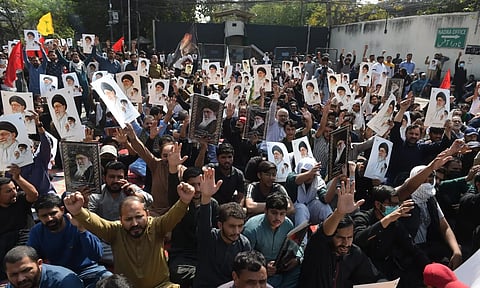
Dubai: At least 12 people were killed and dozens injured on Sunday as protests swept across Pakistan following the assassination of Ayatollah Ali Khamenei in coordinated US-Israeli air strikes on Tehran.
The most violent clashes erupted near the US Consulate in Karachi and around Islamabad’s Diplomatic Enclave, prompting sweeping security crackdowns, bans on public gatherings, and the formation of investigation teams.
Why the protests erupted
The demonstrations were primarily organised by Pakistan’s Shia Muslim community, with groups such as Majlis Wahdat-i-Muslimeen (MWM) calling for nationwide rallies in solidarity with Iran. Protesters viewed Khamenei’s assassination as a direct attack on Muslim sovereignty and a dangerous escalation in the Middle East.
Deadly clashes in Karachi
In Karachi, nine people died and 34 were injured after protesters clashed with law enforcement near the US Consulate on Mai Kolachi Road. According to Dr Mohammad Sabir Memon of Civil Hospital Karachi, all casualties, both deceased and injured, suffered gunshot wounds. Police used tear gas and baton charges after demonstrators breached security cordons. Emotional scenes unfolded outside hospital mortuaries as families gathered to identify victims, while roads surrounding the consulate were sealed. Attempts to block roads with containers triggered further stone-pelting and confrontations.
As Pakistan grapples with the fallout from Khamenei’s assassination, officials face the dual challenge of managing public grief and preventing further bloodshed in a highly charged sectarian and geopolitical climate. Deep grief
The Sindh government expressed “deep grief” over the loss of life and announced the formation of a high-level joint investigation team (JIT) to conduct an impartial probe. Chief Minister Murad Ali Shah described the incident as “extremely tragic” and called for a transparent inquiry into the circumstances and responsibility for the violence.
Protests in Islamabad and Punjab
In the federal capital, two protesters were killed and more than 30 injured during clashes near the Red Zone. Police and Rangers used tear gas to push back demonstrators attempting to march toward the US Embassy. Section 144 was in place, banning gatherings, but thousands still gathered at Aabpara Chowk before being stopped at Serena Chowk. Hospitals reported that several of the injured including police personnel were in critical condition.
Lahore violence
In Lahore, Shia activists gathered outside the US Consulate, attempting to scale boundary walls before being pushed back by police. The Punjab government imposed a seven-day ban on public gatherings and restricted the display of weapons, citing credible security threats and concerns over sectarian unrest.
Unrest spreads
Protests in Skardu and Gilgit turned violent, with demonstrators setting fire to offices of the United Nations Military Observer Group in India and Pakistan (UNMOGIP) and other local buildings. A curfew was imposed, and the Pakistan Army was called in to support civil authorities. Roads in multiple districts were blocked, markets shut down, and foreign tourists were moved to safe locations.
Restraint urged
In Khyber Pakhtunkhwa, rallies in Dera Ismail Khan, Tank, and surrounding districts remained largely peaceful, with Shia leaders emphasising solidarity with Iran while urging restraint. Demonstrators carried portraits of Khamenei and chanted anti-US and anti-Israel slogans, but local authorities reported no violence.
The US Embassy in Islamabad urged American citizens to monitor local news, avoid large crowds, and maintain heightened security awareness. Across Pakistan, authorities stressed the constitutional right to protest but warned that vandalism and violence would not be tolerated.


