Pakistan ‘forced’ to halt Afghanistan trade amid terror concerns: Shehbaz Sharif
PM says talks failed despite mediation, calls on Kabul to rein in militant groups
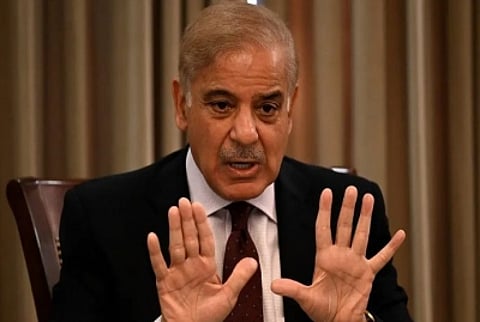
Dubai: Prime Minister Shehbaz Sharif on Tuesday said Pakistan was “forced” to suspend all trade with Afghanistan after Kabul failed to act against militant groups operating from its territory, warning that terrorism had once again become the country’s gravest security challenge.
Addressing a national Khyber Pakhtunkhwa (KP) security workshop in Islamabad, Sharif said the complete shutdown of Pak-Afghan trade, in place since mid-October 2025, was avoidable but unavoidable under the circumstances.
“There is a complete blockade of Pak-Afghan trade. It should not have been there, but they forced us,” the prime minister said, according to Dawn and Geo News.
Trade across the border was halted after clashes erupted in October 2025. Subsequent rounds of talks on counter-terrorism mechanisms failed despite mediation efforts by Turkiye and Qatar.
Sharif said Pakistan had made repeated attempts to resolve the issue diplomatically but Kabul had shown little willingness to commit to reining in terrorist outfits.
“This time, it must be decided whether Afghanistan wants to live peacefully or not,” he said, adding that while Afghans were “our brothers and sisters”, the interim Afghan government must at least show mercy to its own people by preventing militancy.
“Rest assured, we will keep trying our best,” he added.
The prime minister stressed that lasting peace in KP had become inevitable and that the state was determined to eradicate terrorism “once and for all”. He described KP as one of Pakistan’s most strategic provinces and paid tribute to its people and security forces for what he called “unparalleled sacrifices” in the war against terrorism.
Key points
Trade halted: Pak-Afghan border closed since mid-October 2025
Trigger: Border clashes and rising militant attacks
Talks failed: Multiple rounds of negotiations collapsed despite Turkey and Qatar mediation
Pakistan’s demand: Kabul must rein in TTP, BLA and all terror proxies
Doha Accords: PM says Afghanistan violated its pledge to prevent terrorism
Economic impact: Afghanistan hit harder, but Pakistani exporters also report losses
National security, Sharif said, remained the government’s top priority, with a comprehensive strategy being adopted to address both internal and external threats.
He recalled that following the 2014 Army Public School attack, the state had resolved there would be “no good or bad Taliban”, a policy he said remained unchanged.
However, Sharif questioned why terrorism had resurged after being largely contained in recent years.
Militants released
“In 2018, terrorism was completely eradicated through immense sacrifices,” he said. “But after 2018, this menace resurfaced — and we all know why.”
He alleged that militants were released and thousands of individuals were allowed to enter Pakistan from Afghanistan, which he said directly contributed to renewed violence, particularly in KP and Balochistan.
“Terrorism has again struck at Pakistan’s development and prosperity,” Sharif said. “Every day, there is a terrorist incident somewhere.”
Referring to Afghanistan, the prime minister said Pakistan had hosted nearly four million Afghan refugees over decades, often using its own resources despite receiving international aid.
“We did not do any favour; we fulfilled our responsibilities,” he said. “But the way they are paying us back is very upsetting.”
Sharif pointed to the 2020 Doha Accords, noting that Afghanistan had committed to preventing terrorist groups from operating on its soil — a pledge he said had not been honoured.
“We had only one demand: Rein in all terrorist outfits and proxies, whether it is the TTP, BLA, or those supported by India,” he said. “Unfortunately, no serious commitment was made.”
While data shows Afghanistan has been hit harder economically by the trade blockade, Pakistani exporters and businesses have also raised concerns about losses.
“What is good for Afghanistan is good for Pakistan, and vice versa,” Sharif said, adding that peaceful coexistence remained the only viable path forward.


