Explained: How a viral bus video and a suicide ignited outrage in Kerala
Man’s death after viral allegation has exposed fault lines over social media justice
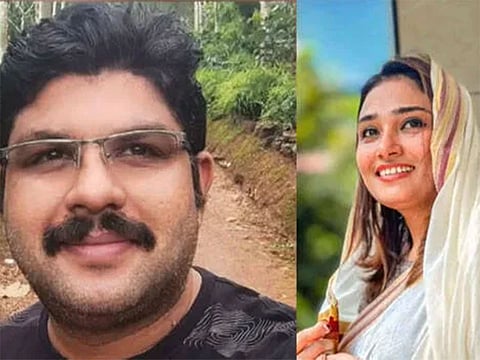
Dubai: The suicide of 41-year-old Deepak U in Kozhikode has sparked widespread public anger, legal action, and an intense social media debate, after a viral video accused him of sexual misconduct on a bus.
According to Onmanorama and other media reports, the case has become a flashpoint over the limits of social media activism, public shaming, and how allegations should be handled.
Kozhikode Medical College Police on Wednesday arrested Shimjitha Musthafa, The police took her for medical examination at Koyilandi taluk hospital.
What happened?
Deepak, a sales officer with a garment firm, was found hanging at his residence in Mankavu on January 18, days after a video posted by social media influencer Shimjitha Musthafa went viral.
In the clip, Shimjitha alleged that Deepak deliberately touched her with sexual intent while travelling on a crowded KSRTC bus.
The video spread rapidly across platforms, triggering strong reactions and heated debate online. Shortly afterwards, Shimjitha deleted the video and uploaded another clip explaining why she had recorded and shared it.
Following Deepak’s death, police registered a case of abetment of suicide based on a complaint filed by his family.
Why did suicide trigger such public outrage?
Public sentiment shifted sharply after Deepak’s death. While the original video had generated discussion around alleged misconduct and women’s safety in public transport, the suicide reframed the issue as one involving irreversible harm.
Family members and friends said Deepak was under severe mental stress following the circulation of the video.
A close friend told Onmanorama that Deepak had been shocked on learning about the clip and had planned to take legal action against Shimjitha, asserting his innocence, the night before his death.
Since Deepak is no longer alive to present his version of events, many members of the public began to question whether social media had effectively conducted a trial without due process.
Who is Shimjitha Musthafa?
According to Onmanorama reports, Shimjitha Musthafa is a 35-year-old social media influencer and former local body representative from Malappuram district.
Originally from Vatakara in Kozhikode district, she moved to Areekode after marriage
Completed graduation, postgraduate studies in commerce, and a BEd degree with family support
Entered public life through the 2020 local body elections as an IUML-backed candidate and won by a large margin
Served on education and health standing committees of the grama panchayat
Later moved to a Gulf country, where she became more active as a content creator and distanced herself from politics
Returned to Kerala in recent months and focused on social media influencing
Her evolving public persona and influencer identity have come under intense scrutiny following the controversy.
In one of the videos, Shimjitha is heard saying, “Yesterday, I shared a video from a public bus where a man deliberately touched me without my consent. This was not an accident or a misunderstanding. It was a clear violation of my sexual boundaries.”
“I began recording after noticing a woman in front of me was uncomfortable. Despite knowing he was being recorded, the man still went ahead and touched me. This shows a deliberate act, a lack of empathy and the belief that he would face no consequences.”
The video was circulated on Friday. Saturday was Deepak’s birthday. His mother said he did not eat anything that day after he learnt that the video was all over the Internet.
Relatives said he had told her mother about what had happened, and she had told him she would somehow find a way out. He had also discussed the matter in detail with his friend.
Deepak was found dead on Sunday morning. “My child could not bear it. He has not been accused of anything wrong ever,” Deepak’s mother sobbed.
Is the video proof of misconduct?
This question lies at the heart of the controversy.
Shimjitha maintains that the touch was deliberate. However, several viewers online have claimed the contact appeared accidental due to crowding on the bus. YouTube and Instagram creators have produced numerous videos analysing the clip, offering interpretations that range from outright dismissal of the allegation to criticism of Shimjitha’s response.
Legal experts and commentators have cautioned that determining intent and liability is the role of investigators and courts, not social media users.
According to police, the video allegedly consists of multiple clips, and efforts are underway to recover Shimjitha’s phone to retrieve the original footage and examine whether editing occurred.
Cardboard boxes, silent fear
A striking and unusual protest unfolded on a bus in Kerala, where conductors and passengers wore cardboard boxes over their faces to symbolise fear and uncertainty.
The silent demonstration was triggered by the suicide of Deepak. Protesters said the boxes represented their anxiety about being filmed, accused and judged instantly online without verification or due process.
The act has intensified an already heated debate around trial by media, public accountability, women’s safety in public transport and growing concerns voiced by men’s rights groups.
Adding to the swirl of online reactions, another widely shared meme showed a bus conductor mockingly announcing that “only men can board the bus,” a satirical take that underscored growing fear and resentment among male commuters.
Police action and legal developments
As the investigation intensified, police issued a lookout notice against Shimjitha after she allegedly went into hiding. The notice is also intended to prevent her from leaving the country.
Shimjitha has approached the Kozhikode District Magistrate Court seeking anticipatory bail. Police say they are examining not only the viral clip but also her earlier videos to establish patterns, intent, and context.
Meanwhile, the All Kerala Men’s Association has approached the High Court seeking a CBI or Crime Branch probe, alleging that the investigation is inadequate and demanding a detailed forensic examination of Shimjitha’s phone.
Cyber backlash and political escalation
Following the suicide, Shimjitha became the target of intense online harassment, including rape and murder threats, according to reports. A political figure later drew condemnation for posting a video that appeared to incite sexual violence against her.
Men’s rights groups have cited the case as an example of what they describe as “false accusations,” while conservative religious groups and political party supporters have also weighed in, amplifying polarised narratives.
This convergence of activism, politics, religion and influencer culture has further inflamed public discourse.
Why do some women defend posting such videos?
Supporters of Shimjitha argue that many women resort to social media because they distrust institutional responses to sexual harassment.
They cite past cases where victims who approached the police were subjected to prolonged scrutiny, victim-shaming, and social isolation.
They argue that recording and sharing such incidents is often driven by a demand for proof, not publicity, and reflects systemic failures rather than individual malice.
However, critics say public naming without investigation risks irreversible damage, particularly when allegations remain unproven.
The unresolved tension
What has intensified outrage is the stark finality of Deepak’s death. With no opportunity for legal resolution or rebuttal, public sympathy has largely tilted toward the deceased and his family.
At the same time, rights groups warn that turning the case into a blanket indictment of women who speak about harassment could discourage victims from coming forward.
What this case has exposed
The episode has exposed deep fault lines:
the blurred boundary between allegation and evidence online
the mental health toll of viral public shaming
the absence of restraint in social media commentary
and the risk that extreme reactions on either side can push individuals toward irreversible outcomes
Investigators continue to probe the sequence of events, digital evidence and intent. Until then, the case remains a reminder that while social media can amplify voices, it can also magnify harm — often faster than law or reason can intervene.


