Trump threatens 10% tariffs on 8 European nations over Greenland dispute
Trump warns tariffs could rise to 25% by June if Greenland deal isn’t reached
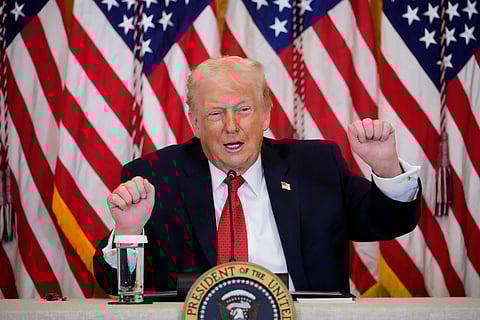
President Donald Trump said Saturday that he plans to impose a 10% import tariff starting in February on goods from eight European countries—Denmark, Norway, Sweden, France, Germany, the UK, the Netherlands, and Finland—citing their opposition to US efforts to purchase Greenland.
He warned that the tariff could rise to 25% on June 1 if a deal for “the Complete and Total purchase of Greenland” is not reached.
Trade tensions escalate with NATO allies
The threat represents a sharp escalation between Trump and NATO allies, straining an alliance that has existed since 1949. Trump has a history of using trade penalties to influence both allies and rivals, previously drawing pushback from countries including China, Brazil, and India. Experts noted that it is unclear how such tariffs could be imposed under US law, though Trump may cite economic emergency powers currently under US. Supreme Court review.
Trump cites Greenland security concerns
In his Truth Social post, Trump justified the tariffs as retaliation for recent visits to Greenland by officials from Britain, the Netherlands, and Finland. He also emphasized Greenland’s strategic importance for the “Golden Dome” missile defense system and warned that China and Russia could try to assert influence over the island.
Greenlanders protest for self-rule
Hours after Trump’s announcement, hundreds of people marched in Nuuk, Greenland, braving near-freezing rain to show support for self-governance. Protesters carried signs reading “Greenland is not for sale” and “We shape our future”, while thousands participated in rallies across the Danish kingdom.
US lawmakers seek to de-escalate tensions
A bipartisan US congressional delegation visited Copenhagen to reassure Denmark and Greenland. Senator Chris Coons (D-Del.) said the rhetoric had caused concern and emphasized that the US respects Denmark and NATO, urging calm to preserve international trust.
NATO training continues amid tensions
Danish Maj. Gen. Søren Andersen, leader of the Joint Arctic Command, confirmed that European and US troops continue joint Arctic defense training in Nuuk. Andersen stressed the exercises are not meant to send political signals, but to maintain readiness against potential Russian threats. He also noted that no Chinese or Russian military presence had been observed near Greenland.
European response and military preparations
European leaders reaffirmed that decisions regarding Greenland are for Denmark and Greenland to make. Denmark announced plans to increase military presence in Greenland in coordination with allies. Thousands of protesters marched in Copenhagen, carrying Greenlandic and Danish flags, highlighting the public resistance to Trump’s proposals.
Trump insists on US control
Trump reiterated his insistence that the US should control Greenland, citing its mineral resources and strategic position. He has warned that anything less than US ownership would be “unacceptable” and hinted at using tariffs to pressure allies, though no formal measures have yet been enacted.
Diplomatic talks continue
Earlier this week, Danish and Greenlandic foreign ministers met in Washington with US officials, resulting in a working group agreement—though both sides offered differing interpretations publicly. Coons stressed the importance of maintaining trust with Denmark to preserve NATO credibility.


