Women over 50: Why strength and heart workouts matter, according to UAE doctors
The most protective approach is a balanced routine that includes regular cardio
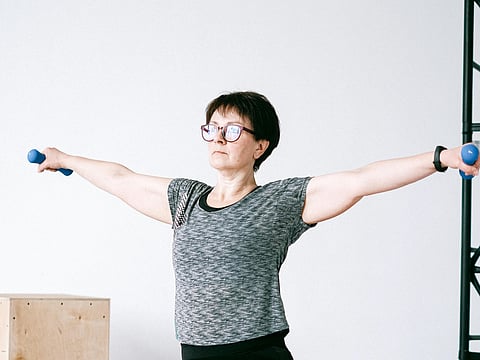
At 65, she feels younger than she did at 45.
Dubai-based Anuradha Chatterjee feels that she is living her second life. "I've been a homemaker my whole life, looking after my husband and children, sending them off to college. My husband died a few years ago, and I was all alone at home. I was just listless and so idle, and I felt physically weak," she adds.
So, she started with a few brief walks. She would get exhausted, but it was oddly exhilarating. And then she gradually extended her walks from 15 to 20 minutes. "I felt adventurous enough to try a treadmill," explains Chatterjee. Over the course of the year, the spurts burst forth. It spread to dumbbells, and yoga. "I pushed myself gently, but not too much. I just gave myself a goal, to be fit. And it made me feel alive, younger than I felt," she says.
Her lesson through the years: It's never too late. Nothing is ever too late.
Nevertheless, it takes time to get there. For many women, midlife can arrive like an ambush. The body changes before life slows down, and the energy dips. The sleep patterns become unpredictable and the weight shifts in alien ways. Suddenly, recovery feels prolonged, and stress resides resolutely in the body.
As they juggle between careers, caregiving, parenting and emotional labour, movement tends to slip on the priority list. However, doctors emphasise that midlife might be the most important time for women to stay physically active, not for aesthetic value, but for their own metabolism and health.
And research does point to this. A study, published in PLOS Medicine, tracked over 11,000 women for 15 years and found that those who consistently met recommended activity levels in their 50s and 60s had significantly better long-term health outcomes.
Women who remain active during midlife, according to studies, significantly reduce their risk of early death, especially from cardiovascular disease, diabetes, osteoporosis, and other chronic illnesses. Furthermore, exercise helps preserve mobility, independence, muscle strength, bone density, and cognitive health well into older age.
It becomes a biological reset point, as Dr. Kinda Al Ani, Consultant Obstetrician & Gynaecologist at Medcare Women & Children Hospital, notes.
The hormonal shift
Midlife does represent a major turning point in women’s health, as the body begins transitioning through perimenopause and menopause. At this point, the hormones shift dramatically as the estrogen levels decline, and the effects ripple through nearly every system in the body.
As Dr. Susan Thomas, Specialist Obstetrics & Gynaecology, Aster Hospital, Qusais explains, the shift contributes to an accelerated rise in chronic disease risk, particularly affecting cardiovascular, metabolic and musculoskeletal systems, with effects that compound into later life.
During this difficult time, the decline in estrogen affects the heart, brain and metabolism, along with the increased tendency for weight gain around the abdomen, accelerated bone density loss and higher vulnerability to chronic diseases, as Dr Al Ani says.
The danger is that many of these changes happen gradually, making it easy for women to dismiss symptoms as simply part of ageing.
But doctors stress this phase is also a critical window for intervention. “This stage offers a key window for preventive intervention, where consistent physical activity, balanced nutrition, and overall lifestyle management can meaningfully alter health trajectories, reducing the risk of early mortality and long-term disability,” says Dr Thomas.
Women in midlife don’t need intense workouts to gain strong health benefits—moderate, consistent activity is enough. The most protective approach is a balanced routine that includes regular cardio (like brisk walking or cycling) to support heart and metabolic health, strength training a few times a week to maintain muscle and bone density, some weight-bearing movement (like walking or light jogging) for bone health...

Why exercise becomes more powerful after 40
For years, exercise is often sold to women as a way to stay slim. Midlife changes that conversation entirely, as movement becomes cure.
According to Dr Thomas, regular physical activity helps to improve heart function, lowering blood pressure and cholesterol and enhance insulin sensitivity, thereby reduce the incidence of cardiovascular diseases, cancer and other metabolic conditions.
Cardiovascular disease, in particular, becomes a growing threat after menopause. “Cardiovascular disease is the most strongly influenced by physical activity,” Dr Thomas says. “Regular activity can reduce risk by 30–50 per cent, making cardiovascular disease the top condition affected by midlife exercise.”
But the benefits also go beyond the heart. Dr Al Ani, points to osteoporosis, cognitive decline, metabolic syndrome, breast cancer, and endometrial cancer as major health risks that can be significantly influenced by staying active.
“In essence, movement acts as a protective shield across multiple systems in the body,” she says.
No, women do not need punishing workouts
The workouts don’t need to be extreme to make a difference. This assumption, is what holds women back from starting at all. It doesn’t need to be intense, to be effective.
It just needs consistency. “The most beneficial approach is a combination of moderate aerobic activity, like brisk walking, cycling, swimming, strength training (to preserve muscle and bone density), flexibility and balance exercises (like yoga or Pilates),” explains Dr Al Ani.
As both agree: The most protective approach is a balanced routine that includes regular cardio, like brisk walking or cycling to support heart and metabolic health, strength training a few times a week to maintain muscle and bone density, some weight-bearing movement (like walking or light jogging) for bone health, and simple balance or flexibility exercises such as yoga.
And the message both doctors repeatedly return to is simple: You need to be consistent.
The 'protective' benefits
The 'most' protective benefits would come from getting stronger. This requires weight training with progressive overload, explains Sarah Lindsay, founder of Dubai's ROAR. The programs need to be periodised, monitored over several weeks to make a significant change. "This is a process that I believe can last a lifetime. Getting strong once can result in being stronger forever," she says.
It's much easier to maintain once you get there and your perception of effort and difficultly adjusts when you really know what your body is capable of. All this said, any and all exercise is worth doing. Even walking, movement, mobility, sport, dancing all add up.
Why resistance training suddenly matters so much
Resistance training sounds intimidating, but it's really about moving your muscles against an opposing force.
That force could be dumbbells, resistance bands, kettlebells, weighted balls, or simply your own body weight through movements such as squats, lunges, planks, or push-ups. It means any movement that causes the muscles to contract against an external resistance. And in midlife, that muscle strength becomes critical.
For years, women were encouraged to focus almost exclusively on cardio and shrinking their bodies. But doctors and trainers now stress that preserving muscle mass may be one of the most important ways women can protect themselves against ageing.
Moreover, as Dr Rajul Matkar, specialist obstetrician and gynaecologist had earlier told us: Resistance training converts fat to lean muscle, which is particularly important for older women, who generally tend to lose muscle mass after turning 50, especially in the menopausal stage. They are at risk for osteoporosis.
Strong muscles help support strong bones. They improve balance, stability, posture, and mobility. They reduce the risk of fractures and falls later in life.
And yet, despite these benefits, midlife is often the exact stage when women stop prioritising movement altogether.
Women transition through perimenopause into menopause, which brings, a decline in estrogen, affecting the heart, bones, brain, and metabolism Increased tendency for central weight gain around the abdomen,a accelerated bone density loss Higher vulnerability to chronic diseases
Why so many women stop prioritising themselves
The reality is that midlife women are often stretched in every direction. There’s work, family, children, ageing parents, household responsibilities and hormonal exhaustion. It adds up to lack of sleep.
By the end of the day, exercise can feel impossible. The result is that women often spend years putting themselves last, exactly when their health needs more support.
However, Lindsay adopts a rather empathetic approach. "I don't want to sound non empathetic to people’s busy lives and I completely understand that some people are under huge stress and limited time," she says, adding that in almost all cases the biggest barrier is that women do not prioritise themselves. "We put ourselves last on the list of who around us matters when we should be first. Nothing is more important than your health even if your reasons are so that you can take care of loved ones. Women deserve to be healthy, protect and look after themselves and of course feel good."
And so, the smartest approach may be the most straightforward one. The doctors say women do not need dramatic overhauls or complicated fitness routines to benefit. “The easiest way for women to stay active without feeling overwhelmed is to build movement into everyday routines instead of treating it like a separate workout,” says Dr Thomas.
That means small, sustainable movement counts. “Short bursts of activity—like 10–15 minute walks, taking stairs, stretching while doing chores, or moving during phone calls—add up over the day and still meet health goals,” she says.
Dr Thomas describes it as a ‘small steps often’ approach,’ adding that it “works better than waiting for long, dedicated workout sessions.”
The advice feels almost radical in a culture that constantly tells women health must look dramatic to matter.
It is never too late to begin
For women who feel they are starting late, doctors say the most important thing is simply to begin.
“The most important step is to make regular movement a fixed part of your week that you can stick to long-term, even if it starts small,” says Thomas.
In midlife, exercise becomes an investment in the next 20 or 30 years of life, and in the woman who will one day live them.
Shorter training sessions, regular walks, and simple mobility routines can be built into the day without adding pressure. Strength training becomes a priority because it supports metabolism, posture, and long-term independence...
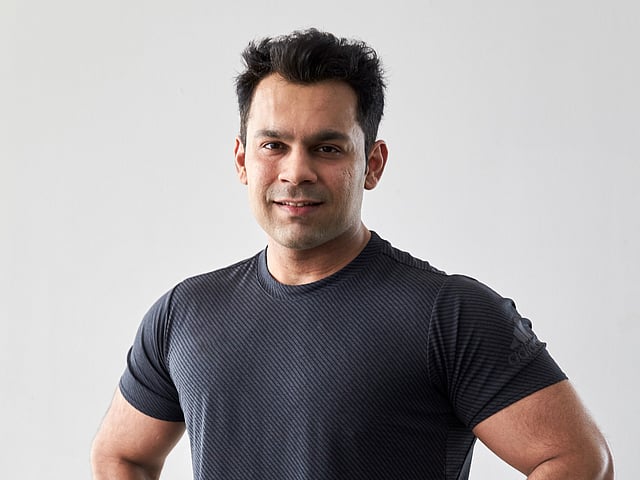
Some resistance training exercises:
Abhinav Malhotra, Founder - Abhifit, breaks it down:
Strength training 3-times a week to maintain muscle and bone density
Daily movement (8-10K steps) like walking to support metabolism and cardiovascular health
Mobility work to keep joints healthy and reduce stiffness
Proper recovery, especially sleep
As he says, "Consistency improves when the plan feels manageable."
Shorter training sessions, regular walks, and simple mobility routines can be built into the day without adding pressure. Strength training becomes a priority because it supports metabolism, posture, and long-term independence."
Nutrition also plays a key role. Stable meals with enough protein and balanced energy intake support hormones, recovery, and body composition far more effectively than restrictive diets.
So how do you begin? "Start with a routine you can follow without disruption. Build gradually. Track how your body responds. Adjust based on recovery, and don't overdo it. Bio-feedback, which means, listening to your body, becomes more important than ever," he explains.
Progress comes from doing the right things repeatedly, not from doing everything at once.


