Why the UAE is seeing rain and cooler weather this spring
Cooler weather and showers expected across the UAE until early next week
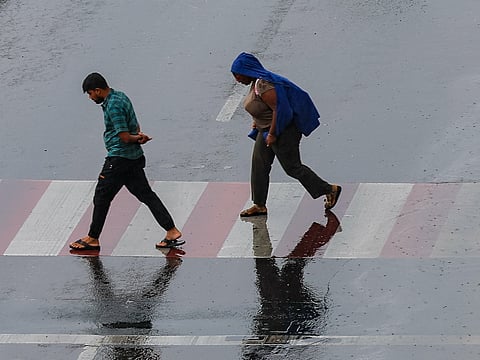
Dubai: Rain showers and unusually cool temperatures across the UAE this week may feel surprising for April, but meteorologists say such conditions are a natural part of the country’s spring transition between winter and summer.
The National Centre of Meteorology (NCM) said the country is experiencing a period of unsettled but pleasant weather, with chances of rainfall beginning early Thursday and expected to continue intermittently until Monday.
Get updated faster and for FREE: Download the Gulf News app now - simply click here.
Most of the rainfall is forecast to be light to moderate across scattered areas, with heavier showers possible in some western and eastern regions.
Is rain unusual at this time of year?
According to Dr Ahmed Habib, a meteorology expert at the NCM, rainfall during this period is not unusual.
“This is a transitional season between winter and summer, and spring typically brings variable weather, including rainfall of different intensities across the UAE,” he explained in comments to Gulf News.
Dr Habib noted that similar conditions were seen in April 2024 and stressed that such weather patterns are common not only in the UAE but across the wider Middle East during this time of year.
The main reason, he said, is the collision of different air masses, cooler air remaining from winter meeting warmer and sometimes humid air moving in as summer approaches. This interaction can lead to cloud formation, strong winds, dust activity and rainfall.
Why does it still feel cool?
The alternating temperatures are also part of this seasonal transition. Dr Habib explained that temperature changes depend on which air mass is dominant.
When cooler northern air systems prevail, temperatures drop and conditions feel milder. When warmer southern air masses move in, temperatures rise again. This explains why residents may experience warm days followed by several cooler days.
When moisture and low-pressure systems are also present, these conditions can trigger cloud development and rainfall.
How do current temperatures compare historically?
So far, temperatures remain within the normal historical range for this time of year, according to the NCM.
Dr Habib said temperatures may fluctuate slightly above or below the seasonal average but remain generally within expected levels. This explains the pattern of short warm spells followed by cooler periods.
How long will this weather last?
These weather fluctuations are expected to continue throughout the spring season, with gradual stabilisation as summer approaches.
“As long as we remain in the spring period, we can expect these weather variations,” Dr Habib said, noting that conditions typically begin to stabilise towards the start of summer on 21 June, when temperatures gradually rise and weather variability decreases.


