US-Iran war: Trump says 'make a deal' or face more attacks — what UAE residents need to know tonight, October 1, 2026
Talks remain stalled as Trump predicts a quick end and Tehran weighs Washington's response
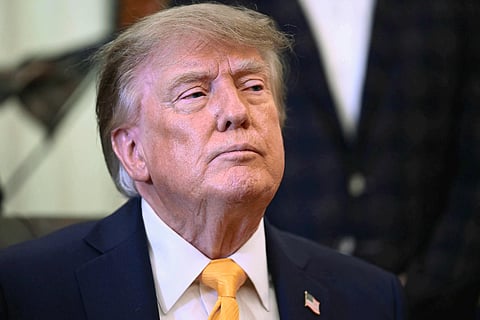
US President Donald Trump says the seven-month war with Iran will end “very soon, one way or the other”, presenting Tehran with a stark choice between reaching an agreement and facing further US military action.
His comments come as Iran considers Washington’s response to its proposal to end the conflict and reopen the Strait of Hormuz, while Qatar continues mediating between the two sides.
Get updated faster and for FREE: Download the Gulf News app now - simply click here.
Tensions nevertheless remain high. Iran’s Revolutionary Guards have portrayed the US campaign as a failure, while Washington says Iran’s military and nuclear capabilities have been severely damaged.
For UAE residents, the main developments this Thursday afternoon and evening are the uncertain diplomatic push, continuing tensions around Hormuz, developments in Iraq and changes to regional flight schedules.
Here is what you need to know on October 1.
Trump: Make a deal or face more attacks
Trump says Washington must decide whether to reach an agreement with Tehran or escalate military action.
“We have to make that decision: We blow them up or make a deal,” Trump told reporters in the Oval Office.
Trump said he expected the conflict to end “very soon, one way or the other” and maintained that military action remains an option if negotiations fail.
He also claimed the US has “almost total control” of the Strait of Hormuz, while acknowledging that conditions could change if Iran laid mines in the strategic waterway.
The comments underline the continuing gulf between Washington and Tehran despite efforts to negotiate an end to the conflict.
Iran weighs US response as Qatar keeps mediating
Iran has confirmed it received Washington’s formal response to its latest proposal to end the war.
Foreign Minister Abbas Araghchi briefed President Masoud Pezeshkian and Iran’s Cabinet after returning from talks involving mediators.
Tehran’s proposal includes conditions for reopening the Strait of Hormuz within seven days, including lifting the US blockade of Iranian ports, releasing frozen Iranian assets and easing restrictions on Iranian oil sales.
Trump had publicly rejected the proposal, but Washington subsequently sent a formal response through mediators.
Iran has not publicly disclosed the contents of the US response or said whether it will accept it.
Pezeshkian said Iran would continue trying to reach an agreement while defending what Tehran considers the rights of the Iranian people.
Rubio orders Iranian delegation to leave New York
US Secretary of State Marco Rubio ordered Araghchi and the Iranian delegation attending the UN General Assembly to leave New York earlier than planned, according to US officials.
The order came as Washington grew frustrated with the lack of progress in indirect negotiations.
Iran disputes the US account, however, saying the delegation’s departure had already been scheduled and communicated to Washington.
Araghchi travelled from New York to Doha, where Qatar has been mediating between the United States and Iran.
The competing accounts underline the ongoing tensions surrounding negotiations, even as diplomatic channels remain open.
Washington and Tehran trade claims over the war
The US and Iran are offering sharply different assessments of the seven-month conflict.
US Defence Secretary Pete Hegseth said American forces had severely damaged Iran’s navy, air force, air defences, military leadership and nuclear ambitions.
Trump similarly described the campaign as a US military victory and claimed Iran had been badly weakened.
Iran’s Islamic Revolutionary Guard Corps rejected that assessment, portraying the US campaign as a failure.
The IRGC also issued a message addressed to Americans urging them to pressure Washington to end the conflict, an appeal dismissed by US officials as propaganda.
Washington and Tehran's competing assertions cannot be treated as independent assessments of the war's overall outcome.
US troops leave Iraq as Baghdad targets armed factions
The US-led coalition established to fight Daesh has formally concluded its mission in Iraq and withdrawn its remaining forces under an agreement reached before the current phase of the US-Iran conflict.
Iran’s Revolutionary Guards welcomed the withdrawal on Thursday, calling it a “historic victory” and demanding that US forces leave the wider Middle East.
Iraqi Prime Minister Ali Al Zaidi, meanwhile, has set June 30, 2027, as the deadline for armed factions operating outside state control to surrender their weapons.
The move is particularly significant for Iran-aligned armed groups that have wielded substantial military and political influence in Iraq.
The US withdrawal was previously agreed and should not be interpreted as a direct consequence of the latest US-Iran negotiations.
UAE flights: Israel services suspended, other disruptions continue
UAE travellers continue to face selected cancellations and delays, with flights between Dubai and Tel Aviv among the most significant changes.
flydubai has suspended services to and from Israel until further notice following an incident aboard flight FZ1073 on September 30. Emirates has also suspended its flydubai codeshare services to and from Tel Aviv.
The UAE’s General Civil Aviation Authority said the security incident aboard FZ1073 was brought under control and that its circumstances remain under investigation.
Elsewhere, selected Emirates, flydubai and Air Arabia flights have been cancelled or delayed, while some services from Abu Dhabi reported minor delays.
Air France’s Dubai suspension has been extended until October 24, while Cathay Pacific has cancelled its Dubai and Riyadh passenger services through January 31, 2027.
Not every cancellation or delay is related to the regional conflict, and passengers should check their individual flight directly with their airline before travelling to the airport.
What UAE residents should watch this evening
The most important question remains whether Iran accepts, rejects or seeks changes to Washington’s response to its latest proposal.
Trump’s comments show that further US military action remains an option if diplomacy fails, while Iran has yet to reveal its decision on the American response publicly.
The Strait of Hormuz will remain a key indicator. Any agreement restoring more normal shipping through the waterway could ease pressure on energy markets and regional trade.
For UAE travellers, the suspension of Dubai-Tel Aviv services is the most significant immediate aviation change, while other airline schedules remain subject to short-notice adjustments.


