US-Iran war: 6 major developments UAE residents need to know today
Saudi coalition hits 136 Houthi targets as Trump announces Russian diesel deal
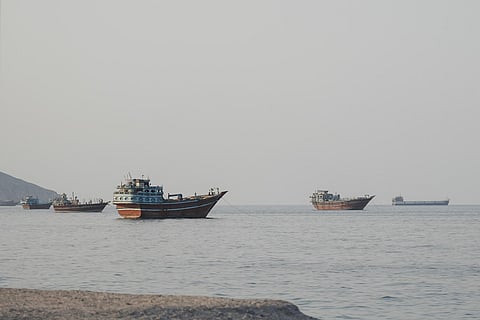
Dubai: The Saudi-led coalition says it has destroyed 136 Houthi military targets in Yemen as regional tensions escalate following deadly attacks on Saudi Arabia.
The UAE has condemned attacks on Riyadh's King Khalid International Airport and a Saudia aircraft that killed three Saudi nationals and injured several civilians.
Get updated faster and for FREE: Download the Gulf News app now - simply click here.
Meanwhile, US President Donald Trump has announced an agreement with Russia to release diesel supplies into global markets, while Iran claims to have struck a tanker in the Strait of Hormuz.
Here are six major developments UAE residents need to know this Saturday morning, October 10.
1. Saudi-led coalition says 136 Houthi targets destroyed
The Saudi-led coalition announced a large-scale military operation against Yemen's Iran-backed Houthis on Saturday, saying it had destroyed 136 military targets.
Coalition spokesman Turki Al Maliki said the operation targeted Houthi personnel and military capabilities in areas controlled by the group.
The Houthis' Almasirah television channel reported that Saudi missiles struck areas in Yemen's northwestern Saada governorate.
Fighting between the Houthis and Yemen's internationally recognised government, which Saudi Arabia supports, reignited in July and has since spilt into the neighbouring kingdom.
2. UAE condemns deadly Houthi attacks on Saudi airport
The UAE has strongly condemned Houthi attacks on King Khalid International Airport in Riyadh and a Saudia aircraft.
The attacks killed three Saudi nationals and injured several civilians.
In a statement, the Ministry of Foreign Affairs reaffirmed the UAE's solidarity with Saudi Arabia and its support for measures to protect the kingdom's security and stability.
The ministry also extended condolences to the victims' families and wished the injured a speedy recovery.
3. Trump announces Russian diesel deal to ease fuel prices
US President Donald Trump said he had secured an agreement with Russian President Vladimir Putin to release diesel supplies into American and global markets.
Trump said Russia would immediately supply more than 300,000 tonnes of diesel, followed by another 500,000 tonnes in November.
The announcement comes as the war with Iran continues to put pressure on global energy supplies and fuel prices.
The US Treasury Department also announced a temporary licence allowing Russian diesel to flow into global markets.
Trump said the additional supplies would help ease rising energy costs, although the impact on fuel prices remains to be seen.
4. Iran claims tanker strike in Strait of Hormuz
Iran's Islamic Revolutionary Guard Corps (IRGC) said it had struck a liquefied petroleum gas carrier attempting to pass through what it described as an illegal route in the Strait of Hormuz.
Iranian authorities identified the vessel as the NV Sunshine, which was reportedly travelling through the southern part of the waterway when it was hit.
The IRGC also claimed Iranian forces had taken control of the administration of the strait.
Tehran has sought to blockade the strategic shipping route since the beginning of the Middle East war.
The reported strike and Iran's claims about control of the waterway have not been independently verified.
5. Strait of Hormuz shipping remains 75% below normal
Commercial shipping through the Strait of Hormuz remains approximately 75 per cent below pre-conflict levels, according to a report published by UK Maritime Trade Operations (UKMTO) on October 9.
The agency recorded 275 vessel movements over the previous seven days, comprising 129 outbound and 146 inbound transits.
UKMTO also reported 11 attacks on commercial vessels during the period, including 10 in the Strait of Hormuz and one in the Arabian Gulf.
Seven vessels sustained minor damage but continued their journeys.
Maritime security risks remain severe in the Strait of Hormuz, while the threat level in the Arabian Gulf and Gulf of Oman is assessed as moderate.
The agency also recorded nine reports of satellite-navigation interference and 18,881 anomalous vessel-tracking positions during the seven days.
The figures highlight ongoing disruption to commercial shipping on one of the world's most important energy routes.
6. US says 133 commercial vessels redirected
US Central Command (CENTCOM) said American forces redirected 133 commercial vessels to ensure compliance with regional restrictions.
In an update issued on October 9, CENTCOM said it redirected the vessels as part of efforts to enforce the restrictions.
The command did not identify the vessels, disclose their destinations or provide further details about the operations.
The announcement comes amid continuing tensions between Washington and Tehran over maritime access and security in the Gulf.
What UAE residents should watch today
The escalation between Saudi Arabia and the Houthis remains a major regional concern following the deadly attacks on civilian aviation facilities and the coalition's latest military operation.
Developments in the Strait of Hormuz will also remain in focus, particularly following Iran's reported tanker strike and fresh figures showing severely disrupted shipping.
On the economic front, attention will turn to whether the Russian diesel agreement helps ease pressure on global fuel prices.


