UAE summer camps: How do you pick the right one for your child? Experts explain
The camp becomes a space where children are gently stretched, not pushed...
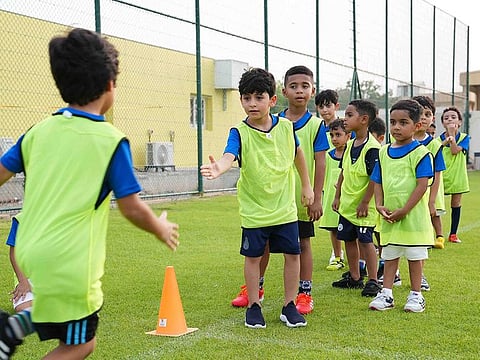
In childhood, I was led to believe, (thanks the magic of television and Enid Blytyon books) that summer camps would mean tents far away in the wild and evenings of roasting marshmellows over a roaring bonfire.
Well, while they do exist and my childhood belief wasn’t a complete lie: A growing realisation formed; a summer camp, even without tents, bonfire and marshmellows could be worth writing home about.
A camp could be as straightforward as being taken for football sessions that would last all morning.
Or, maybe just doing gymnastics, as in the case of Dubai-based Patricia M Gomez’s daughter, who fell in love with the sport, at a summer sports camp. “She enjoyed it so much that she joined a gymnastics club afterwards, and it’s still one of her favourite sports today,” Gomez notes.
It just served as a reminder that children just need the chance to try something new to discover what they truly love. Maybe arts, crafts, or just playing with animals. This summer, Gomez’s daughter would be attending the Dubai Sports Camp, where they have the opportunity to try a wide range of activities, including gymnastics, climbing, tennis, basketball, swimming and arts. “The programme is designed with age-specific groups, ensuring every child is challenged, engaged, and supported at the right level,” she adds.
There’s a distinct sense of peace and joy after her seeing daughters at the camps. They come home confident, independent and with a wider circle of friends, she observes. “Being exposed to so many different activities gives them the opportunity to discover talents they may never have realised they had.”
For most parents and children, there isn’t a better way to enjoy the holiday months. It gives them the chance to nurture fresh interests, build confidence, develop new skills and make lasting friendships, she notes. Moreover it’s a boon for working parents too: Their children are in a safe environment, socializing with children their own age and guided by coaches.
Indeed: There are several benefits to participating in summer camps.
Inside camp life: An organised kind of freedom
What really changes a child’s perspective at summer camp?
That shift doesn’t happen by accident, says Aziza Sobh, Counselling Psychologist at The Hummingbird Clinic. It comes from the way camp life is structured, giving children freedom, but within a safe framework.
When children are away from their parents at camp, they are encouraged to make small decisions on their own. They manage their routines, look after their belongings, and begin to take responsibility without constant adult direction.
They are also placed in new peer groups, often outside their usual school circles, allowing them space to build social skills in a different way. “For example, children can gain confidence in starting conversations, make new friends, read social cues, and practice working as part of a team,” says Sobh.
Alongside this independence comes challenge, but in manageable doses.
“Additionally, camp naturally presents manageable stressors in the form of missing parents, coping with home sickness, trying unfamiliar activities, and resolving conflicts. With the support of camp counselors, there is opportunity for the campers to tolerate uncomfortable emotions, recover from setbacks, build resilience, and ask for help when needed.”
In other words, camp becomes a space where children are gently stretched, not pushed, learning how to wade through new experiences with support close by.
Why camp lessons stay with children
As Sobh says what makes camp so memorable isn’t what children do, but the way they experience it. Many of the skills children develop at summer camp are not necessarily absent from home or school, but camp provides a unique environment where these skills are practised more frequently, more independently, and with lower stakes. The combination of new peers, supportive adults, novel activities, and time away from familiar routines creates opportunities that are difficult to replicate elsewhere.
In simple terms, camp gives children more room to try things on their own. They make small decisions without parents immediately stepping in, they try activities without the pressure of grades, and they learn that mistakes are part of the process, not something to be afraid of.
And, a camp feels different. The children are away from their usual school circles. They're around new friends. It's a whole new world, as they practise teamwork, start conversations, and figure things out together, often more naturally than they would in structured classroom settings. It's an environment rooted in comfort and encouragement. Performance takes a backseat.
As a result, children often return from camp, not only with new hobbies or memories, but with greater confidence, stronger social skills and a deeper belief in their ability to wade through unfamiliar situations independently.
Many of the skills children develop at summer camp are not necessarily absent from home or school, but camp provides a unique environment where these skills are practiced more frequently, more independently, and with lower stakes. The combination of new peers, supportive adults, novel activities, and time away from familiar routines creates opportunities that are difficult to replicate elsewhere...

How do you choose the right camp for your child?
Apart from interests and schedules, the real question parents should ask is: What does my child actually need in a space like this?
As Meriam Atef, Psychologist at The Hummingbird Clinic explains, the right summer camp is not about finding a “best” option, but finding a good match with a child’s personality and temperament. There is no single camp that works for every child.
She draws on the “goodness of fit” concept from Chess and Thomas’ Longitudinal Study, which shows that outcomes are shaped not just by temperament, whether a child is cautious, active, sociable, or slow to adapt, but by how well their environment matches those traits.
“When there is a mismatch, children may experience stress that is sometimes mistaken for behavioural difficulty rather than an environmental incompatibility. For parents in the UAE, this makes pre-enrolment assessment essential,” she says.
She adds that emotional environment is just as important as the activities themselves. In other words, it is not only what children do at camp—but how they feel while doing it.
When choosing a camp, parents can keep a few key considerations in mind, as she and Sarkis Gudjelian, Psychologist at The Hummingbird Clinic explain:
Age-appropriate peer groups
Being around children of a similar age helps children relate more easily, build friendships, and feel a stronger sense of belonging.Genuine interest in activities
Children are more engaged when they actually enjoy what they are doing, which builds energy, enthusiasm, and active participation.Opportunities to take part, not just watch
Good camps encourage children to be involved and hands-on, helping them build confidence and independence.A supportive emotional environment
Children should feel included and encouraged, not pressured to perform or compete.Staff who understand emotional needs
Supervisors should be able to recognise when a child is shy, anxious, or overwhelmed, and respond with sensitivity.Emotional safety and reassurance
Camps should help children navigate moments like homesickness or separation anxiety in a calm, supportive way so they feel secure enough to settle and grow.
Homesickness is a common and developmentally normal response to separation, often resembling a mild form of grief rather than a sign of maladjustment. Structured pre-camp preparation involving both parents and staff can significantly reduce the intensity of early separation distress. Camps that are highly considered are typically those that can outline clear, step-by-step support protocols for children who struggle to settle, rather than relying on general assurances that adjustment will occur naturally.

What makes a camp feel emotionally safe?
As Atef explains, the real measure of a good camp is not its branding, facilities, or activities, but how it responds when a child is struggling.
From a psychological perspective, what matters most is how a camp handles emotional moments, especially early ones like homesickness. She explains that homesickness is completely normal for children. What is initially perceived as misbehaviour, is actually a mild form of grief that comes with separation. And that’s why, the early days of camp matter so much.
Camps that prepare children well in advance, by involving both parents and staff, tend to make the transition easier. A child needs clear routines, reassurance and just understanding what to expect. That itself, can reduce separation anxiety. Furthermore, it’s the structure that matters: Instead of simply saying “children will adjust,” they have clear, step-by-step ways to support children who are finding it difficult to settle, adds Atef.
You also need to know who is around your child. Are there enough supervisors, caregivers? If yes, children are more likely to be noticed, if they become withdrawn and upset.
Parents, she adds, can also look at the emotional tone of a camp. Camps that encourage inclusion rather than competition often help children feel safer and less pressured, especially those already dealing with school stress.
Finally: Transparency. When camps clearly explain how they monitor children’s emotional adjustment in the first few days, rather than leaving parents guessing.


