Dubai's Al Awir 1 to get new roads, access from Emirates Road
16.5km of internal roads, intersections and roundabouts to reduce travel time
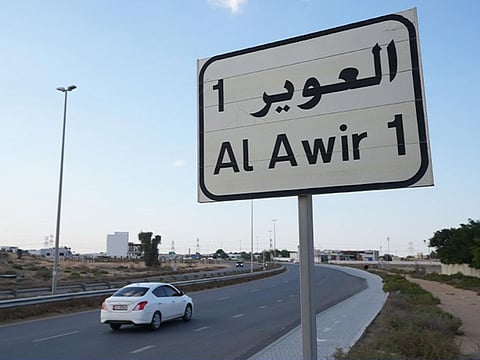
Dubai: The Roads and Transport Authority (RTA) of Dubai is undertaking a project to construct 16.5km of internal roads in Al Awir 1.
The project aims to better serve residents by providing an additional entrance from Emirates Road, along with intersections and roundabouts to improve accessibility and reduce travel time.
The project also includes adding a lane to Emirates Road, extending from the entrance of Al Awir 1 to Sharjah, increasing the road’s capacity by up to 16 per cent, the authority said.
Mattar Al Tayer, Director-General, Chairman of the Board of Executive Directors of RTA, stated: “This project aligns with RTA’s commitment to enhancing infrastructure in residential areas, including road networks, lighting and rainwater drainage systems. The objective is to accommodate the increasing traffic congestion, improve traffic flow and enhance road safety. Al Awir 1 is a key residential area.”
Al Tayer added: “The project includes the construction of 5 km of internal roads within the Mohammed bin Rashid Housing Establishment residential project and a 7.5 km road connecting Emirates Road to Al Awir 1. This dual-lane road in each direction features intersections, roundabouts, and U-turns near Emirates Road to link the Mohammed bin Rashid Housing Establishment project with Emirates Road.
“The development of the new entrance and exit will double the capacity of the area’s access points, increasing from 1,500 vehicles per hour to 3,000 vehicles per hour i.e., an increase of 100 per cent. Additionally, the project involves adding a 4km lane to Emirates Road, extending from the entrance of Al Awir 1 to Sharjah, with a speed limit of 110 km/h and a capacity of 2,000 vehicles per hour. This addition is expected to enhance traffic flow and boost the road’s capacity by 16 per cent.”
Al Warqa
RTA recently initiated the construction of additional entrances and exits in four residential areas: Al Warqa, Nadd Hessa, Al Barsha South, and Wadi Al Safa 3. In Al Warqa, work is underway to develop a direct entrance and exit from Sheikh Mohammed bin Zayed Road and enhance Al Warqa 1 Street. The project includes converting existing roundabouts into signalised intersections designed to ease traffic congestion.
Serving a population of over 350,000 residents, the project aims to streamline entry and exit to and from the area, increase the capacity of Al Warqa 1 Street by 30 per cent, and reduce travel time by 80 per cent, cutting it from 20 minutes to just 3.5 minutes. The improvements will also shorten travel distances from 5.7km to 1.5km.
Nadd Hessa
The project involves the construction of an additional entrance and exit for Nadd Hessa, connecting Sheikh Mohammed bin Zayed Road and Sheikh Zayed bin Hamdan Al Nahyan Street. Designed with two lanes, these new access points will handle up to 6,000 vehicles per hour, serving Nadd Hessa, Al Warsan 4, Hessa Gardens, and Dubai Silicon Oasis, benefiting a population of over 300,000 residents.
Extending from the service road parallel to Sheikh Mohammed bin Zayed Road to Sheikh Zayed bin Hamdan Al Nahyan Street, the development includes a dual-lane road in each direction opposite Nadd Hessa. A roundabout will also be constructed to ensure smooth access to and from Nadd Hessa and the Dubai Silicon Oasis complex. Additionally, a signalised intersection will be introduced at Sheikh Zayed bin Hamdan Al Nahyan Street, reducing travel time by 80 per cent, from 138 seconds to just 37 seconds.
Wadi Al Safa 3
The Wadi Al Safa 3 project involves constructing a direct entrance from Sheikh Mohammed bin Zayed Road for vehicles coming from Dubai–Al Ain Road and Sheikh Mohammed bin Zayed Road. Spanning 4km, the project includes internal roads and the entrance, enhancing connectivity for area residents. This development reduces travel distances by approximately 10 km and cuts travel time to the area from 10 minutes to just two minutes.
Al Barsha South
RTA has also completed road development works in Al Barsha South. The enhancements included upgrading the signalised intersection at Hessa Street and Al Barsha South by adding a third left-turn lane to facilitate entry from Hessa Street into the area. Additionally, Hessa Street was widened by two lanes over a 1,114-metre stretch at the intersection, accommodating traffic from Sheikh Mohammed bin Zayed Road toward Al Khail Road.
These improvements increased the total number of lanes to four in each direction, significantly enhancing the entry and exit points for Al Barsha South. The project expanded road capacity from 6,000 vehicles per hour in both directions to 9,000 vehicles per hour, improving traffic flow and cutting wait times at the signal from four minutes to just one minute.


